An environmental library of Japanese picture books for children published after 1945. Books whose heroes are anthropomorphized landscapes, plants, natural objects, insects, and other more-than-human actors aim to explore how ehon convey a relationship to nature and the living world. With the hope that when a mountain has a face, it is not so easy to start digging into it.
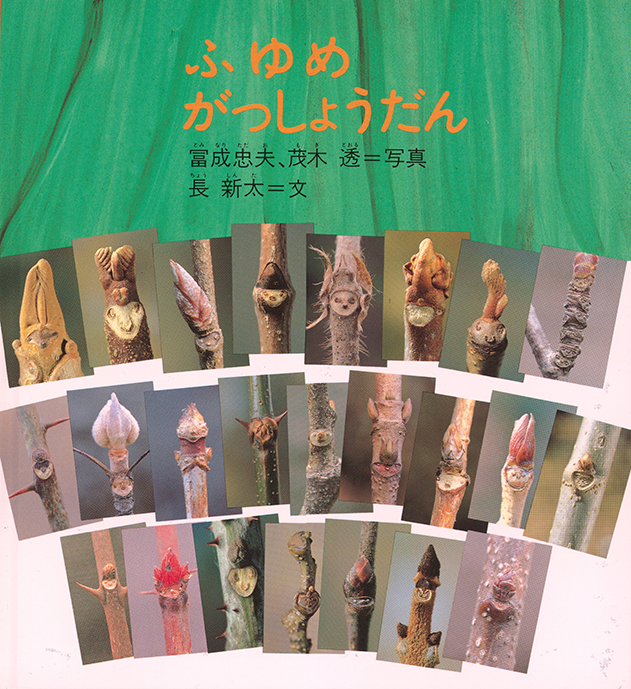
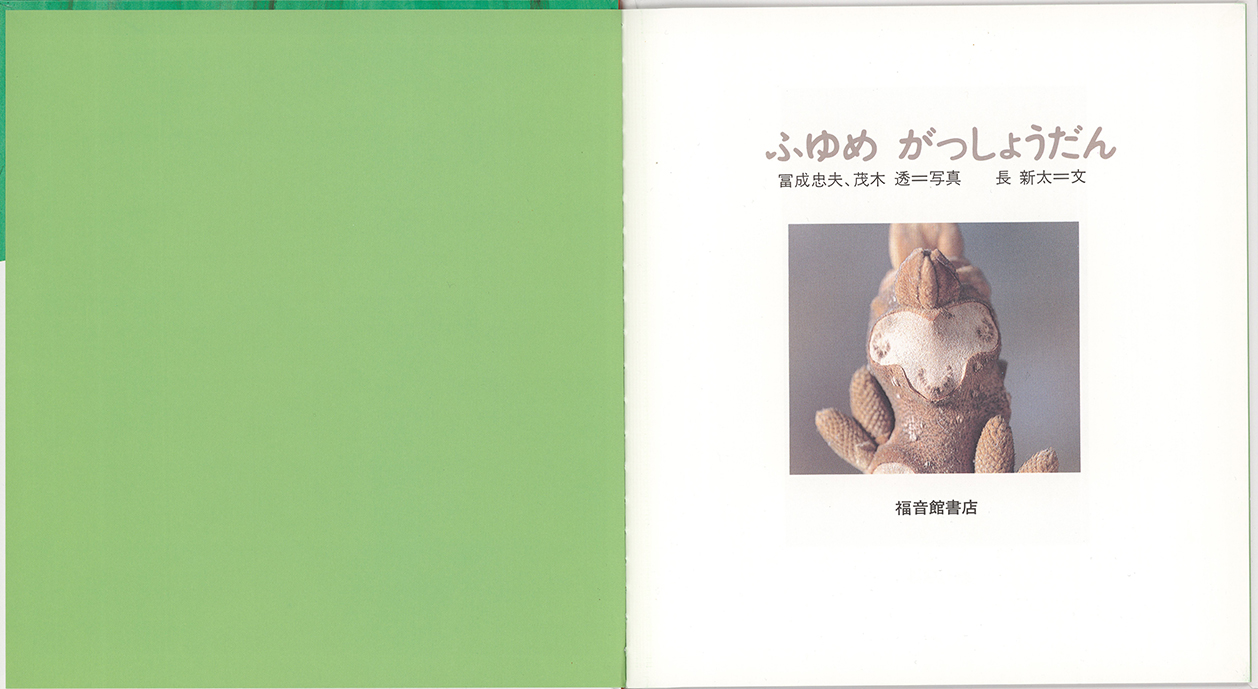
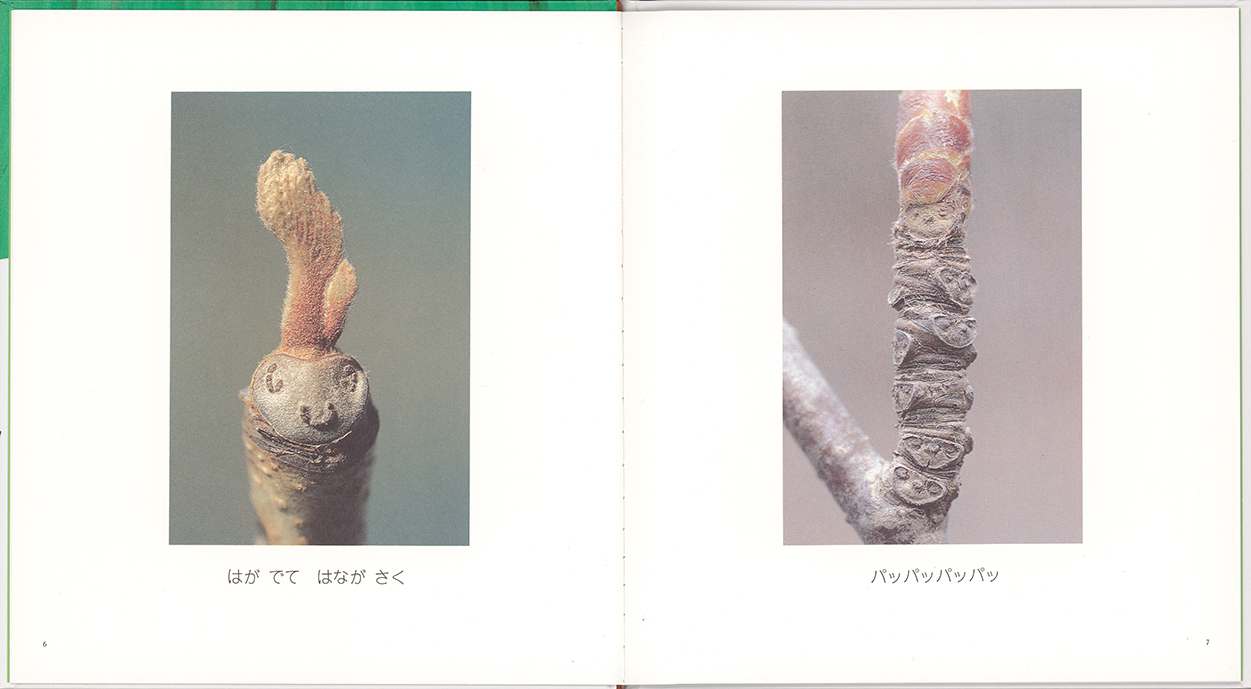
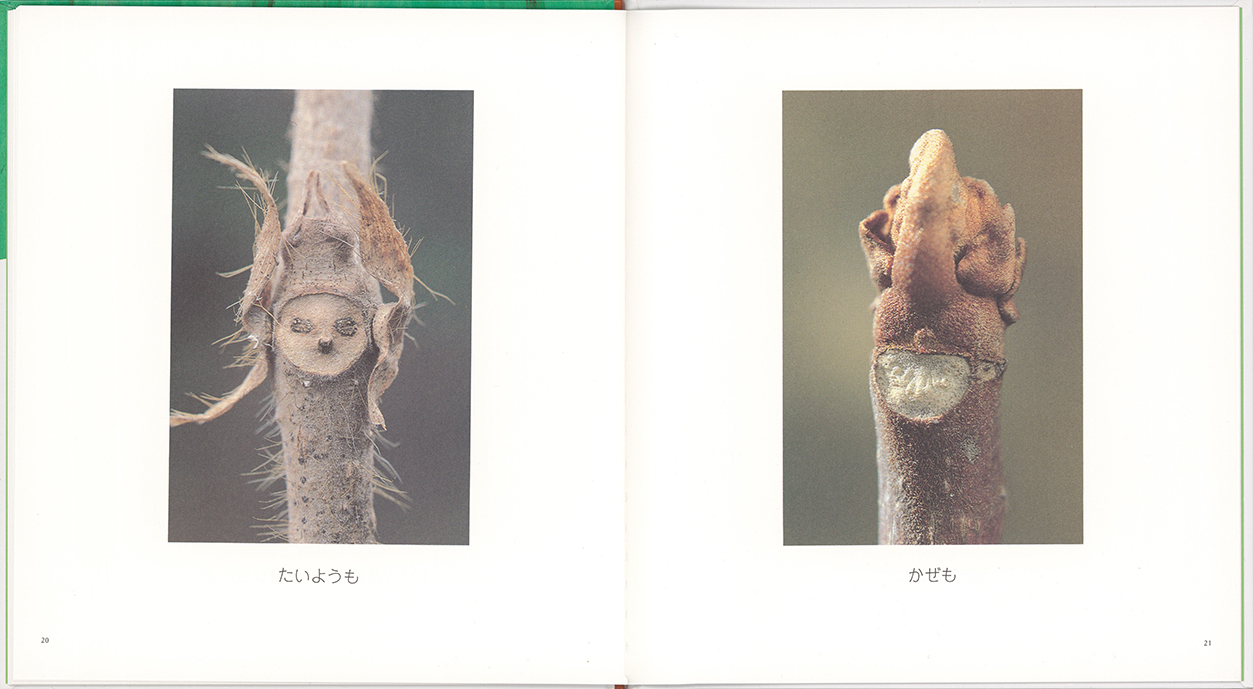
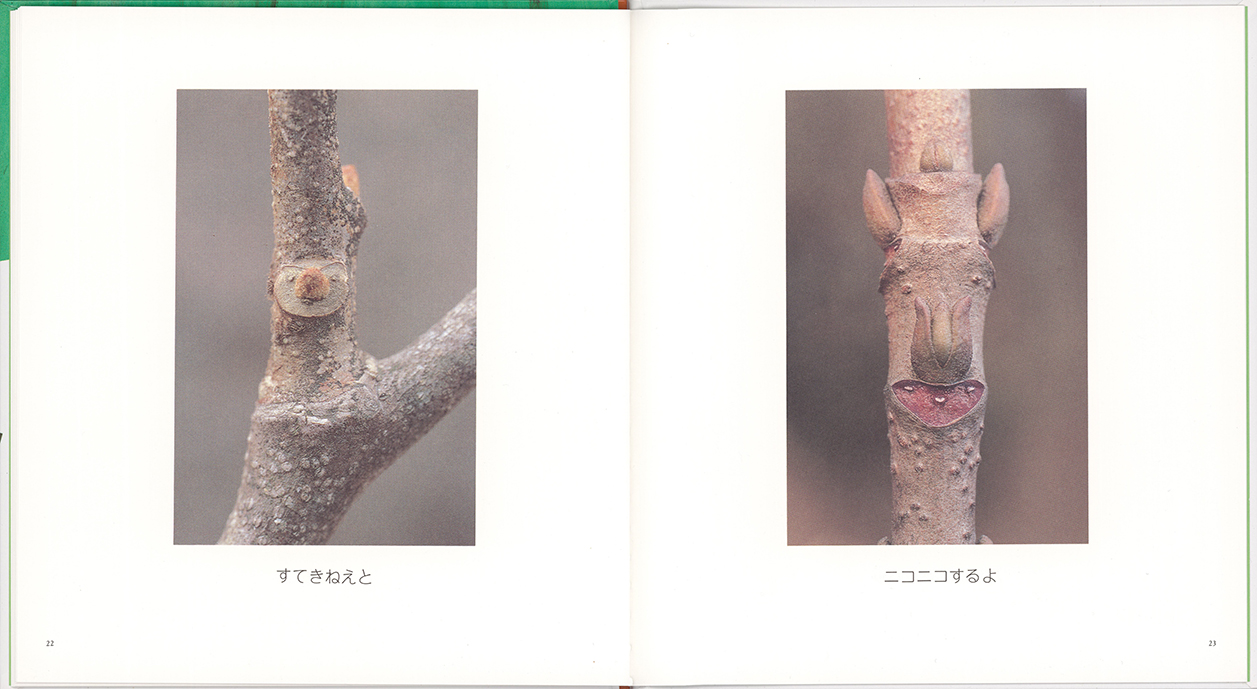
What unexpected things can be found in a sleeping forest? This poetic picture book is composed of photographs of winter buds that resemble all manner of faces. Eyes and mouths are formed by the remnants of the tiny tubes through which the now-fallen leaves were once fed; buds waiting to sprout create curious hairstyles and other facial arrangements. The text was written by the celebrated painter and illustrator Cho Shinta, and the book has gone through 36 editions in Japan. They are, they are — buds!
A Chorus of Winter Buds
Tadao Tominari, Toru Mogi — photography Cho Shinta — text
What unexpected things can be found in a sleeping forest? This poetic picture book is composed of photographs of winter buds that resemble all manner of faces. Eyes and mouths are formed by the remnants of the tiny tubes through which the now-fallen leaves were once fed; buds waiting to sprout create curious hairstyles and other facial arrangements. The text was written by the celebrated painter and illustrator Cho Shinta, and the book has gone through 36 editions in Japan. They are, they are — buds!
A Chorus of Winter Buds
Tadao Tominari, Toru Mogi — photography Cho Shinta — text
What unexpected things can be found in a sleeping forest? This poetic picture book is composed of photographs of winter buds that resemble all manner of faces. Eyes and mouths are formed by the remnants of the tiny tubes through which the now-fallen leaves were once fed; buds waiting to sprout create curious hairstyles and other facial arrangements. The text was written by the celebrated painter and illustrator Cho Shinta, and the book has gone through 36 editions in Japan. They are, they are — buds!
A leaf will sprout, a flower will bloom — puff, puff, puff
What unexpected things can be found in a sleeping forest? This poetic picture book is composed of photographs of winter buds that resemble all manner of faces. Eyes and mouths are formed by the remnants of the tiny tubes through which the now-fallen leaves were once fed; buds waiting to sprout create curious hairstyles and other facial arrangements. The text was written by the celebrated painter and illustrator Cho Shinta, and the book has gone through 36 editions in Japan. They are, they are — buds!
What unexpected things can be found in a sleeping forest? This poetic picture book is composed of photographs of winter buds that resemble all manner of faces. Eyes and mouths are formed by the remnants of the tiny tubes through which the now-fallen leaves were once fed; buds waiting to sprout create curious hairstyles and other facial arrangements. The text was written by the celebrated painter and illustrator Cho Shinta, and the book has gone through 36 editions in Japan. They are, they are — buds!