library of japanese children picture books for times of climate emergency
Ehon 絵本
i
An environmental library of Japanese picture books for children published after 1945. Books whose heroes are anthropomorphized landscapes, plants, natural objects, insects, and other more-than-human actors aim to explore how ehon convey a relationship to nature and the living world. With the hope that when a mountain has a face, it is not so easy to start digging into it.
texts
CZ
obálka
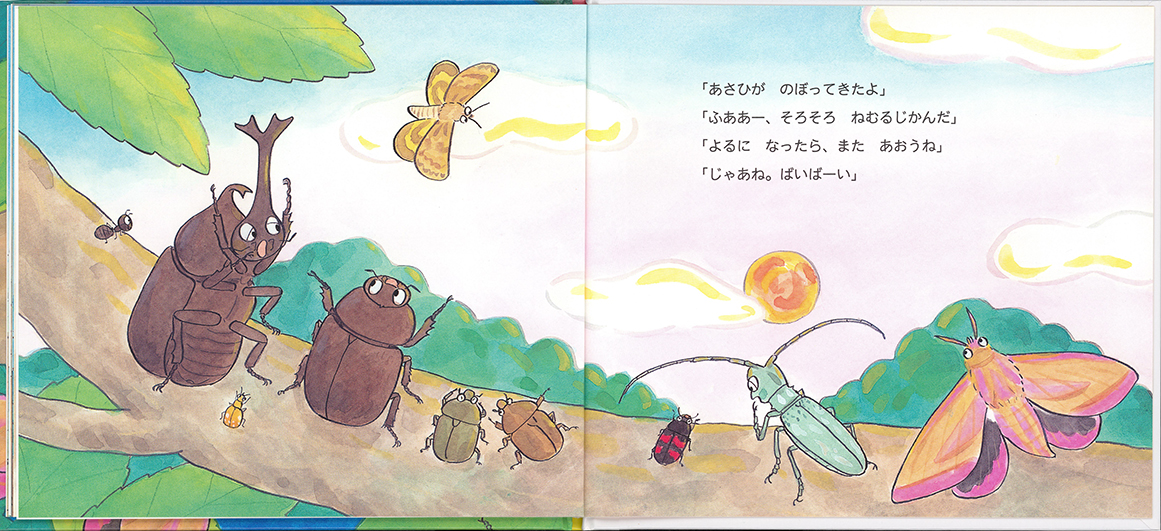
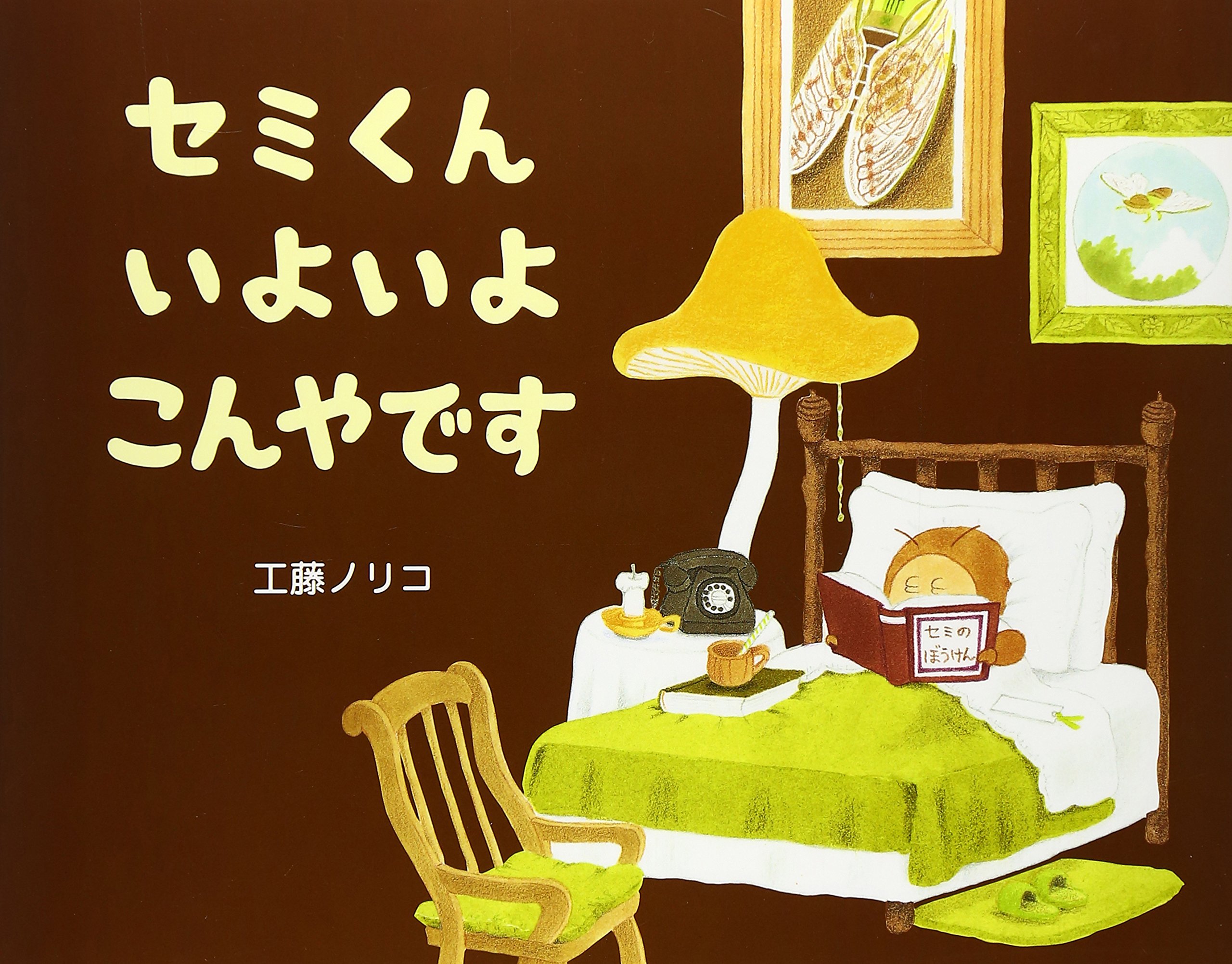
Semikun ijoijo konja
Noriko Kudo
Kyouikugageki, 2004


i
translation
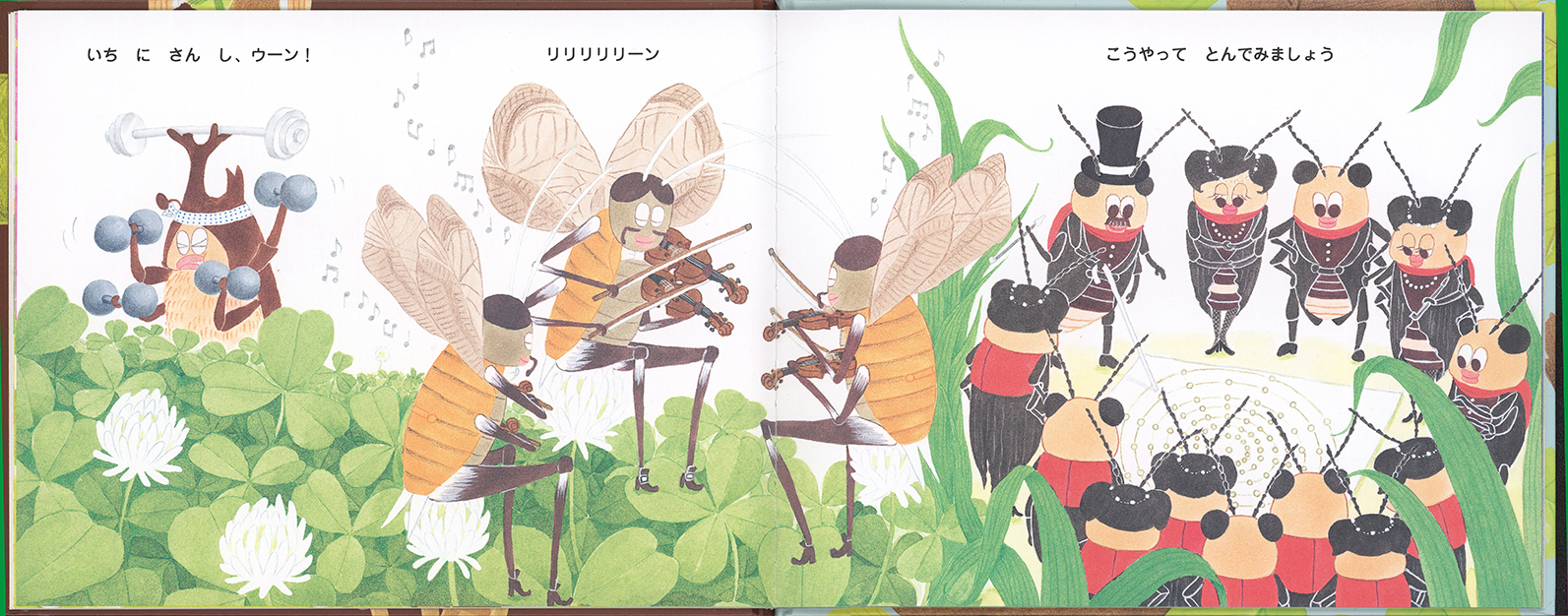
The cicada's big day is coming. Everyone is preparing for the big party. The baby caterpillars and bees are preparing refreshments, the old rhinoceros is working out his muscles, the crickets are practicing violin melodies, the fireflies are planning the choreography of a celestial dance... What can a little cicada boy expect when he leaves his home? A lovely picture book full of playful details, where everything runs smoothly, invites repeated viewing. The book ingeniously uses familiar clichés of the insect world and presents a story about a rite of passage, the motif of the transformation from larva to adult is an excuse to organize a party of human proportions. Noriko Kudo is also the author of the extremely popular book series about a gang of eight cats, Noraneko gundan, which has already sold over 3 million copies.

Cikádkův velký večer
Noriko Kudo

(kniha: Dobrodružství cikády)

3
Semikun ijoijo konja
Noriko Kudo
Kyouikugageki, 2004


i
translation
The cicada's big day is coming. Everyone is preparing for the big party. The baby caterpillars and bees are preparing refreshments, the old rhinoceros is working out his muscles, the crickets are practicing violin melodies, the fireflies are planning the choreography of a celestial dance... What can a little cicada boy expect when he leaves his home? A lovely picture book full of playful details, where everything runs smoothly, invites repeated viewing. The book ingeniously uses familiar clichés of the insect world and presents a story about a rite of passage, the motif of the transformation from larva to adult is an excuse to organize a party of human proportions. Noriko Kudo is also the author of the extremely popular book series about a gang of eight cats, Noraneko gundan, which has already sold over 3 million copies.

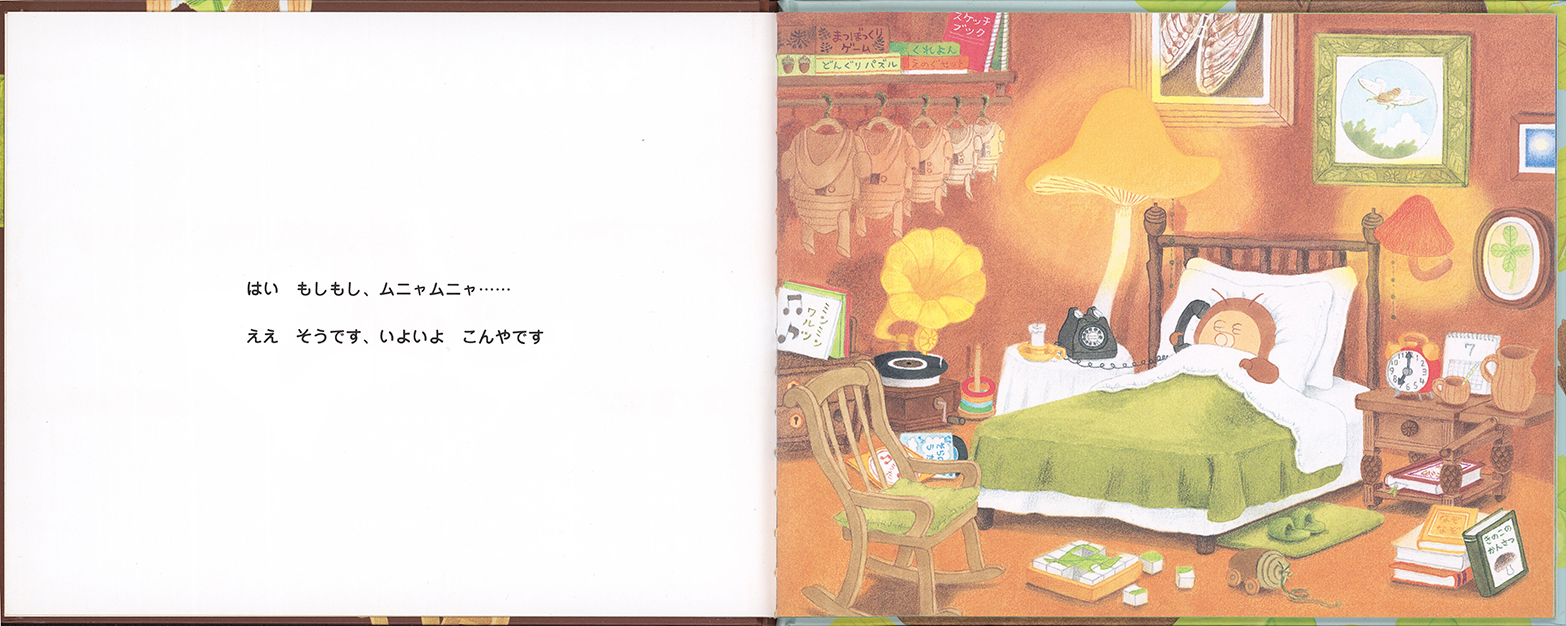
Ano, haló haló, mumly mumly….

Ano, je to tak, konečně, je to dnes večer

6
Semikun ijoijo konja
Noriko Kudo
Kyouikugageki, 2004


i
translation
The cicada's big day is coming. Everyone is preparing for the big party. The baby caterpillars and bees are preparing refreshments, the old rhinoceros is working out his muscles, the crickets are practicing violin melodies, the fireflies are planning the choreography of a celestial dance... What can a little cicada boy expect when he leaves his home? A lovely picture book full of playful details, where everything runs smoothly, invites repeated viewing. The book ingeniously uses familiar clichés of the insect world and presents a story about a rite of passage, the motif of the transformation from larva to adult is an excuse to organize a party of human proportions. Noriko Kudo is also the author of the extremely popular book series about a gang of eight cats, Noraneko gundan, which has already sold over 3 million copies.

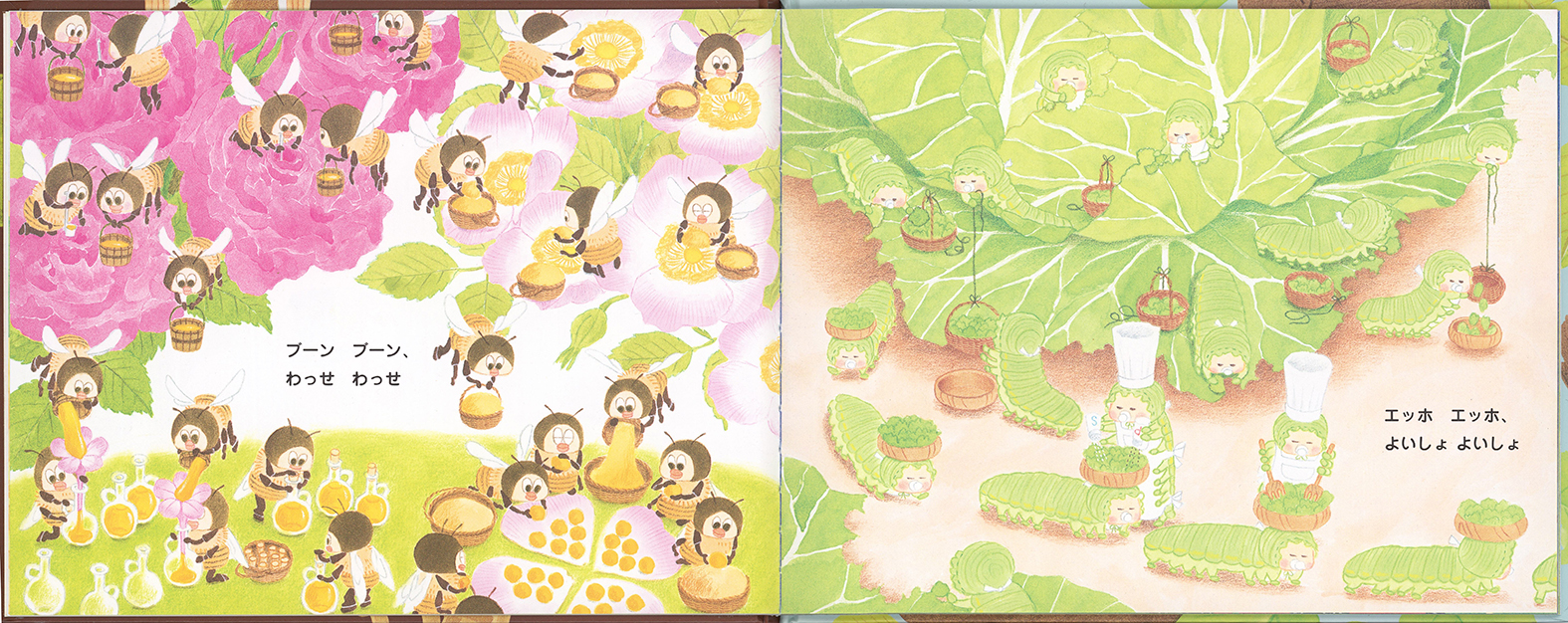
Bzz bzz,
hej rup, hej rup!

Uf uf,
hopsa hejsa!

7
Semikun ijoijo konja
Noriko Kudo
Kyouikugageki, 2004


i
translation
The cicada's big day is coming. Everyone is preparing for the big party. The baby caterpillars and bees are preparing refreshments, the old rhinoceros is working out his muscles, the crickets are practicing violin melodies, the fireflies are planning the choreography of a celestial dance... What can a little cicada boy expect when he leaves his home? A lovely picture book full of playful details, where everything runs smoothly, invites repeated viewing. The book ingeniously uses familiar clichés of the insect world and presents a story about a rite of passage, the motif of the transformation from larva to adult is an excuse to organize a party of human proportions. Noriko Kudo is also the author of the extremely popular book series about a gang of eight cats, Noraneko gundan, which has already sold over 3 million copies.

Raz, dva, tři, čtyři… huup!
Riririrííín (cvrkot / zvonivý zvuk cikád)
Zkusme takhle letět.

9
Semikun ijoijo konja
Noriko Kudo
Kyouikugageki, 2004


i
translation
The cicada's big day is coming. Everyone is preparing for the big party. The baby caterpillars and bees are preparing refreshments, the old rhinoceros is working out his muscles, the crickets are practicing violin melodies, the fireflies are planning the choreography of a celestial dance... What can a little cicada boy expect when he leaves his home? A lovely picture book full of playful details, where everything runs smoothly, invites repeated viewing. The book ingeniously uses familiar clichés of the insect world and presents a story about a rite of passage, the motif of the transformation from larva to adult is an excuse to organize a party of human proportions. Noriko Kudo is also the author of the extremely popular book series about a gang of eight cats, Noraneko gundan, which has already sold over 3 million copies.

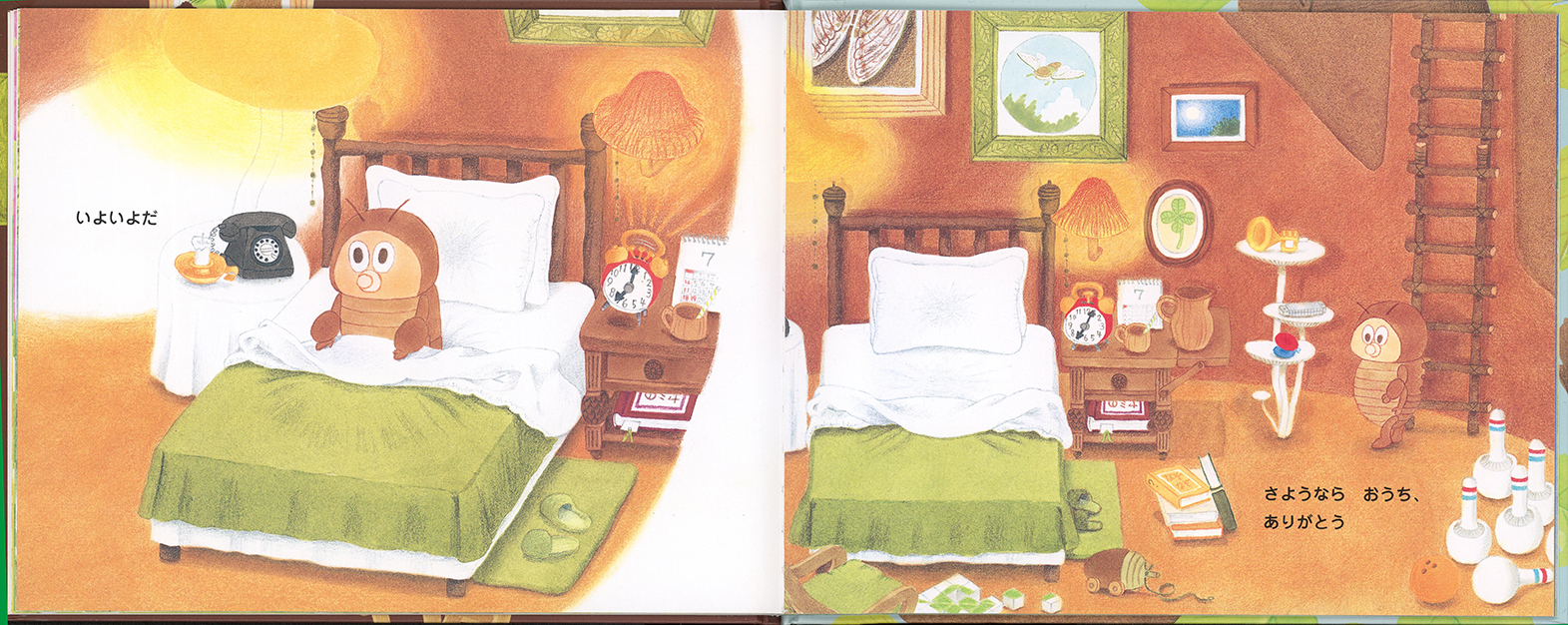
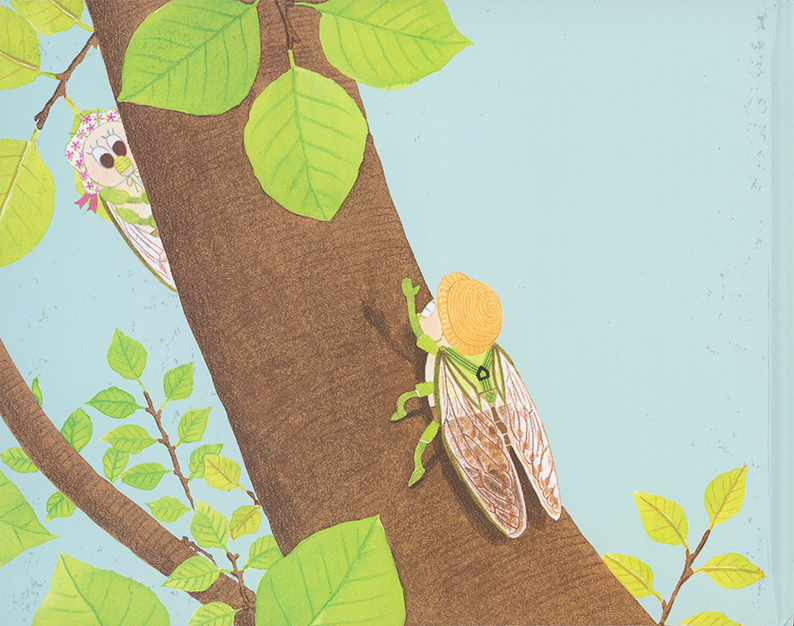
Už je to tady.
Sbohem, domečku, děkuji ti.

11
Semikun ijoijo konja
Noriko Kudo
Kyouikugageki, 2004


i
translation
The cicada's big day is coming. Everyone is preparing for the big party. The baby caterpillars and bees are preparing refreshments, the old rhinoceros is working out his muscles, the crickets are practicing violin melodies, the fireflies are planning the choreography of a celestial dance... What can a little cicada boy expect when he leaves his home? A lovely picture book full of playful details, where everything runs smoothly, invites repeated viewing. The book ingeniously uses familiar clichés of the insect world and presents a story about a rite of passage, the motif of the transformation from larva to adult is an excuse to organize a party of human proportions. Noriko Kudo is also the author of the extremely popular book series about a gang of eight cats, Noraneko gundan, which has already sold over 3 million copies.

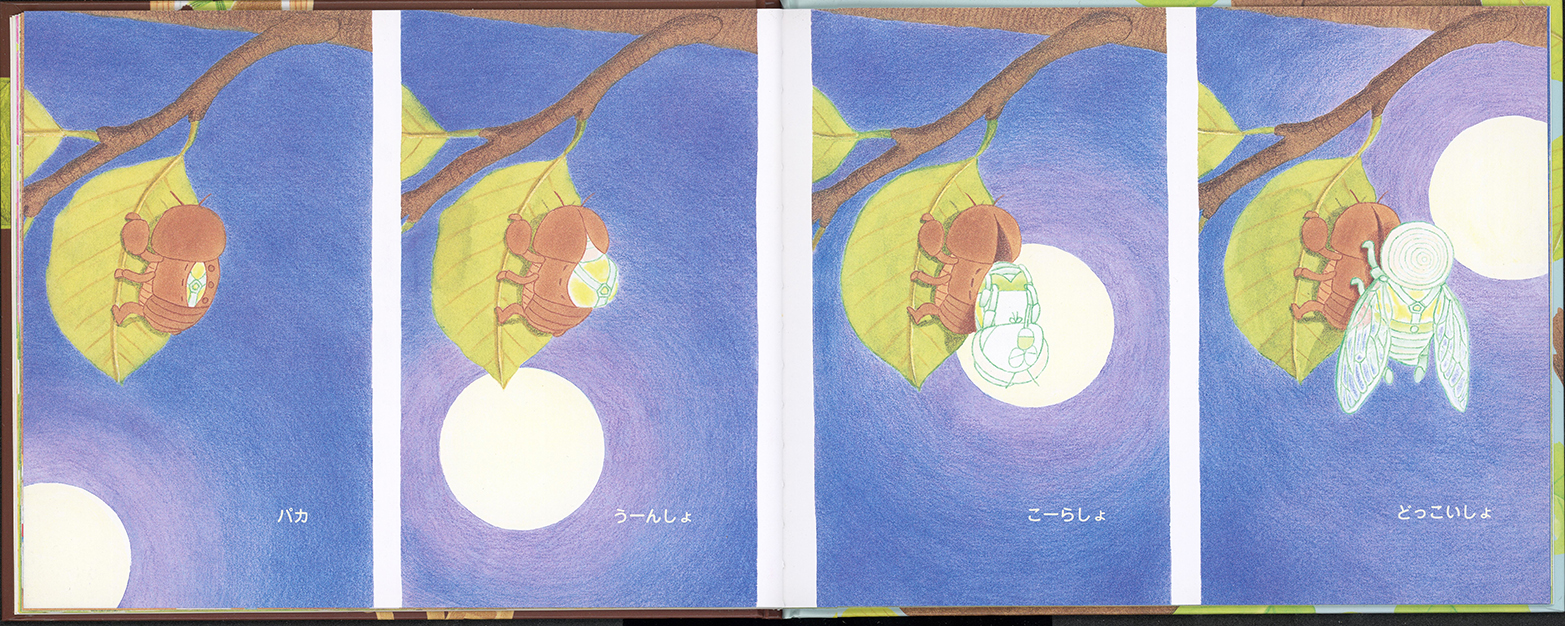
Prask!
Uuuh… hup!
Tak… a teď!
A je to!

13
Semikun ijoijo konja
Noriko Kudo
Kyouikugageki, 2004


i
translation
The cicada's big day is coming. Everyone is preparing for the big party. The baby caterpillars and bees are preparing refreshments, the old rhinoceros is working out his muscles, the crickets are practicing violin melodies, the fireflies are planning the choreography of a celestial dance... What can a little cicada boy expect when he leaves his home? A lovely picture book full of playful details, where everything runs smoothly, invites repeated viewing. The book ingeniously uses familiar clichés of the insect world and presents a story about a rite of passage, the motif of the transformation from larva to adult is an excuse to organize a party of human proportions. Noriko Kudo is also the author of the extremely popular book series about a gang of eight cats, Noraneko gundan, which has already sold over 3 million copies.

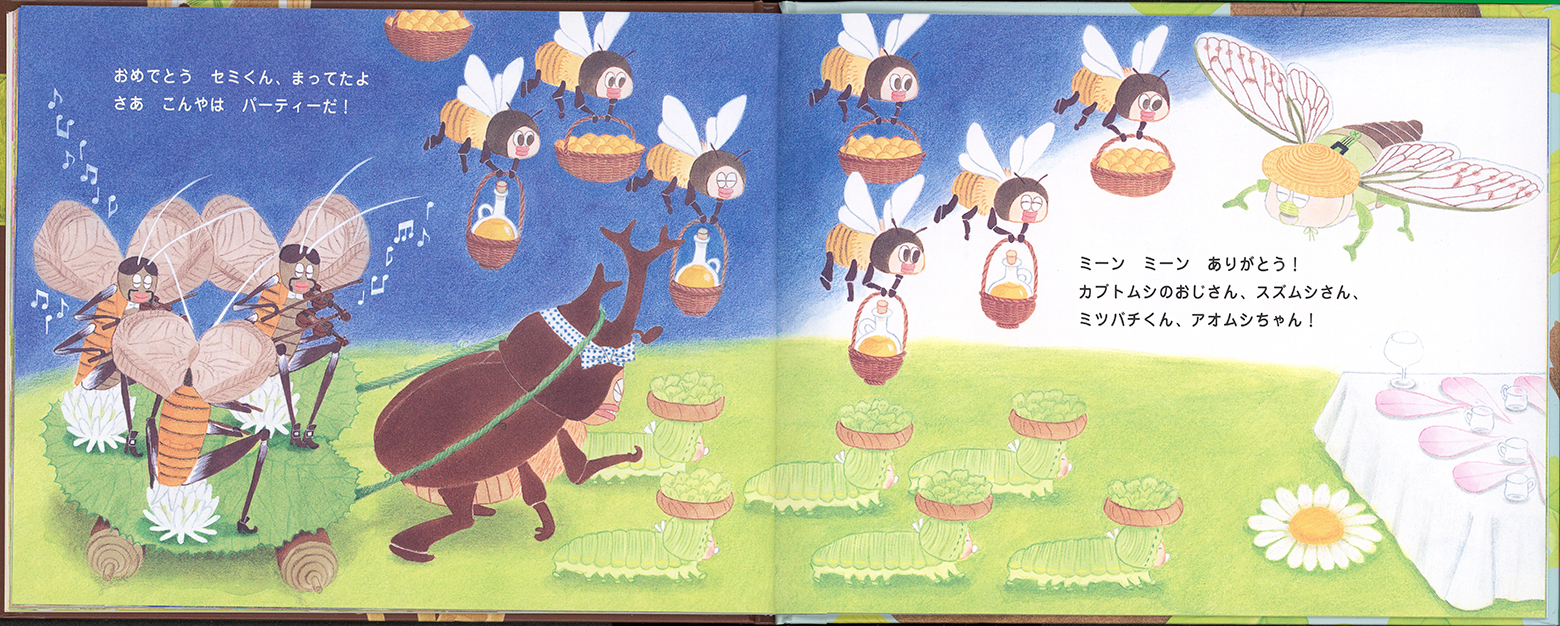
Gratulujeme cikádko, čekali jsme tě
Tak dneska je oslava

(Miin miin) děkuji!
Pane nosorožíku, cvrčku,
včelo a housenečky!

15
Semikun ijoijo konja
Noriko Kudo
Kyouikugageki, 2004


i
translation
The cicada's big day is coming. Everyone is preparing for the big party. The baby caterpillars and bees are preparing refreshments, the old rhinoceros is working out his muscles, the crickets are practicing violin melodies, the fireflies are planning the choreography of a celestial dance... What can a little cicada boy expect when he leaves his home? A lovely picture book full of playful details, where everything runs smoothly, invites repeated viewing. The book ingeniously uses familiar clichés of the insect world and presents a story about a rite of passage, the motif of the transformation from larva to adult is an excuse to organize a party of human proportions. Noriko Kudo is also the author of the extremely popular book series about a gang of eight cats, Noraneko gundan, which has already sold over 3 million copies.

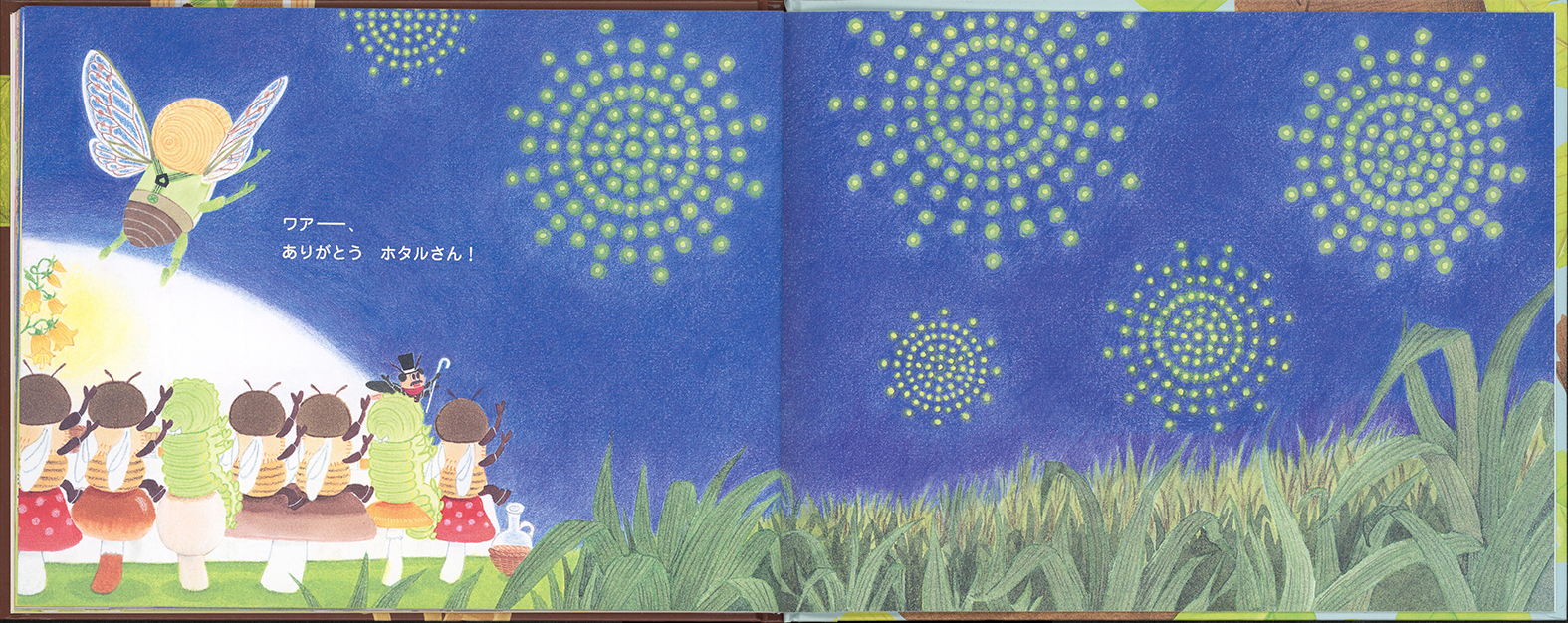
Jéé!
Děkujeme, pane světluško!

17
Semikun ijoijo konja
Noriko Kudo
Kyouikugageki, 2004


i
translation
The cicada's big day is coming. Everyone is preparing for the big party. The baby caterpillars and bees are preparing refreshments, the old rhinoceros is working out his muscles, the crickets are practicing violin melodies, the fireflies are planning the choreography of a celestial dance... What can a little cicada boy expect when he leaves his home? A lovely picture book full of playful details, where everything runs smoothly, invites repeated viewing. The book ingeniously uses familiar clichés of the insect world and presents a story about a rite of passage, the motif of the transformation from larva to adult is an excuse to organize a party of human proportions. Noriko Kudo is also the author of the extremely popular book series about a gang of eight cats, Noraneko gundan, which has already sold over 3 million copies.

-

Semikun ijoijo konja
Noriko Kudo
Kyouikugageki
2004
obalka
Omisejasan
Eiko Kadono, Seichi Tabata
Doshinsha, 1992


i
translation
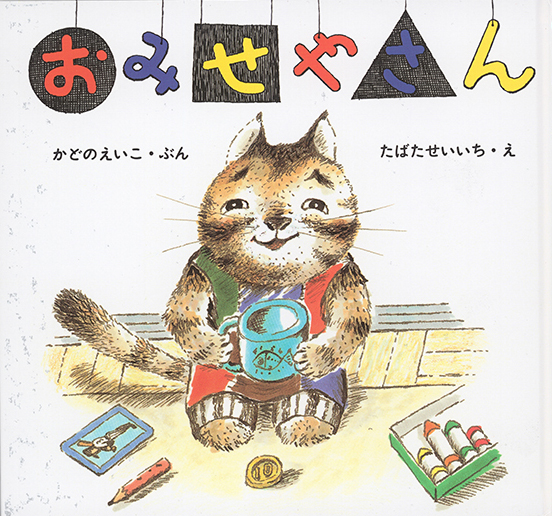
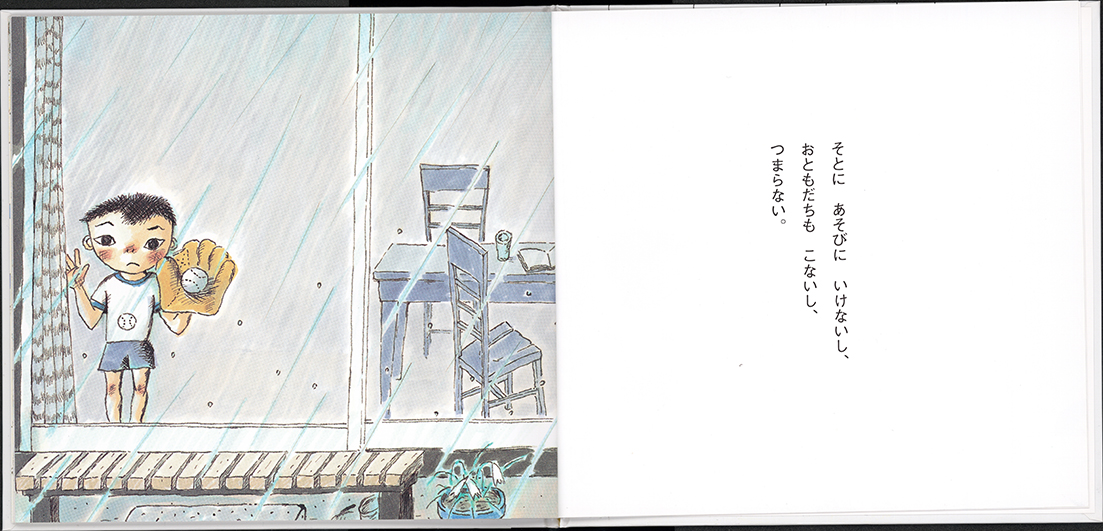
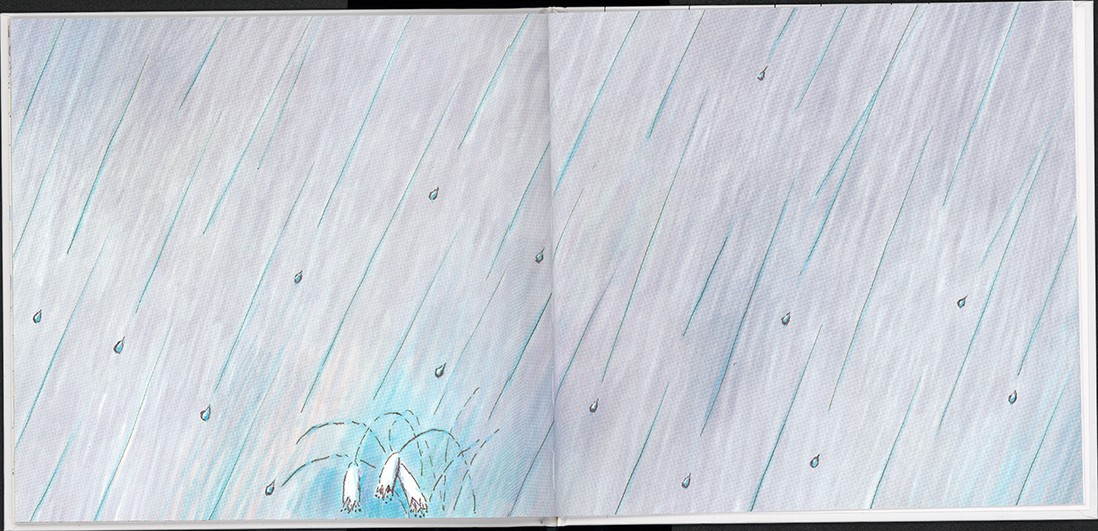
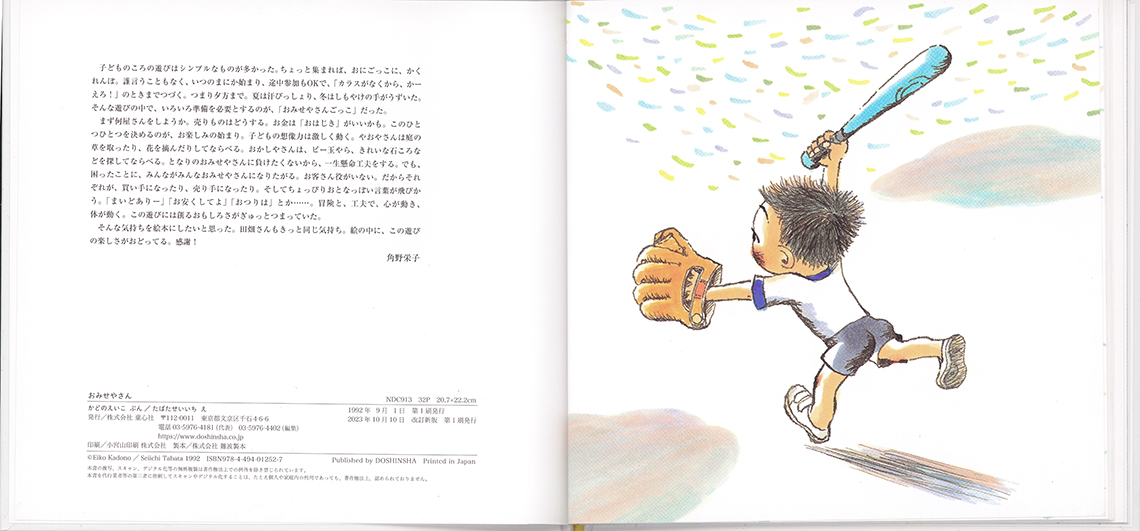
Outside it just keeps raining. The boy is stuck indoors and bored. What to do? How about playing shop? A lightly and playfully told story about a long, dull afternoon and encounters with unexpected customers.

The Shopkeeper 
Eiko Kadono — text
Seiichi Tabata — illustrations

2
Omisejasan
Eiko Kadono, Seichi Tabata
Doshinsha, 1992


i
translation
Outside it just keeps raining. The boy is stuck indoors and bored. What to do? How about playing shop? A lightly and playfully told story about a long, dull afternoon and encounters with unexpected customers.

I can't go out to play, no friends are coming over, and it's so boring.

-
Omisejasan
Eiko Kadono, Seichi Tabata
Doshinsha, 1992


i
translation
Outside it just keeps raining. The boy is stuck indoors and bored. What to do? How about playing shop? A lightly and playfully told story about a long, dull afternoon and encounters with unexpected customers.

-

7
Omisejasan
Eiko Kadono, Seichi Tabata
Doshinsha, 1992


i
translation
Outside it just keeps raining. The boy is stuck indoors and bored. What to do? How about playing shop? A lightly and playfully told story about a long, dull afternoon and encounters with unexpected customers.

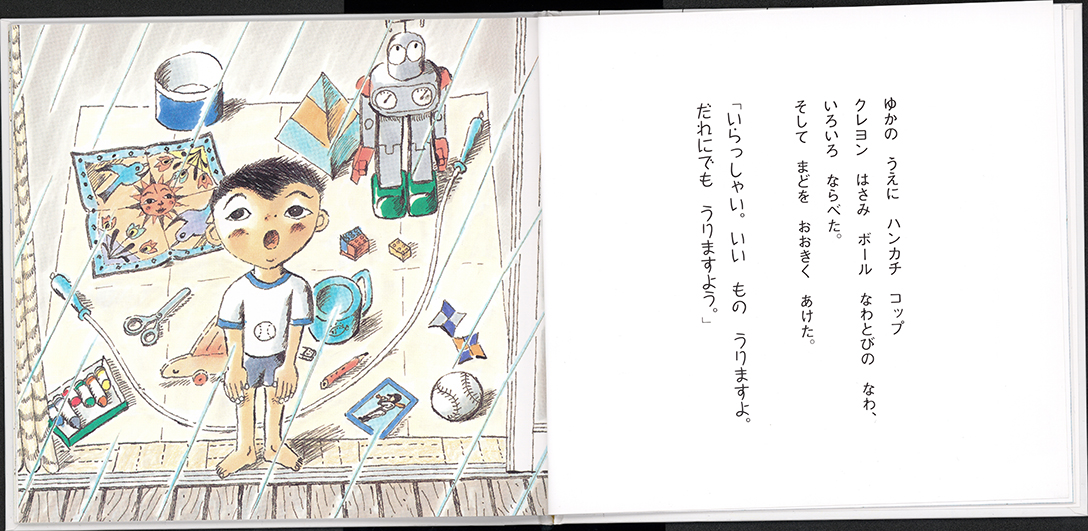
I spread out a handkerchief, a mug, crayons, scissors, a ball, a skipping rope and all sorts of things on the floor. Then I threw the window wide open. "Come on in. We have wonderful things for sale. I have something for everyone."

74
Omisejasan
Eiko Kadono, Seichi Tabata
Doshinsha, 1992


i
translation
Outside it just keeps raining. The boy is stuck indoors and bored. What to do? How about playing shop? A lightly and playfully told story about a long, dull afternoon and encounters with unexpected customers.

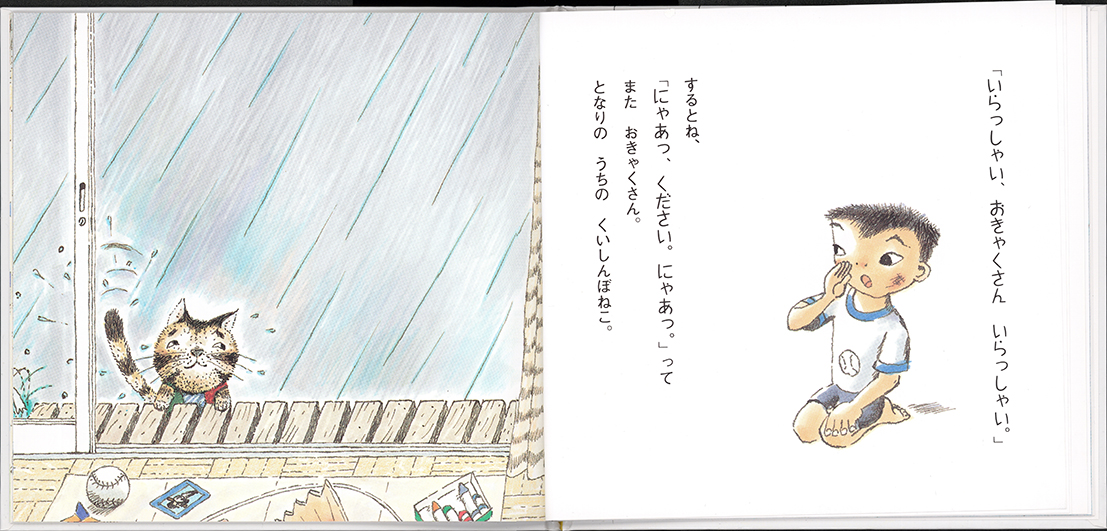
"Come in, come in." And then came a sound. "Meow, please. Meow." Another customer. My neighbour's fat cat.

78
Omisejasan
Eiko Kadono, Seichi Tabata
Doshinsha, 1992


i
translation
Outside it just keeps raining. The boy is stuck indoors and bored. What to do? How about playing shop? A lightly and playfully told story about a long, dull afternoon and encounters with unexpected customers.

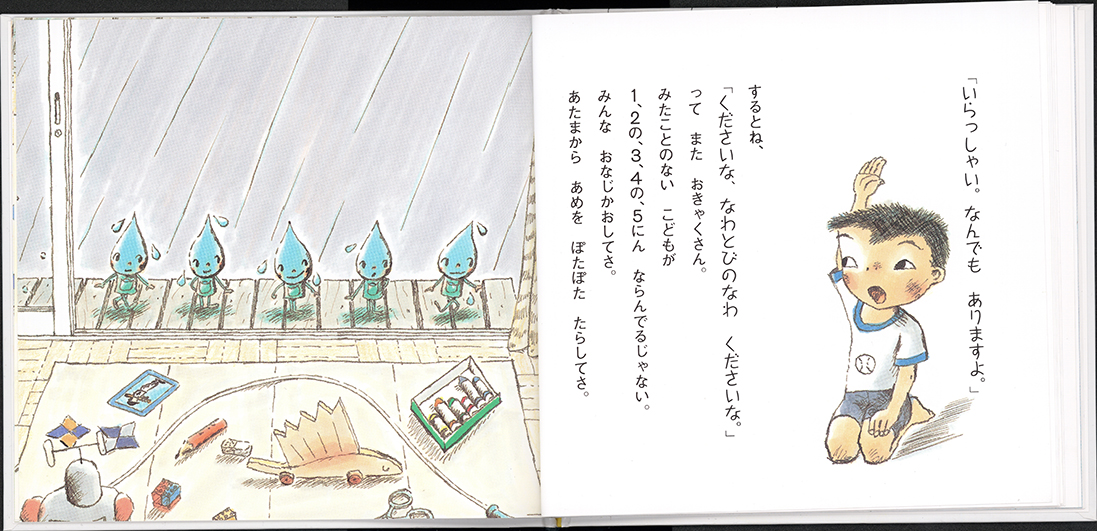
"Come in, come in. We have everything." And then came a sound. "A skipping rope, please," said the next customer. Children appeared whom I had never seen before. 1, 2, 3, 4, 5 of them were there. And they all looked the same. Rain dripping from their heads.

79
Omisejasan
Eiko Kadono, Seichi Tabata
Doshinsha, 1992


i
translation
Outside it just keeps raining. The boy is stuck indoors and bored. What to do? How about playing shop? A lightly and playfully told story about a long, dull afternoon and encounters with unexpected customers.

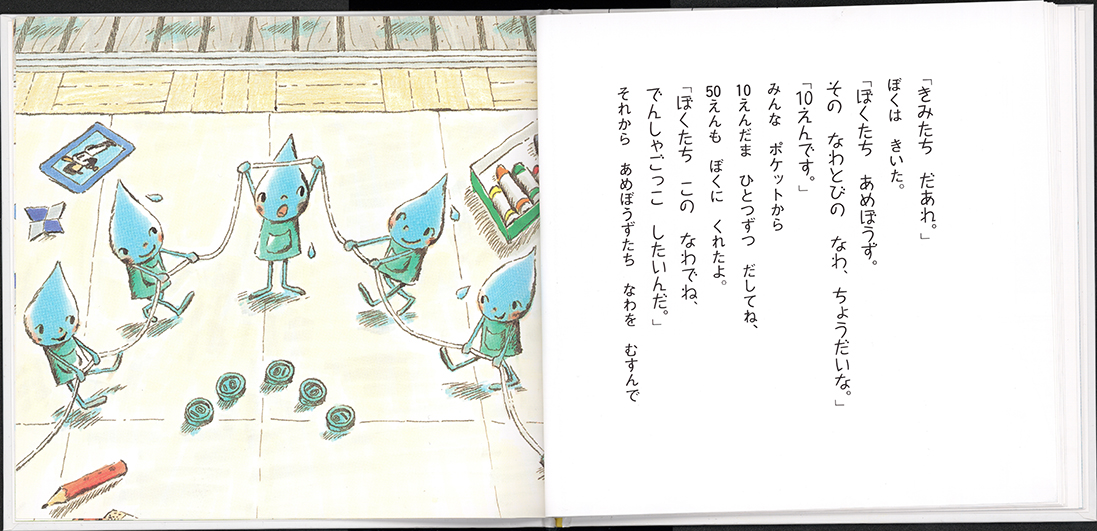
"Who are you?" I asked. "We are rain boys. Please give us the skipping rope." "That will be 10 yen." Each one took 10 yen from their pocket and gave me 50 yen. "You see, we want to play train with this skipping rope."

80
Omisejasan
Eiko Kadono, Seichi Tabata
Doshinsha, 1992


i
translation
Outside it just keeps raining. The boy is stuck indoors and bored. What to do? How about playing shop? A lightly and playfully told story about a long, dull afternoon and encounters with unexpected customers.

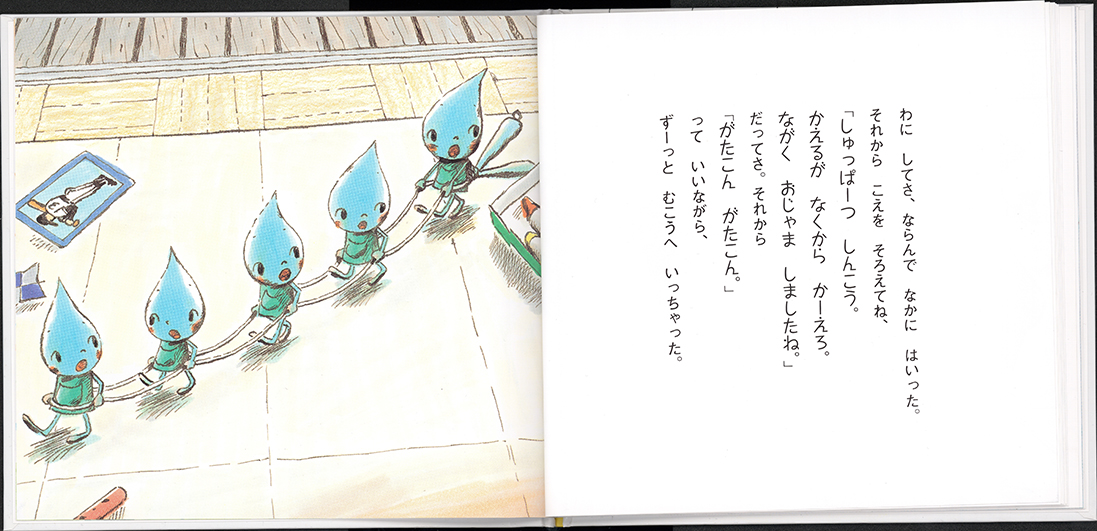
And the rain boys tied the skipping rope into a circle. Then they all lined up and climbed inside. And all together they said: "Departure. The tansy is already in bloom, we must return. We have been here long enough." And with a "clickety-clack" they disappeared into the distance.

82
Omisejasan
Eiko Kadono, Seichi Tabata
Doshinsha, 1992


i
translation
Outside it just keeps raining. The boy is stuck indoors and bored. What to do? How about playing shop? A lightly and playfully told story about a long, dull afternoon and encounters with unexpected customers.

-

Omisejasan
Eiko Kadono, Seichi Tabata
Doshinsha
1992
Mušipuro
Mušipuro
Takashi Jamamoto
Kyoiku Gageki Co., 2006


i
translation
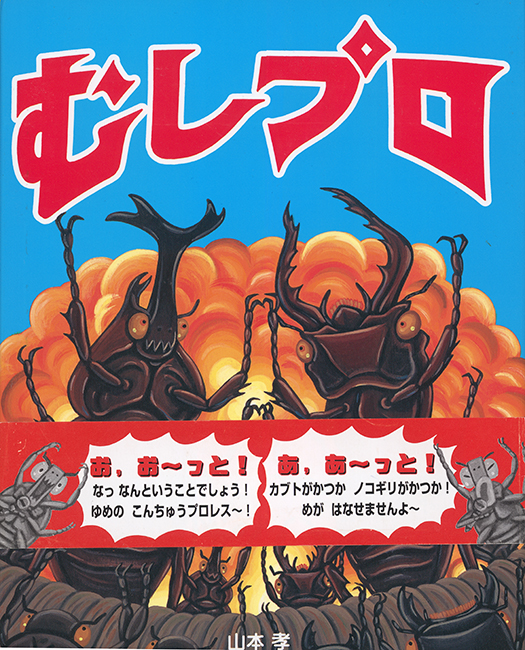
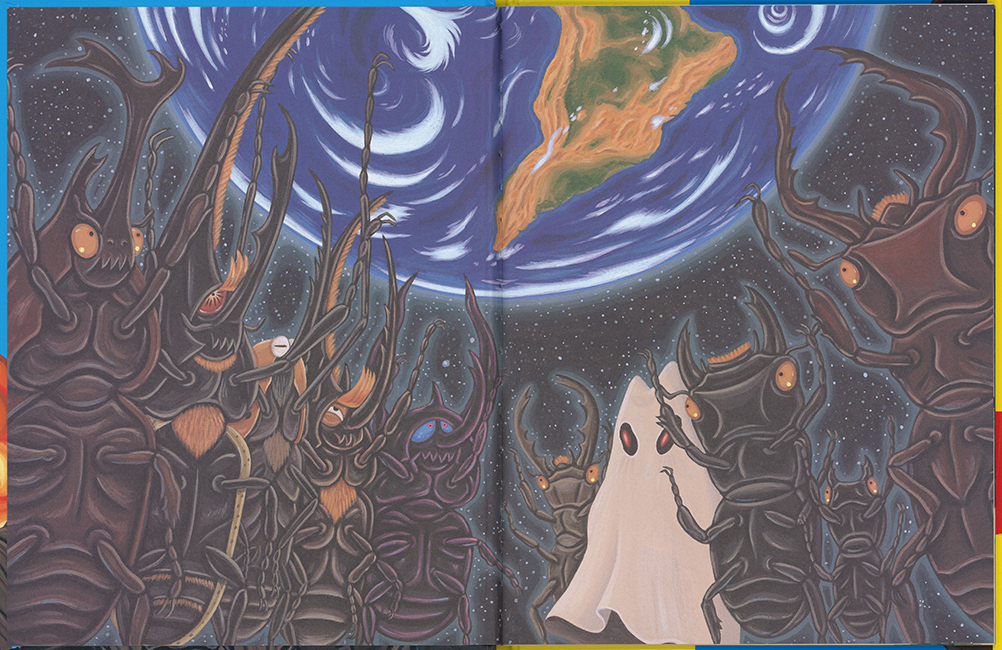
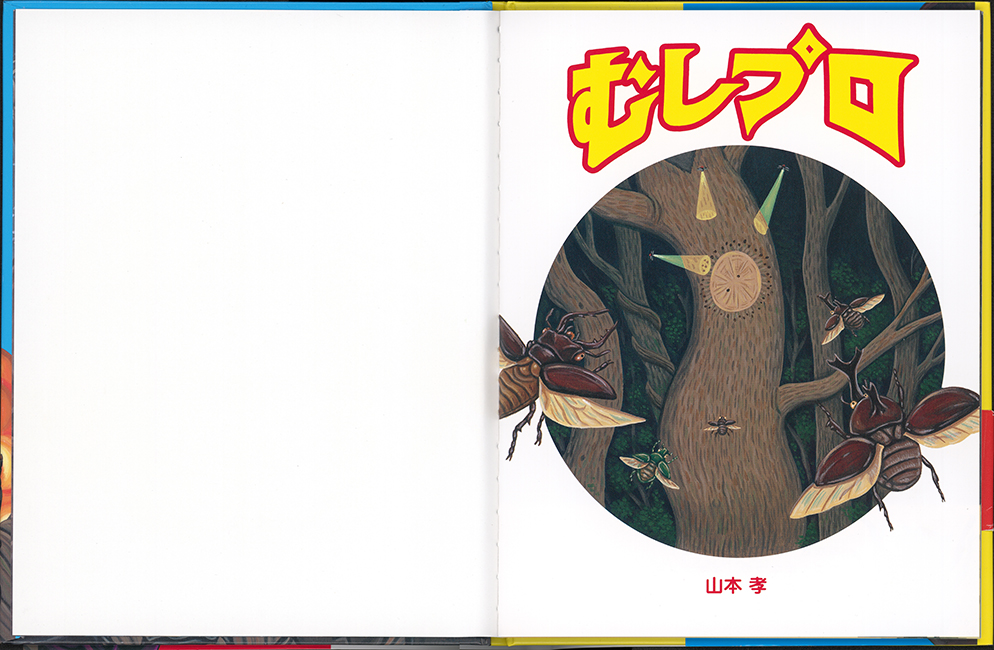
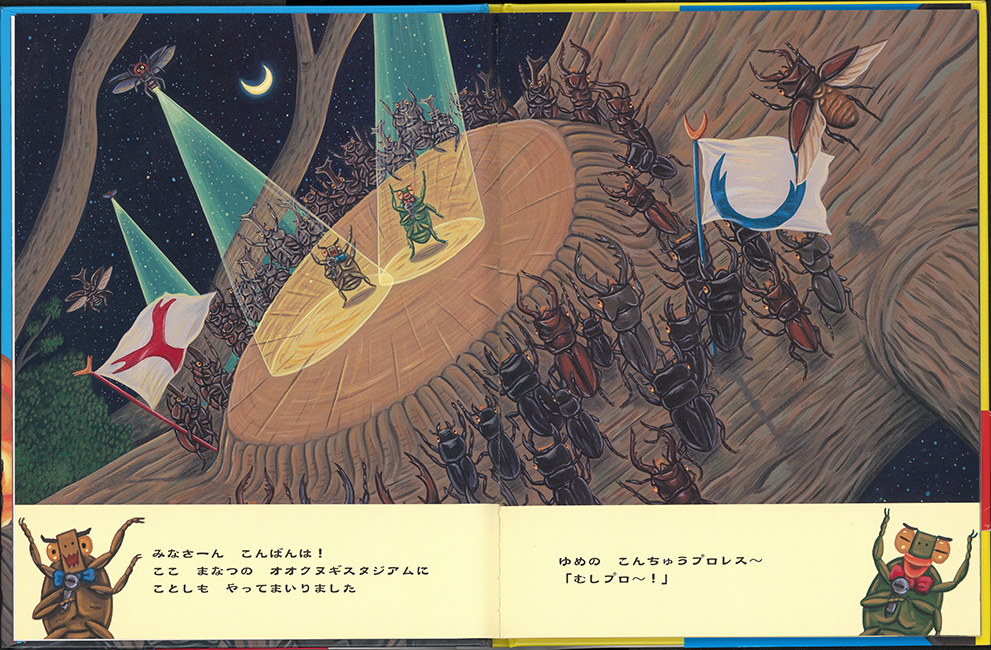
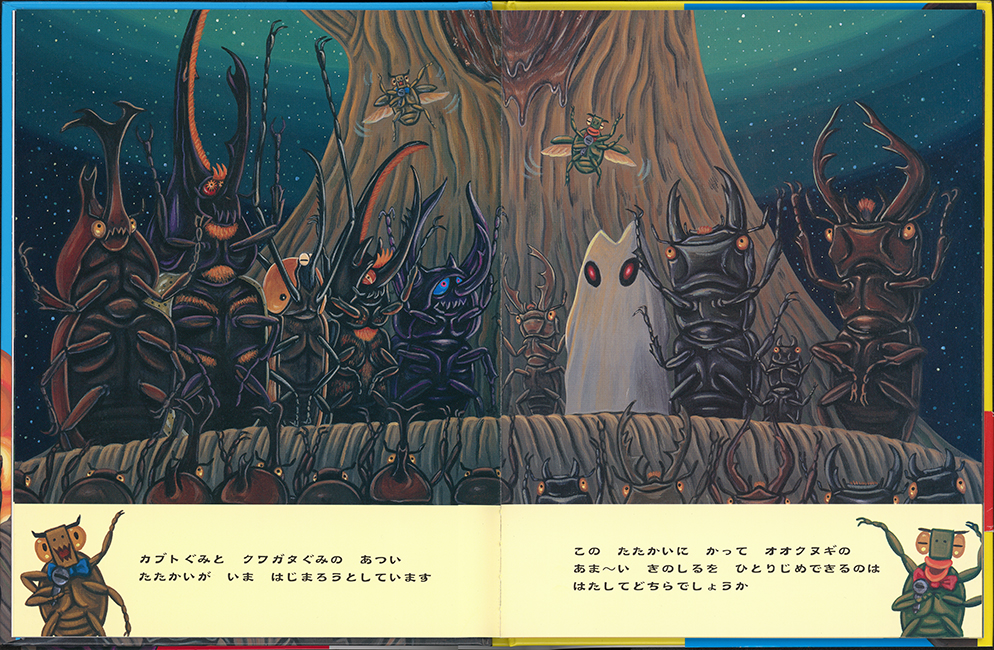
There is a commotion at the stadium by the great oak. Rhinoceros beetles versus stag beetles — a match for the sweet sap of the great oak is about to begin. The remarkable shapes of the beetles' shells make for the most extraordinary models in a thrilling dream wrestling match!

Beetle Proffesional
Takashi Yamamoto

Oh, ohhh! Ah, ahhh! What on earth is happening?! The dream insect wrestling match! The stag beetle really goes for it! The rhinoceros beetle too! You can't tear your eyes away!


předsádka
Mušipuro
Takashi Jamamoto
Kyoiku Gageki Co., 2006


i
translation
There is a commotion at the stadium by the great oak. Rhinoceros beetles versus stag beetles — a match for the sweet sap of the great oak is about to begin. The remarkable shapes of the beetles' shells make for the most extraordinary models in a thrilling dream wrestling match!

-

2
Mušipuro
Takashi Jamamoto
Kyoiku Gageki Co., 2006


i
translation
There is a commotion at the stadium by the great oak. Rhinoceros beetles versus stag beetles — a match for the sweet sap of the great oak is about to begin. The remarkable shapes of the beetles' shells make for the most extraordinary models in a thrilling dream wrestling match!

Beetle Proffesional
Takashi Yamamoto

4
Mušipuro
Takashi Jamamoto
Kyoiku Gageki Co., 2006


i
translation
There is a commotion at the stadium by the great oak. Rhinoceros beetles versus stag beetles — a match for the sweet sap of the great oak is about to begin. The remarkable shapes of the beetles' shells make for the most extraordinary models in a thrilling dream wrestling match!

Good evening, ladies and gentlemen! Once again this year we have gathered at the Great Oak Stadium! The dream insect wrestling match — "Mushi Pro!"

5
Mušipuro
Takashi Jamamoto
Kyoiku Gageki Co., 2006


i
translation
There is a commotion at the stadium by the great oak. Rhinoceros beetles versus stag beetles — a match for the sweet sap of the great oak is about to begin. The remarkable shapes of the beetles' shells make for the most extraordinary models in a thrilling dream wrestling match!

The thrilling battle between the rhinoceros beetle team and the stag beetle team is just beginning! Who will win this match and claim the sweet sap of the Great Oak all for themselves? Which team will it be?

6
Mušipuro
Takashi Jamamoto
Kyoiku Gageki Co., 2006


i
translation
There is a commotion at the stadium by the great oak. Rhinoceros beetles versus stag beetles — a match for the sweet sap of the great oak is about to begin. The remarkable shapes of the beetles' shells make for the most extraordinary models in a thrilling dream wrestling match!

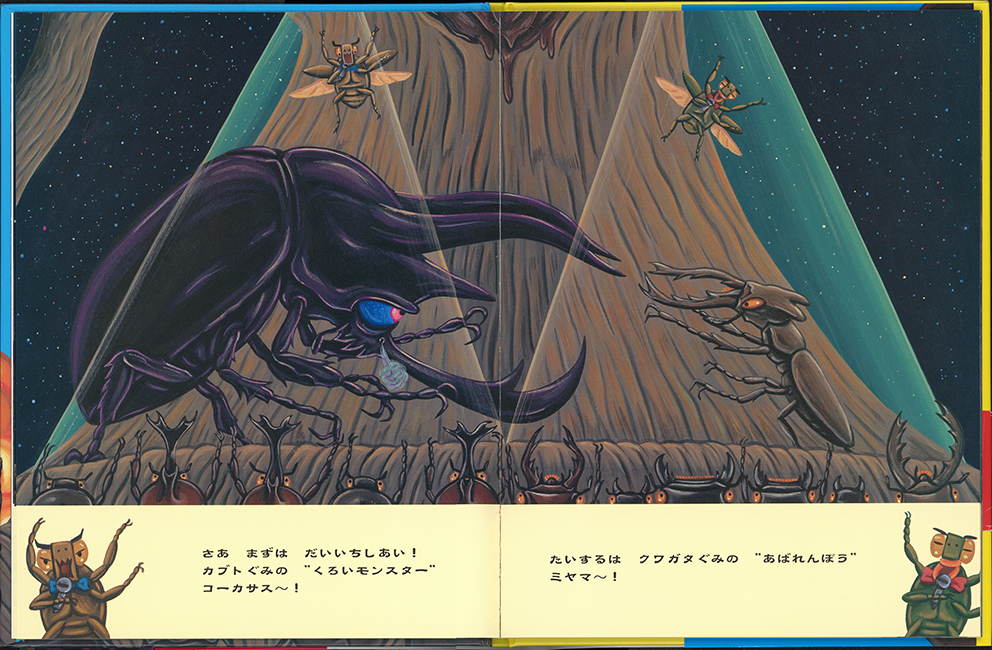
And now, the first match! From the rhinoceros beetle team, here comes "The Black Monster" — Kokasus! And facing him from the stag beetle team, "The Wild One" — Miyama!

8
Mušipuro
Takashi Jamamoto
Kyoiku Gageki Co., 2006


i
translation
There is a commotion at the stadium by the great oak. Rhinoceros beetles versus stag beetles — a match for the sweet sap of the great oak is about to begin. The remarkable shapes of the beetles' shells make for the most extraordinary models in a thrilling dream wrestling match!

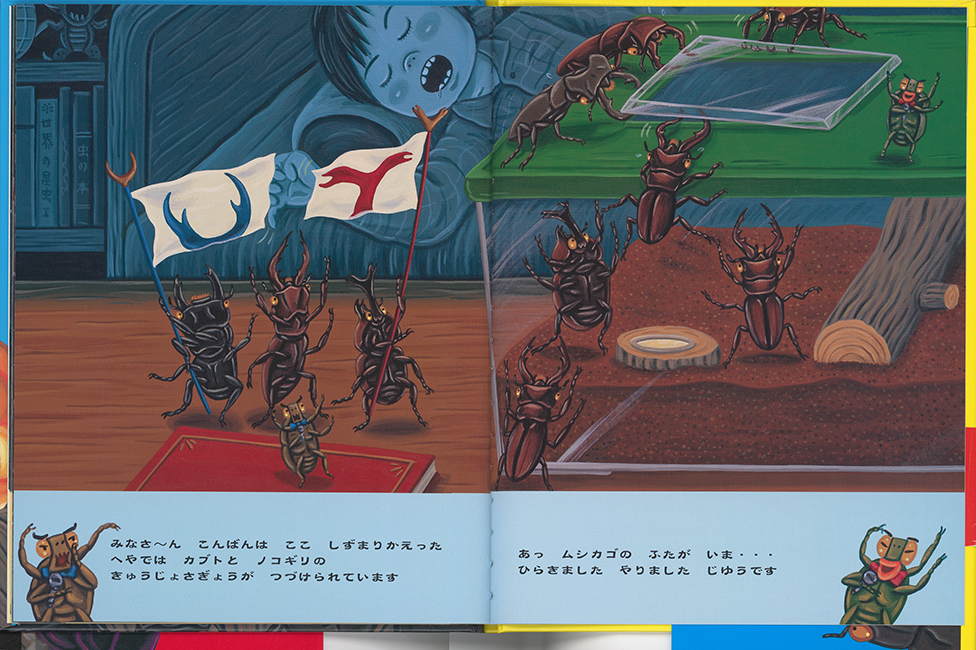
Good evening, ladies and gentlemen! Here in this hushed room, the match between the rhinoceros beetle and the saw stag beetle continues. Oh! The lid of the insect cage has just... opened! They did it — they are free!

Mušipuro
Takashi Jamamoto
Kyoiku Gageki Co.
2006
obálka
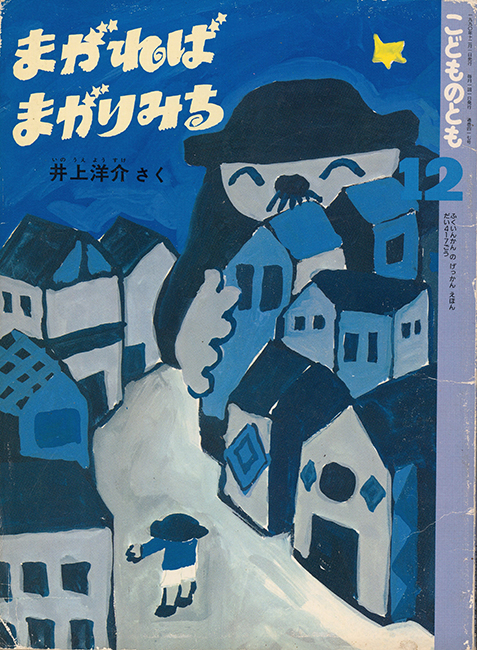
Magareba Magarimiči
Yosuke Inoue
Fukuinkan-Shoten, 1990


i
translation
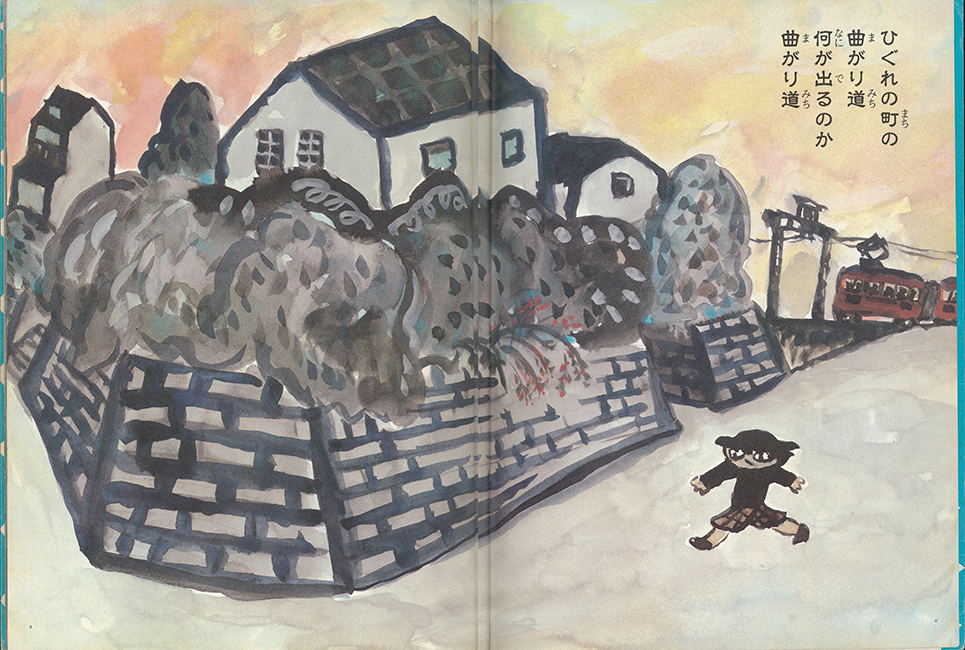
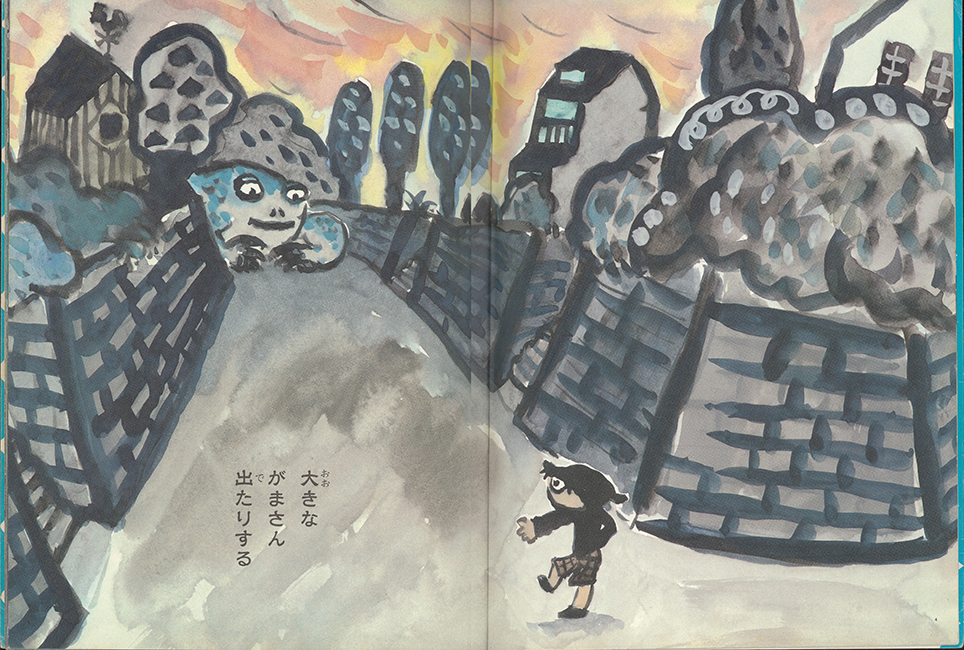
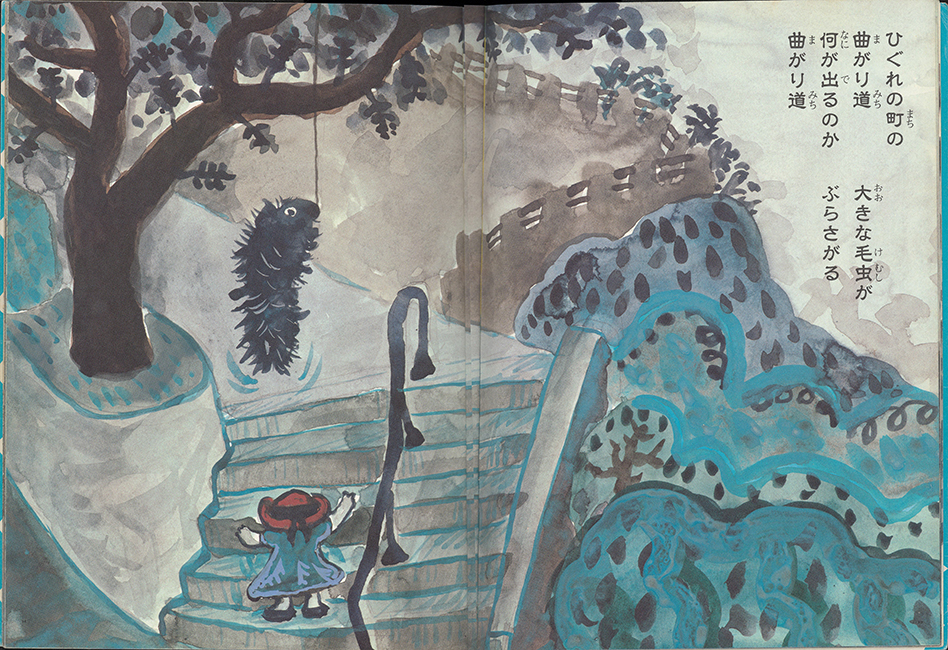
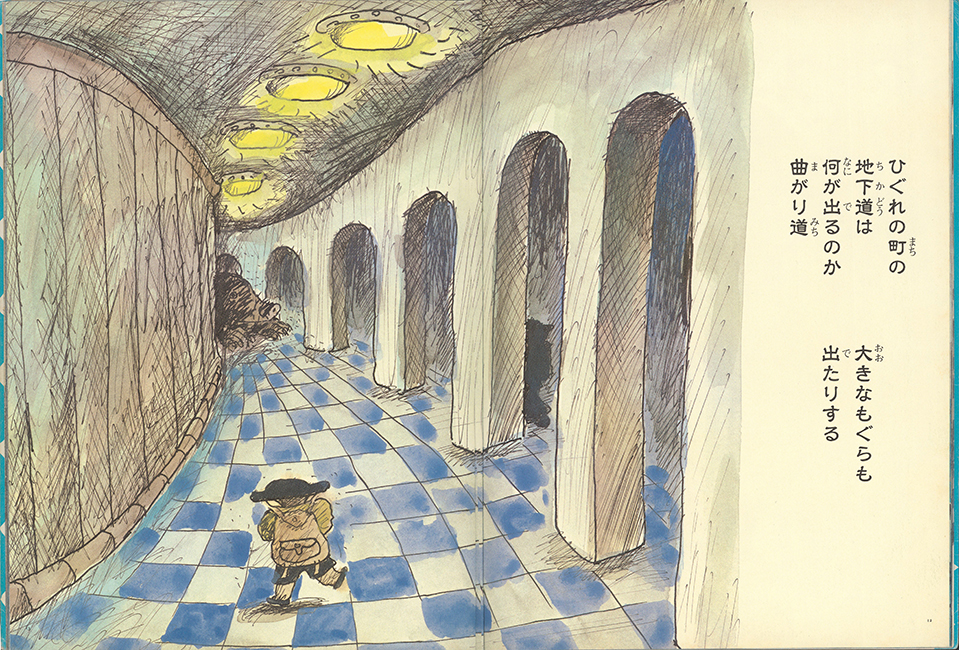
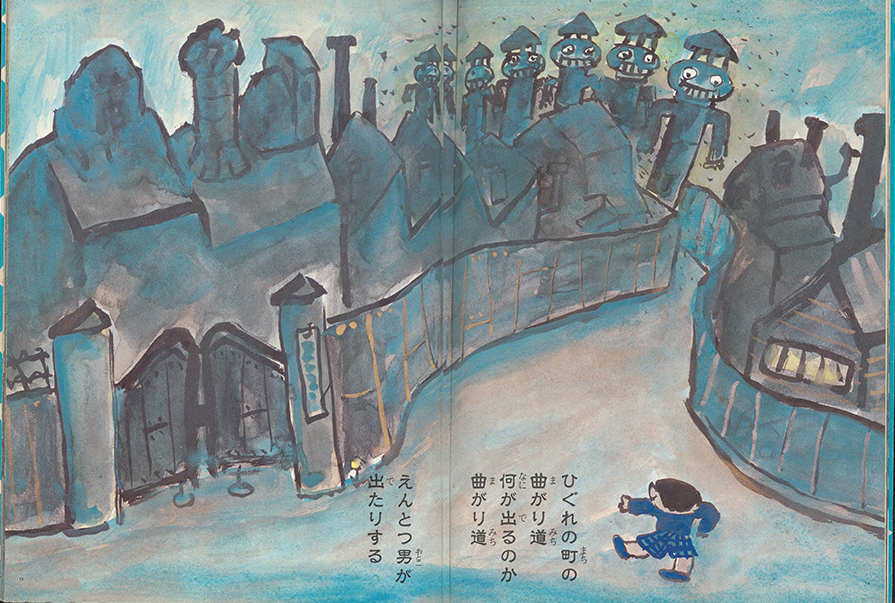
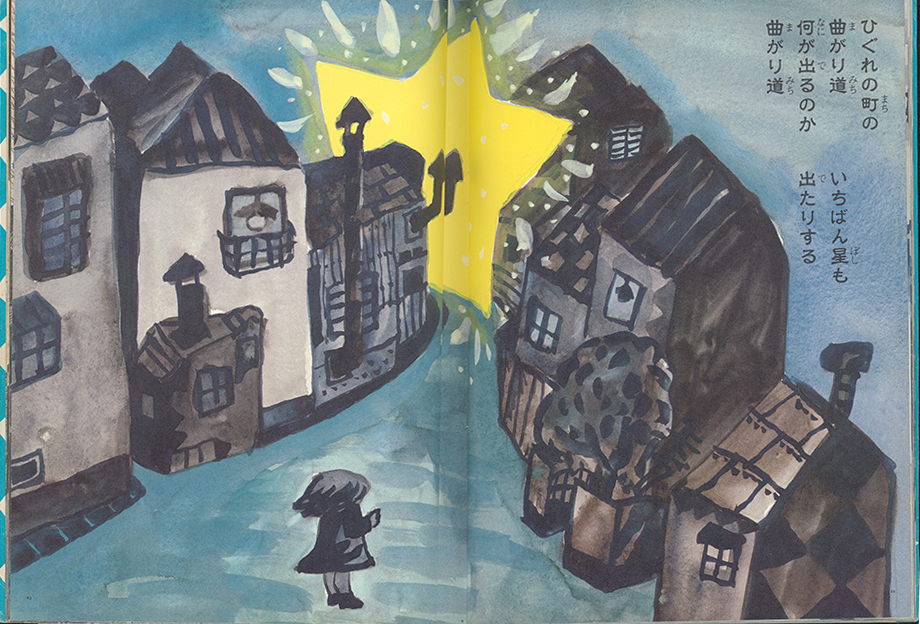
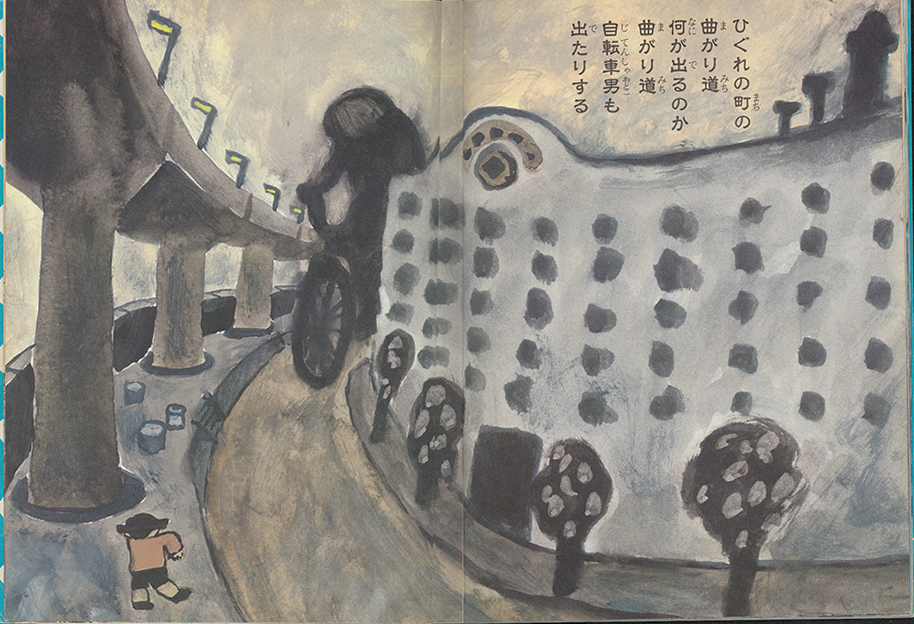
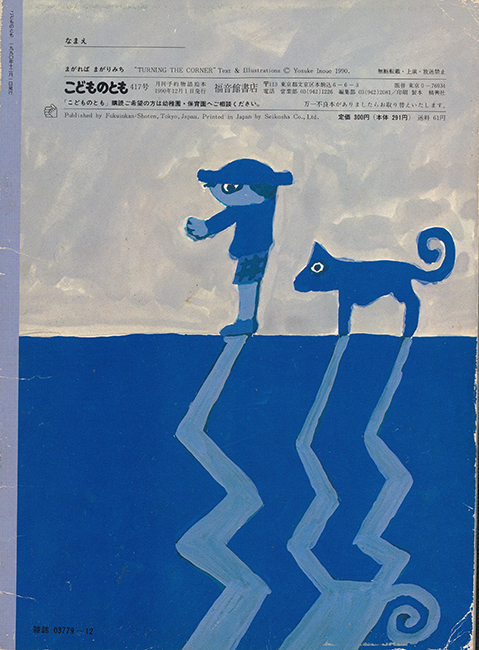
In the book Nagereba magarimichi, we wander along with the main character at dusk through the winding streets of a bluish city, and the remnants of daylight already belong to the night—they suggestively depict dark corners and nooks, the silhouettes in the immediate vicinity take on the form of ghostly beings. Who will I meet around the bend of a winding street? The projection screen of the darkened city presents us with: a giant mole, a rider on a motorbike the size of a skyscraper, ... Personified fear takes on its own, distinct existence. Strange, terrifying.

Around the Corner
Yosuke Inoue 

Kodomo no tomo (Childhood Friend)
number 12


3
Magareba Magarimiči
Yosuke Inoue
Fukuinkan-Shoten, 1990


i
translation
In the book Nagereba magarimichi, we wander along with the main character at dusk through the winding streets of a bluish city, and the remnants of daylight already belong to the night—they suggestively depict dark corners and nooks, the silhouettes in the immediate vicinity take on the form of ghostly beings. Who will I meet around the bend of a winding street? The projection screen of the darkened city presents us with: a giant mole, a rider on a motorbike the size of a skyscraper, ... Personified fear takes on its own, distinct existence. Strange, terrifying.

What might appear on a winding street in a city at dusk? 
A winding street

4
Magareba Magarimiči
Yosuke Inoue
Fukuinkan-Shoten, 1990


i
translation
In the book Nagereba magarimichi, we wander along with the main character at dusk through the winding streets of a bluish city, and the remnants of daylight already belong to the night—they suggestively depict dark corners and nooks, the silhouettes in the immediate vicinity take on the form of ghostly beings. Who will I meet around the bend of a winding street? The projection screen of the darkened city presents us with: a giant mole, a rider on a motorbike the size of a skyscraper, ... Personified fear takes on its own, distinct existence. Strange, terrifying.

A great toad looms up

6
Magareba Magarimiči
Yosuke Inoue
Fukuinkan-Shoten, 1990


i
translation
In the book Nagereba magarimichi, we wander along with the main character at dusk through the winding streets of a bluish city, and the remnants of daylight already belong to the night—they suggestively depict dark corners and nooks, the silhouettes in the immediate vicinity take on the form of ghostly beings. Who will I meet around the bend of a winding street? The projection screen of the darkened city presents us with: a giant mole, a rider on a motorbike the size of a skyscraper, ... Personified fear takes on its own, distinct existence. Strange, terrifying.

What might appear on a winding street in a city at dusk? 
Around the corner hangs a great hairy caterpillar

7
Magareba Magarimiči
Yosuke Inoue
Fukuinkan-Shoten, 1990


i
translation
In the book Nagereba magarimichi, we wander along with the main character at dusk through the winding streets of a bluish city, and the remnants of daylight already belong to the night—they suggestively depict dark corners and nooks, the silhouettes in the immediate vicinity take on the form of ghostly beings. Who will I meet around the bend of a winding street? The projection screen of the darkened city presents us with: a giant mole, a rider on a motorbike the size of a skyscraper, ... Personified fear takes on its own, distinct existence. Strange, terrifying.

What might appear on a winding street in a city at dusk? 
Around the corner loomed a great mole

8
Magareba Magarimiči
Yosuke Inoue
Fukuinkan-Shoten, 1990


i
translation
In the book Nagereba magarimichi, we wander along with the main character at dusk through the winding streets of a bluish city, and the remnants of daylight already belong to the night—they suggestively depict dark corners and nooks, the silhouettes in the immediate vicinity take on the form of ghostly beings. Who will I meet around the bend of a winding street? The projection screen of the darkened city presents us with: a giant mole, a rider on a motorbike the size of a skyscraper, ... Personified fear takes on its own, distinct existence. Strange, terrifying.

What might appear on a winding street in a city at dusk? 
Around the corner loomed chimney boys

12
Magareba Magarimiči
Yosuke Inoue
Fukuinkan-Shoten, 1990


i
translation
In the book Nagereba magarimichi, we wander along with the main character at dusk through the winding streets of a bluish city, and the remnants of daylight already belong to the night—they suggestively depict dark corners and nooks, the silhouettes in the immediate vicinity take on the form of ghostly beings. Who will I meet around the bend of a winding street? The projection screen of the darkened city presents us with: a giant mole, a rider on a motorbike the size of a skyscraper, ... Personified fear takes on its own, distinct existence. Strange, terrifying.

What might appear on a winding street in a city at dusk? 
Around the corner will appear the first star

14
Magareba Magarimiči
Yosuke Inoue
Fukuinkan-Shoten, 1990


i
translation
In the book Nagereba magarimichi, we wander along with the main character at dusk through the winding streets of a bluish city, and the remnants of daylight already belong to the night—they suggestively depict dark corners and nooks, the silhouettes in the immediate vicinity take on the form of ghostly beings. Who will I meet around the bend of a winding street? The projection screen of the darkened city presents us with: a giant mole, a rider on a motorbike the size of a skyscraper, ... Personified fear takes on its own, distinct existence. Strange, terrifying.

What might appear on a winding street in a city at dusk? 
Around the corner will loom a cyclist

18
Magareba Magarimiči
Yosuke Inoue
Fukuinkan-Shoten, 1990


i
translation
In the book Nagereba magarimichi, we wander along with the main character at dusk through the winding streets of a bluish city, and the remnants of daylight already belong to the night—they suggestively depict dark corners and nooks, the silhouettes in the immediate vicinity take on the form of ghostly beings. Who will I meet around the bend of a winding street? The projection screen of the darkened city presents us with: a giant mole, a rider on a motorbike the size of a skyscraper, ... Personified fear takes on its own, distinct existence. Strange, terrifying.

-

Magareba Magarimiči
Yosuke Inoue
Fukuinkan-Shoten
1990
obálka
Fujume gašódan
Tadao Tominari, Toru Mogi, Šinta Čó
Kagaku no tomo, 1986


i
translation
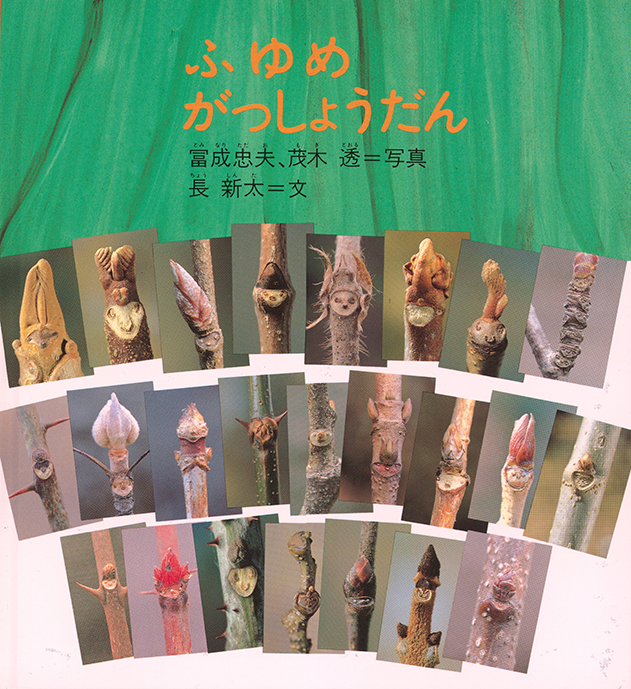
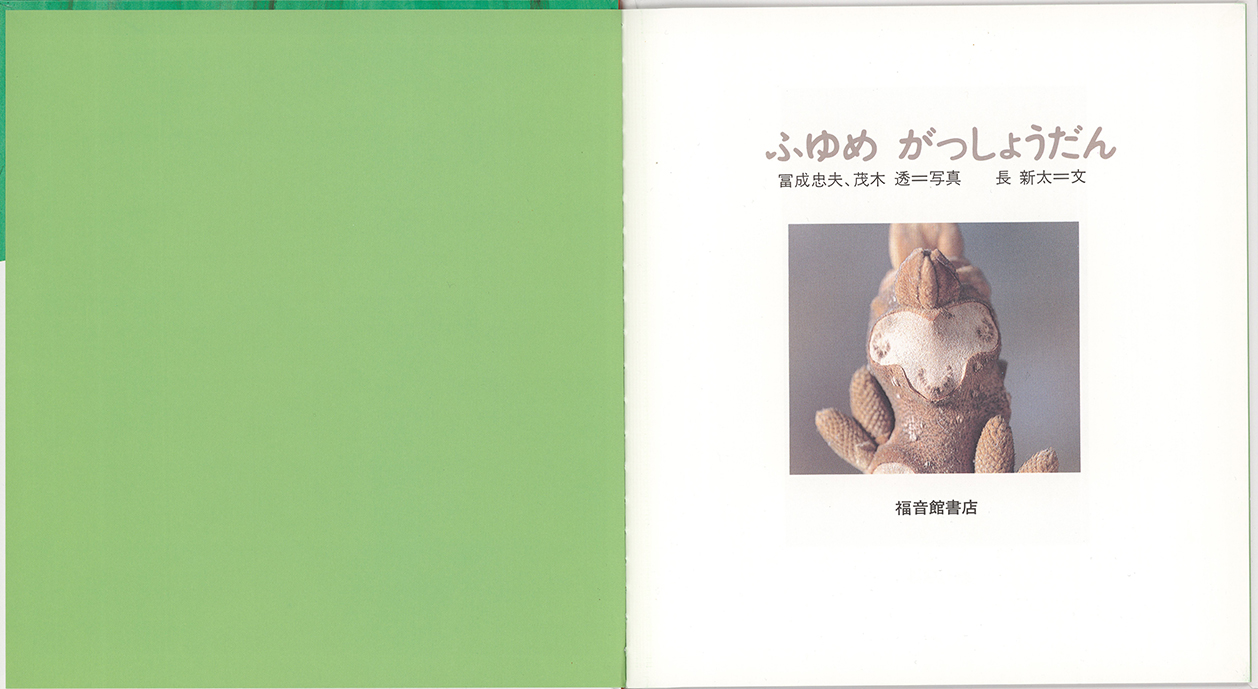
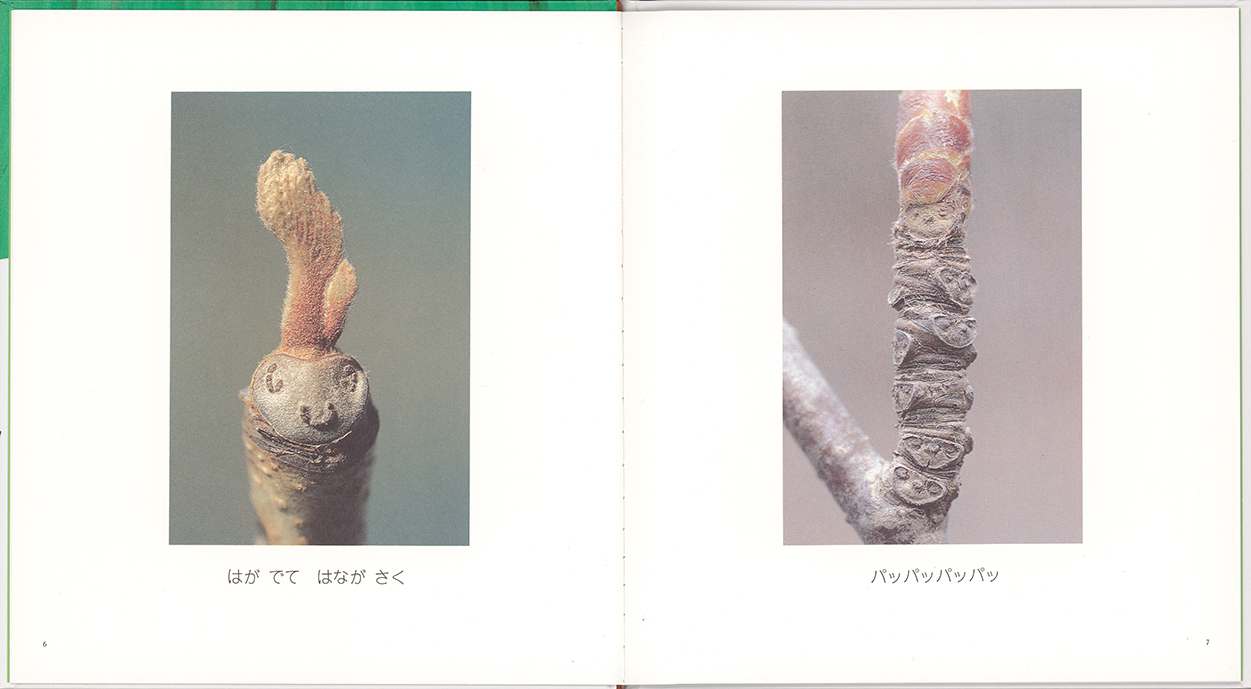
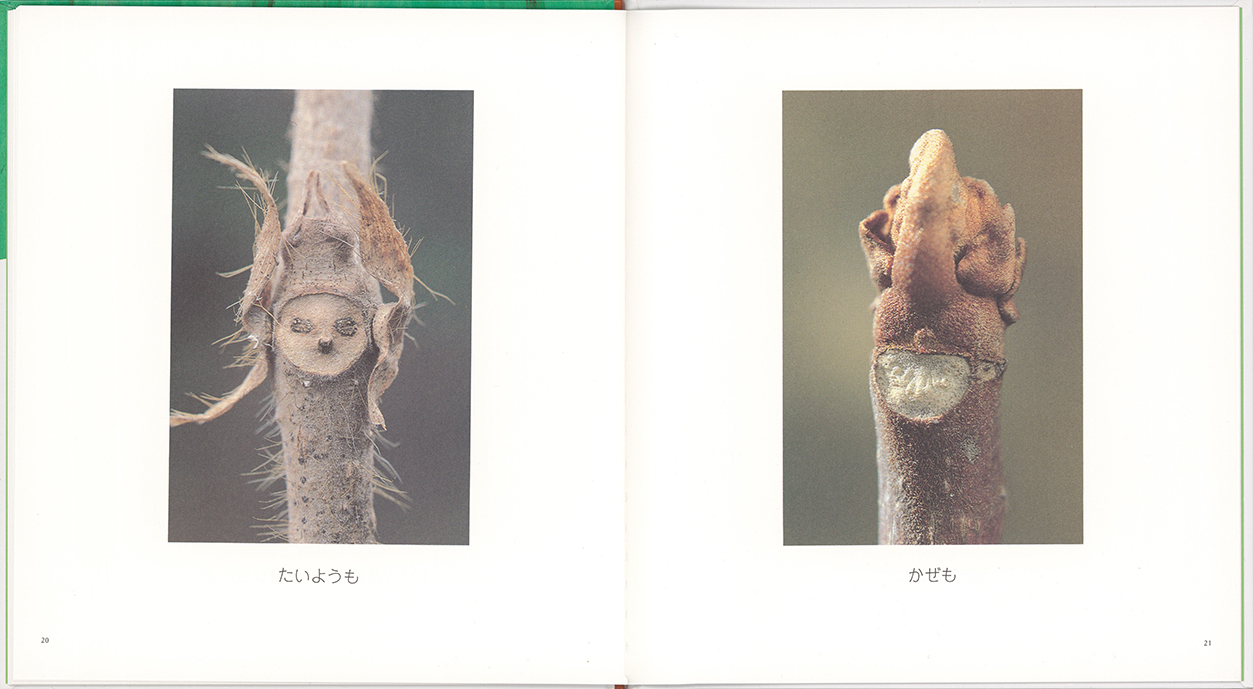
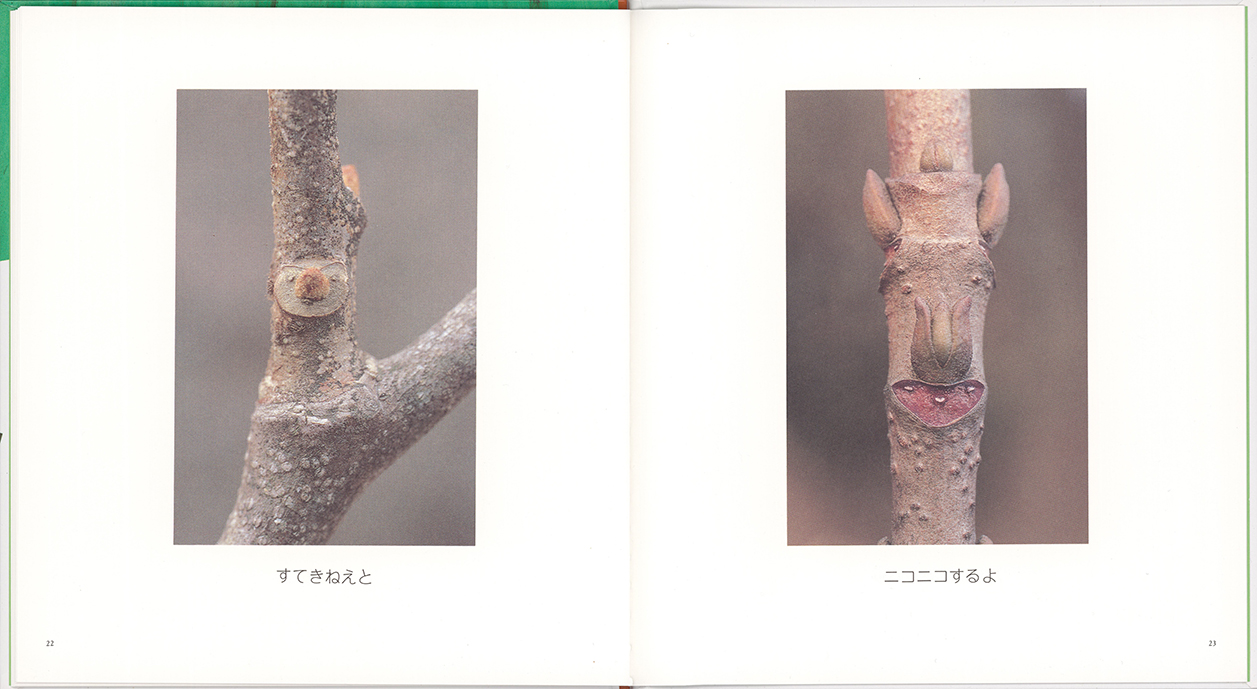
What unexpected things can be found in a sleeping forest? This poetic picture book is composed of photographs of winter buds that resemble all manner of faces. Eyes and mouths are formed by the remnants of the tiny tubes through which the now-fallen leaves were once fed; buds waiting to sprout create curious hairstyles and other facial arrangements. The text was written by the celebrated painter and illustrator Cho Shinta, and the book has gone through 36 editions in Japan. They are, they are — buds!

A Chorus of Winter Buds 

Tadao Tominari, Toru Mogi — photography
Cho Shinta — text

2
Fujume gašódan
Tadao Tominari, Toru Mogi, Šinta Čó
Kagaku no tomo, 1986


i
translation
What unexpected things can be found in a sleeping forest? This poetic picture book is composed of photographs of winter buds that resemble all manner of faces. Eyes and mouths are formed by the remnants of the tiny tubes through which the now-fallen leaves were once fed; buds waiting to sprout create curious hairstyles and other facial arrangements. The text was written by the celebrated painter and illustrator Cho Shinta, and the book has gone through 36 editions in Japan. They are, they are — buds!

A Chorus of Winter Buds 

Tadao Tominari, Toru Mogi — photography
Cho Shinta — text

4
Fujume gašódan
Tadao Tominari, Toru Mogi, Šinta Čó
Kagaku no tomo, 1986


i
translation
What unexpected things can be found in a sleeping forest? This poetic picture book is composed of photographs of winter buds that resemble all manner of faces. Eyes and mouths are formed by the remnants of the tiny tubes through which the now-fallen leaves were once fed; buds waiting to sprout create curious hairstyles and other facial arrangements. The text was written by the celebrated painter and illustrator Cho Shinta, and the book has gone through 36 editions in Japan. They are, they are — buds!

A leaf will sprout, a flower will bloom — puff, puff, puff

8
Fujume gašódan
Tadao Tominari, Toru Mogi, Šinta Čó
Kagaku no tomo, 1986


i
translation
What unexpected things can be found in a sleeping forest? This poetic picture book is composed of photographs of winter buds that resemble all manner of faces. Eyes and mouths are formed by the remnants of the tiny tubes through which the now-fallen leaves were once fed; buds waiting to sprout create curious hairstyles and other facial arrangements. The text was written by the celebrated painter and illustrator Cho Shinta, and the book has gone through 36 editions in Japan. They are, they are — buds!

And the sun, and the wind

9
Fujume gašódan
Tadao Tominari, Toru Mogi, Šinta Čó
Kagaku no tomo, 1986


i
translation
What unexpected things can be found in a sleeping forest? This poetic picture book is composed of photographs of winter buds that resemble all manner of faces. Eyes and mouths are formed by the remnants of the tiny tubes through which the now-fallen leaves were once fed; buds waiting to sprout create curious hairstyles and other facial arrangements. The text was written by the celebrated painter and illustrator Cho Shinta, and the book has gone through 36 editions in Japan. They are, they are — buds!

They are so wonderful they say, laughing

Fujume gašódan
Tadao Tominari, Toru Mogi, Šinta Čó
Kagaku no tomo
1986
obálka
Pan dorobou
Keiko Shibata
Kadokawa, 2020


i
translation
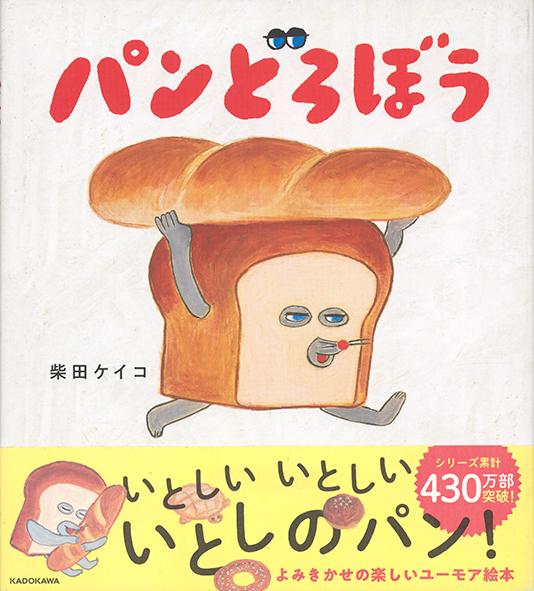
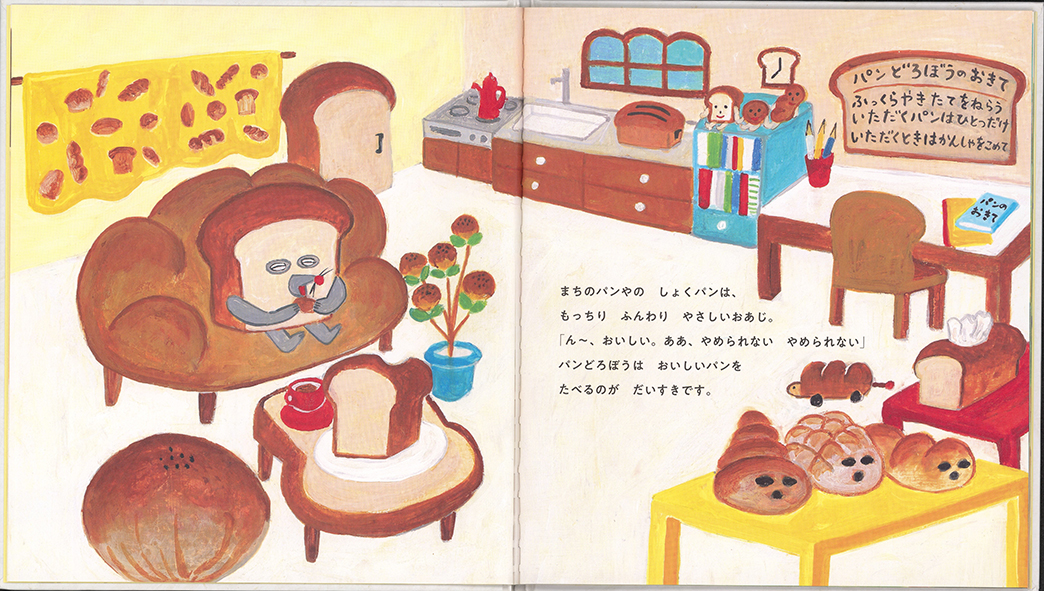
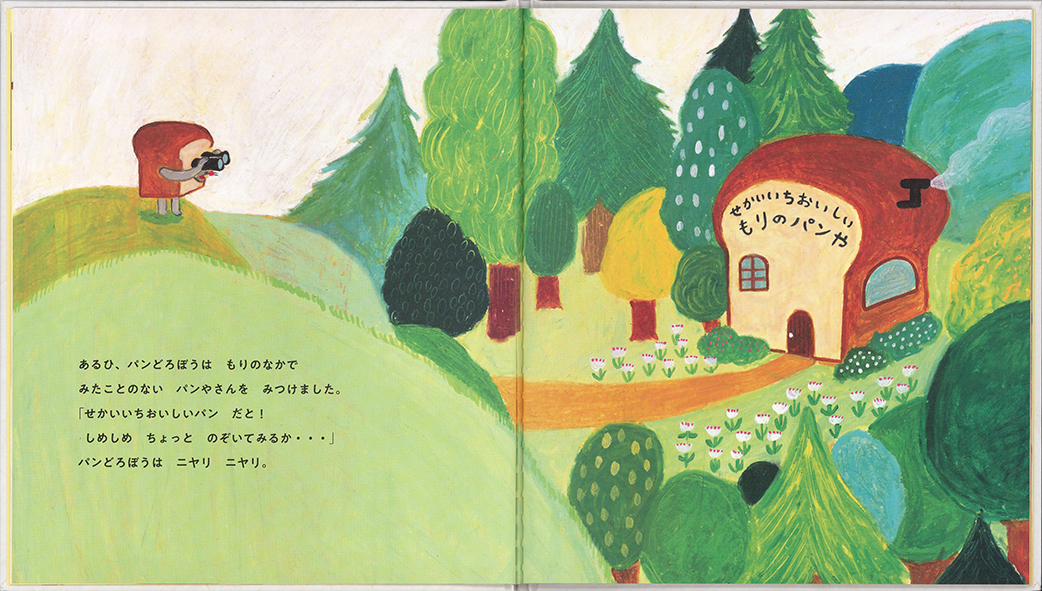
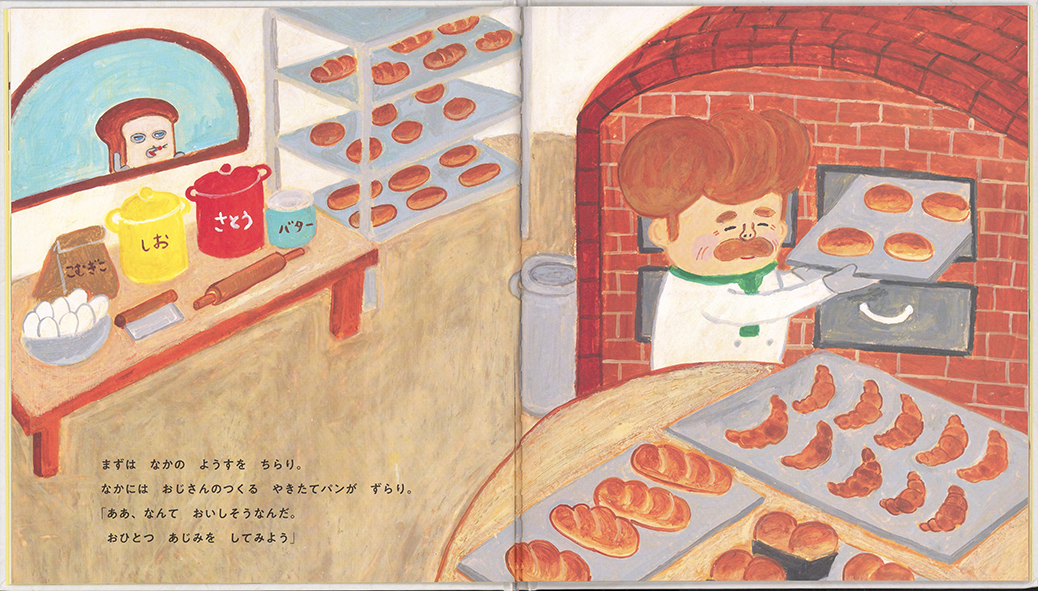
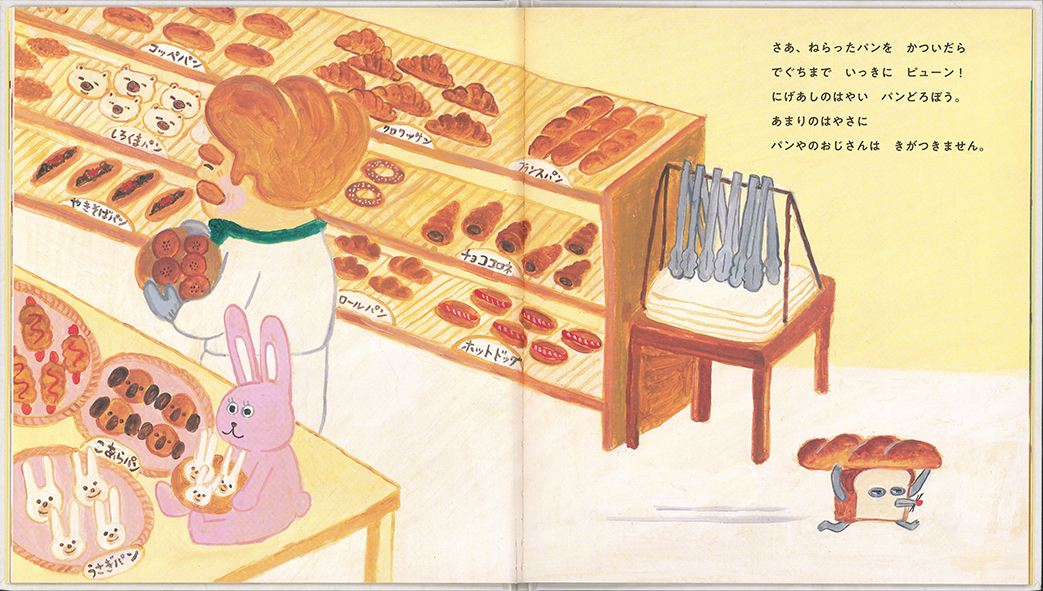
"A bread thief who loves baked goods, seeks out bread from all over the world. And today too, he sneaks into the bakery!" The Bread Thief, created by illustrator Keiko Shibata, can be found not only in a book series but across a wide range of merchandise, from plush toys (including a life-size mascot) to calendars and keychain charms made for special vending machines. A Bread Thief exhibition is touring Japan, and an anime of the same name is in the works. The Bread Thief is currently the best-selling book of the Reiwa era, with five million copies sold.

The Bread Thief 
Keiko Shibata

My dear, my dear, sweet bread!

4
Pan dorobou
Keiko Shibata
Kadokawa, 2020


i
translation
"A bread thief who loves baked goods, seeks out bread from all over the world. And today too, he sneaks into the bakery!" The Bread Thief, created by illustrator Keiko Shibata, can be found not only in a book series but across a wide range of merchandise, from plush toys (including a life-size mascot) to calendars and keychain charms made for special vending machines. A Bread Thief exhibition is touring Japan, and an anime of the same name is in the works. The Bread Thief is currently the best-selling book of the Reiwa era, with five million copies sold.

[The Corner Bakery] 
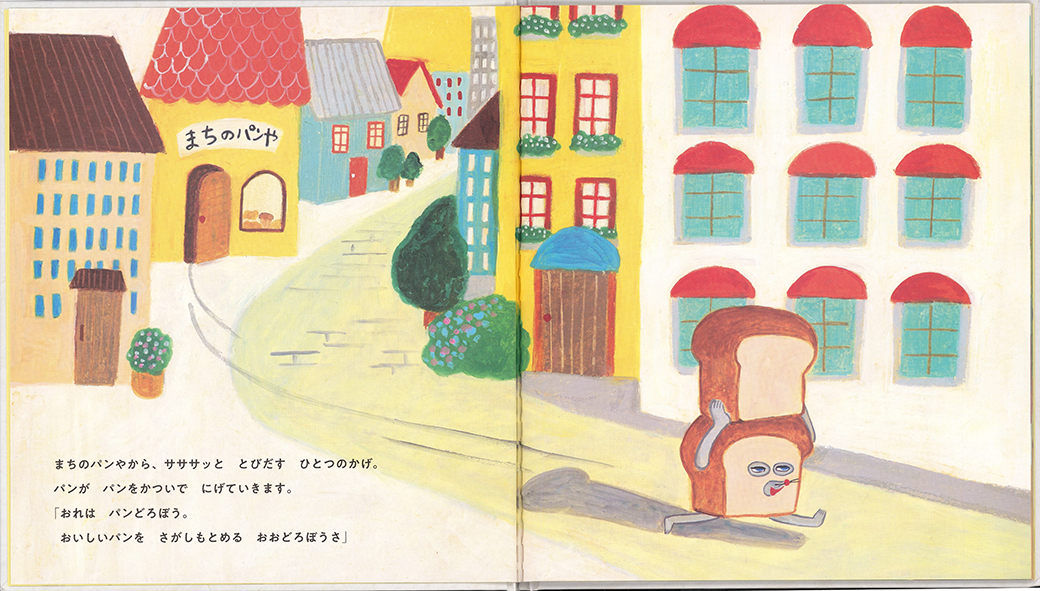
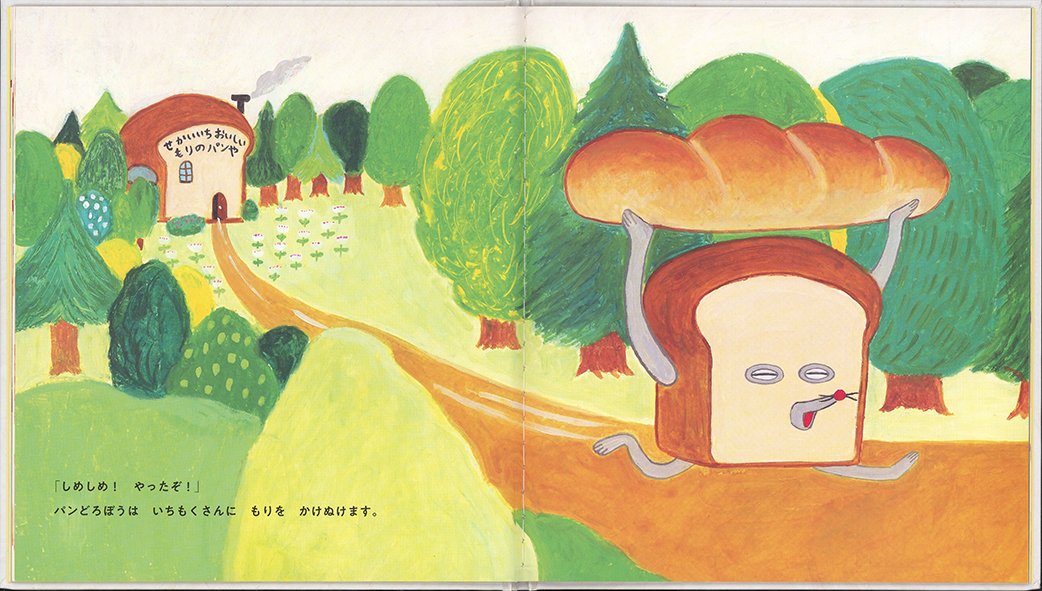
A shadow shot out from the bakery on the corner. Bread clutching bread, running away with it. "I am the Bread Thief! A master thief who goes after the finest baked goods."

5
Pan dorobou
Keiko Shibata
Kadokawa, 2020


i
translation
"A bread thief who loves baked goods, seeks out bread from all over the world. And today too, he sneaks into the bakery!" The Bread Thief, created by illustrator Keiko Shibata, can be found not only in a book series but across a wide range of merchandise, from plush toys (including a life-size mascot) to calendars and keychain charms made for special vending machines. A Bread Thief exhibition is touring Japan, and an anime of the same name is in the works. The Bread Thief is currently the best-selling book of the Reiwa era, with five million copies sold.

The bread from the corner bakery is soft, fluffy and delicate. "What a treat. I just can't stop eating it." The Bread Thief loves eating good bread more than anything.

6
Pan dorobou
Keiko Shibata
Kadokawa, 2020


i
translation
"A bread thief who loves baked goods, seeks out bread from all over the world. And today too, he sneaks into the bakery!" The Bread Thief, created by illustrator Keiko Shibata, can be found not only in a book series but across a wide range of merchandise, from plush toys (including a life-size mascot) to calendars and keychain charms made for special vending machines. A Bread Thief exhibition is touring Japan, and an anime of the same name is in the works. The Bread Thief is currently the best-selling book of the Reiwa era, with five million copies sold.

One day the Bread Thief found a bakery deep in the forest that he had never seen before. "They say it's the best bread in the world? What if I just took a little peek inside?" He smiles beneath his whiskers.

7
Pan dorobou
Keiko Shibata
Kadokawa, 2020


i
translation
"A bread thief who loves baked goods, seeks out bread from all over the world. And today too, he sneaks into the bakery!" The Bread Thief, created by illustrator Keiko Shibata, can be found not only in a book series but across a wide range of merchandise, from plush toys (including a life-size mascot) to calendars and keychain charms made for special vending machines. A Bread Thief exhibition is touring Japan, and an anime of the same name is in the works. The Bread Thief is currently the best-selling book of the Reiwa era, with five million copies sold.

He peered inside to see what it looked like. Inside, rows of freshly baked goods line the shelves, just out of the oven. "My, that looks delicious. I must try one."

10
Pan dorobou
Keiko Shibata
Kadokawa, 2020


i
translation
"A bread thief who loves baked goods, seeks out bread from all over the world. And today too, he sneaks into the bakery!" The Bread Thief, created by illustrator Keiko Shibata, can be found not only in a book series but across a wide range of merchandise, from plush toys (including a life-size mascot) to calendars and keychain charms made for special vending machines. A Bread Thief exhibition is touring Japan, and an anime of the same name is in the works. The Bread Thief is currently the best-selling book of the Reiwa era, with five million copies sold.

He slings the bread over his shoulder and dashes toward the exit. This Bread Thief has very quick feet. He is so fast that the baker doesn't notice him at all.

11
Pan dorobou
Keiko Shibata
Kadokawa, 2020


i
translation
"A bread thief who loves baked goods, seeks out bread from all over the world. And today too, he sneaks into the bakery!" The Bread Thief, created by illustrator Keiko Shibata, can be found not only in a book series but across a wide range of merchandise, from plush toys (including a life-size mascot) to calendars and keychain charms made for special vending machines. A Bread Thief exhibition is touring Japan, and an anime of the same name is in the works. The Bread Thief is currently the best-selling book of the Reiwa era, with five million copies sold.

[forest bakery, the best in the world] 
"Hooray, I did it!" He dashes out of the forest.

Pan dorobou
Keiko Shibata
Kadokawa
2020
obálka
Čísana Ki
Eiko Kadono, Miho Satake
Kaisei-sha, 2023


i
translation
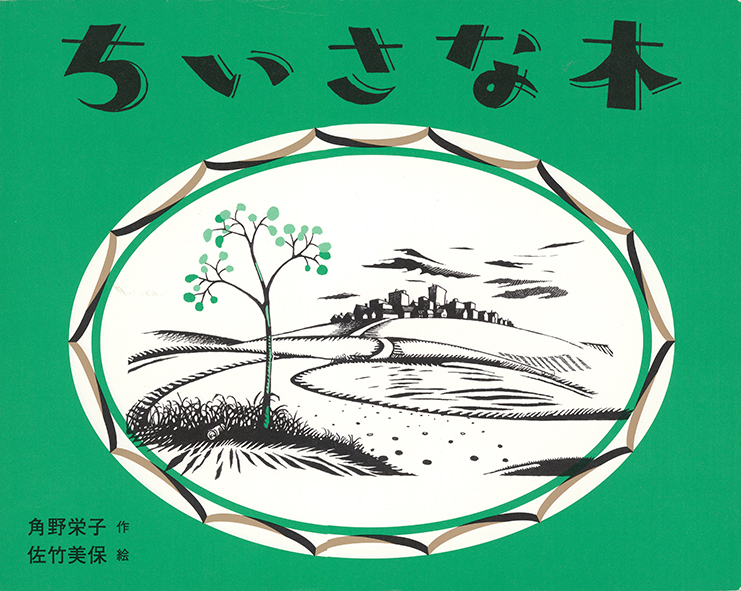
A lonely little tree on an abandoned road receives an impulse from a wandering dog, and together they decide to find a place they will love. The tree pulls its roots out of the ground and discovers that it can walk! Along the way, a stone and a lake join them, and together they journey toward their dream destination. The book explores the idea that even what seems impossible at first can be achieved.

A Little Tree
Eiko Kadono, Miho Satake

16
Čísana Ki
Eiko Kadono, Miho Satake
Kaisei-sha, 2023


i
translation
A lonely little tree on an abandoned road receives an impulse from a wandering dog, and together they decide to find a place they will love. The tree pulls its roots out of the ground and discovers that it can walk! Along the way, a stone and a lake join them, and together they journey toward their dream destination. The book explores the idea that even what seems impossible at first can be achieved.

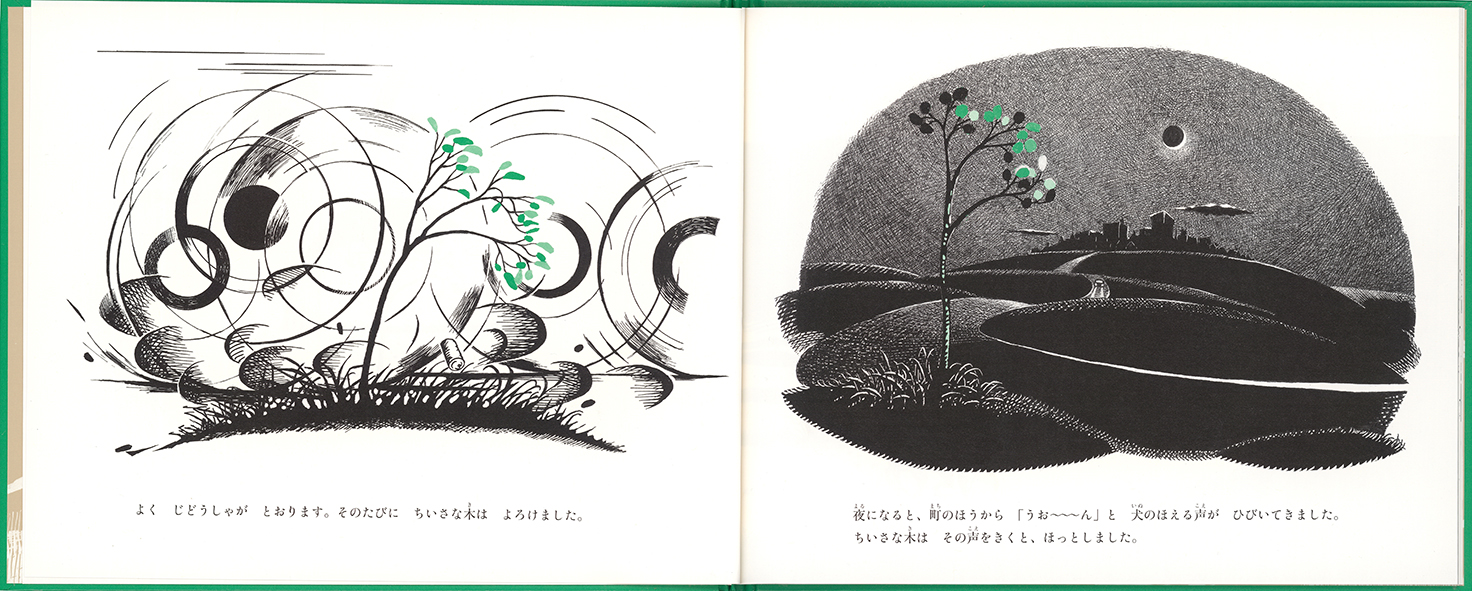
Cars often drove past. And every time, the little tree trembled. When night came, a "woooon" echoed from the town — a dog's bark carried far into the distance. When the little tree heard that voice, it felt relieved.

19
Čísana Ki
Eiko Kadono, Miho Satake
Kaisei-sha, 2023


i
translation
A lonely little tree on an abandoned road receives an impulse from a wandering dog, and together they decide to find a place they will love. The tree pulls its roots out of the ground and discovers that it can walk! Along the way, a stone and a lake join them, and together they journey toward their dream destination. The book explores the idea that even what seems impossible at first can be achieved.

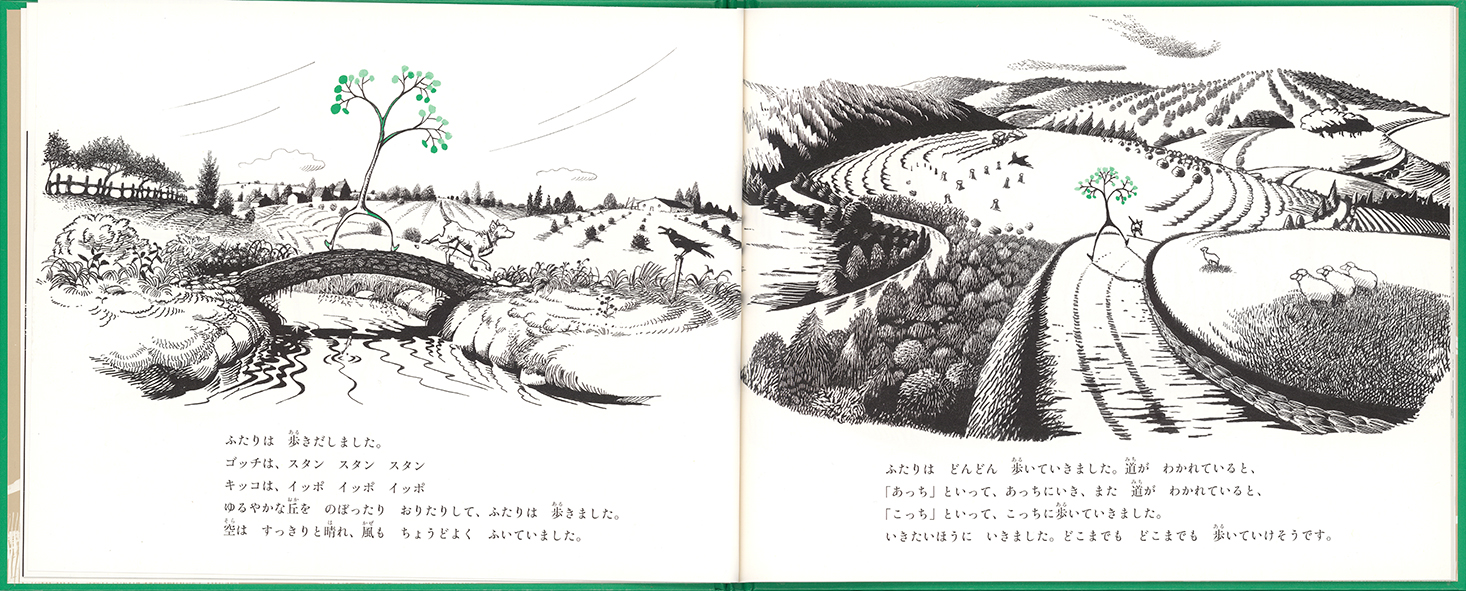
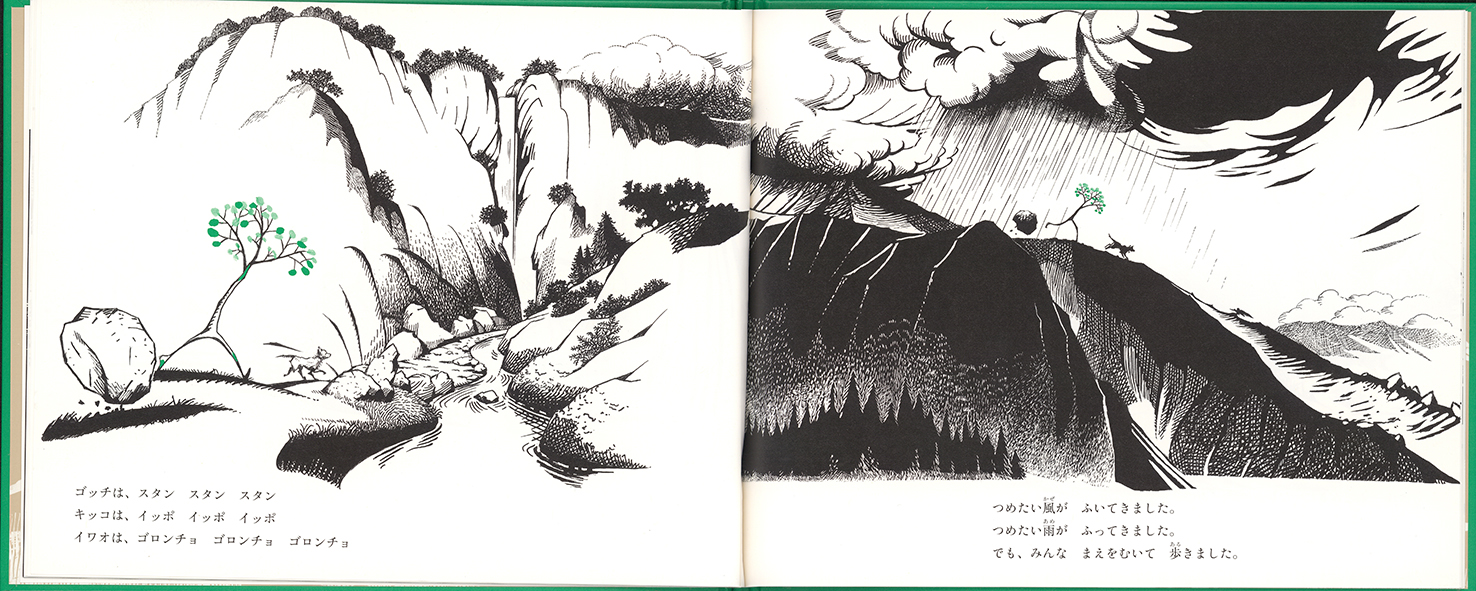
The two of them set off on their journey. Gogh walked: thump, thump, thump. Kikko walked: step, step, step. They went up and down gentle hills and walked on. The sky was a bright blue and a pleasant breeze was blowing. They walked and walked. When the road forked, they said: "That way!" and went there. And when it forked again, they said: "This way!" and went another way. They went wherever they wanted. It seemed as though they could walk forever, anywhere and as far as they wished.

22
Čísana Ki
Eiko Kadono, Miho Satake
Kaisei-sha, 2023


i
translation
A lonely little tree on an abandoned road receives an impulse from a wandering dog, and together they decide to find a place they will love. The tree pulls its roots out of the ground and discovers that it can walk! Along the way, a stone and a lake join them, and together they journey toward their dream destination. The book explores the idea that even what seems impossible at first can be achieved.

Gogh walked: thump, thump, thump. Kikko walked: step, step, step. Iwao rolled: thud, thud, thud. A cold wind began to blow. A cold rain began to fall. But they all kept going, with their faces turned forward.

25
Čísana Ki
Eiko Kadono, Miho Satake
Kaisei-sha, 2023


i
translation
A lonely little tree on an abandoned road receives an impulse from a wandering dog, and together they decide to find a place they will love. The tree pulls its roots out of the ground and discovers that it can walk! Along the way, a stone and a lake join them, and together they journey toward their dream destination. The book explores the idea that even what seems impossible at first can be achieved.

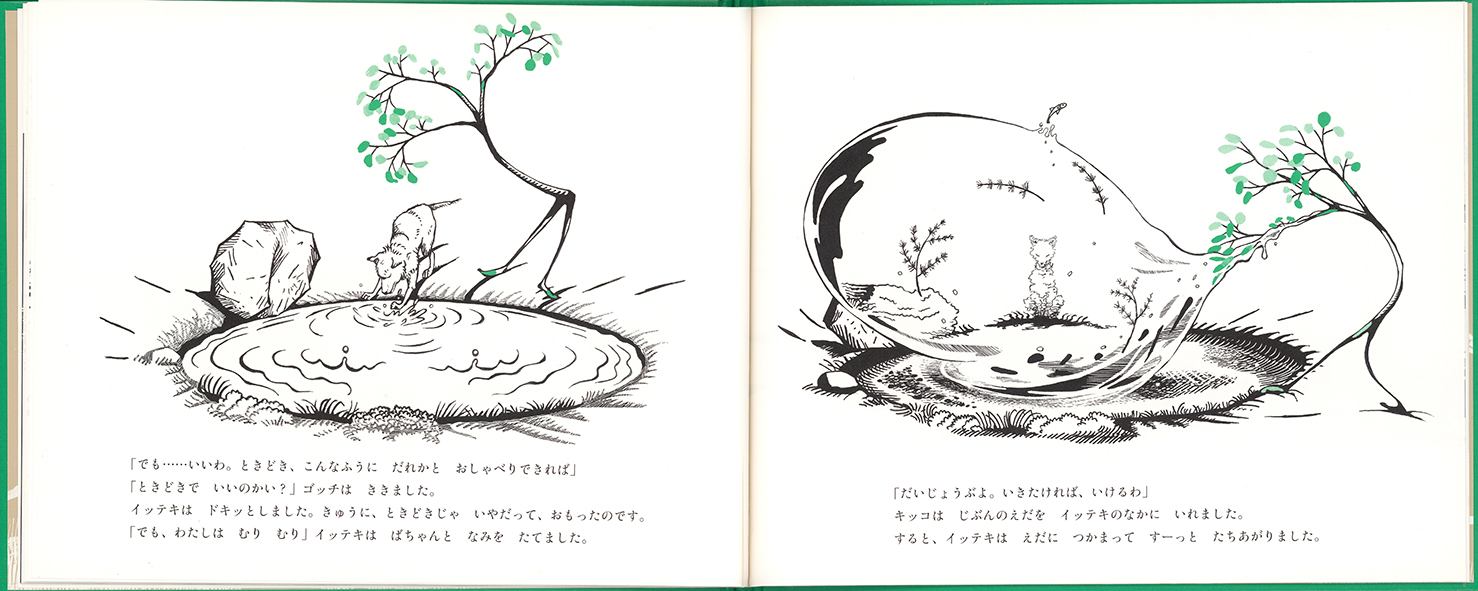
"But... that's alright. It's enough if I can chat with someone like this every now and then." "Every now and then is enough for you?" asked Gogh. Itcche paused. Just a moment ago she had thought that "every now and then" was not enough. "But I can't, it's impossible," Itcche rippled the water with a loud splash. "That's alright. When you want to go, you'll be able to," said Kikko. Then she dipped her branch into Itcche. And Itcche grabbed hold of that branch and rose up lightly and smoothly.

26
Čísana Ki
Eiko Kadono, Miho Satake
Kaisei-sha, 2023


i
translation
A lonely little tree on an abandoned road receives an impulse from a wandering dog, and together they decide to find a place they will love. The tree pulls its roots out of the ground and discovers that it can walk! Along the way, a stone and a lake join them, and together they journey toward their dream destination. The book explores the idea that even what seems impossible at first can be achieved.

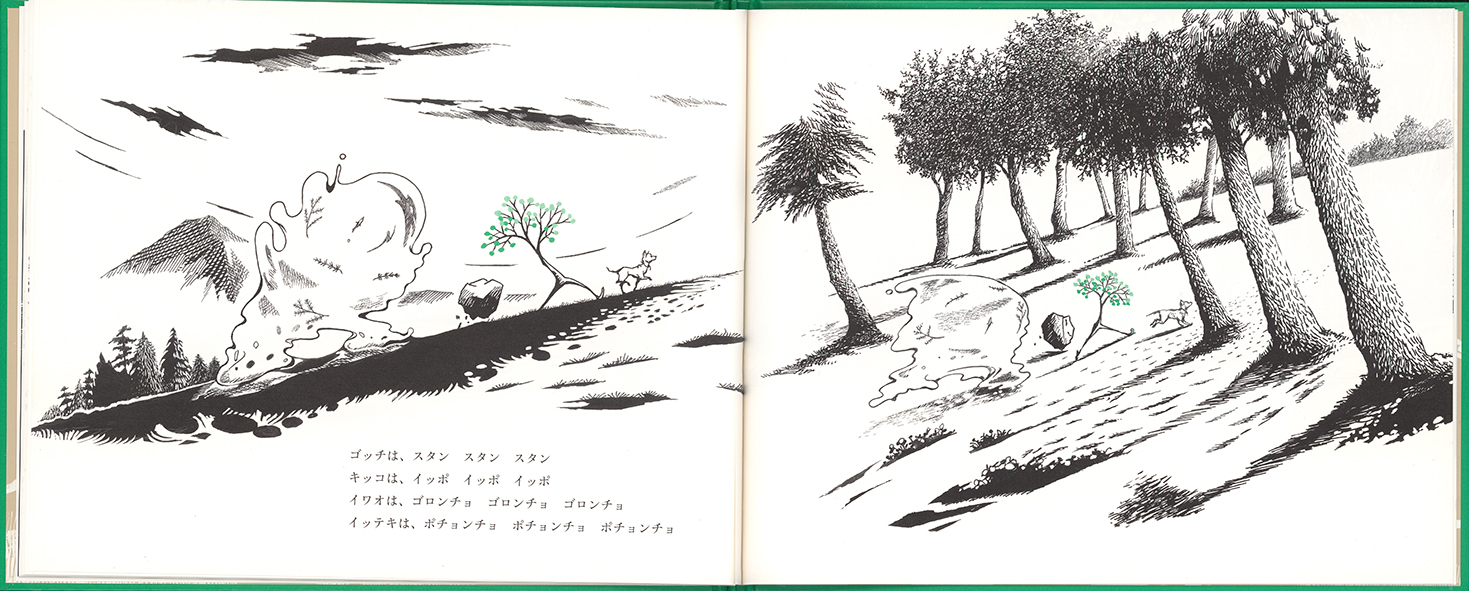
Gogh walked: thump, thump, thump. 
Kikko walked: step, step, step. 
Iwao rolled: thud-thud, thud-thud, thud-thud. 
Itcche bounced: splash-splash, splash-splash, splash-splash.

29
Čísana Ki
Eiko Kadono, Miho Satake
Kaisei-sha, 2023


i
translation
A lonely little tree on an abandoned road receives an impulse from a wandering dog, and together they decide to find a place they will love. The tree pulls its roots out of the ground and discovers that it can walk! Along the way, a stone and a lake join them, and together they journey toward their dream destination. The book explores the idea that even what seems impossible at first can be achieved.

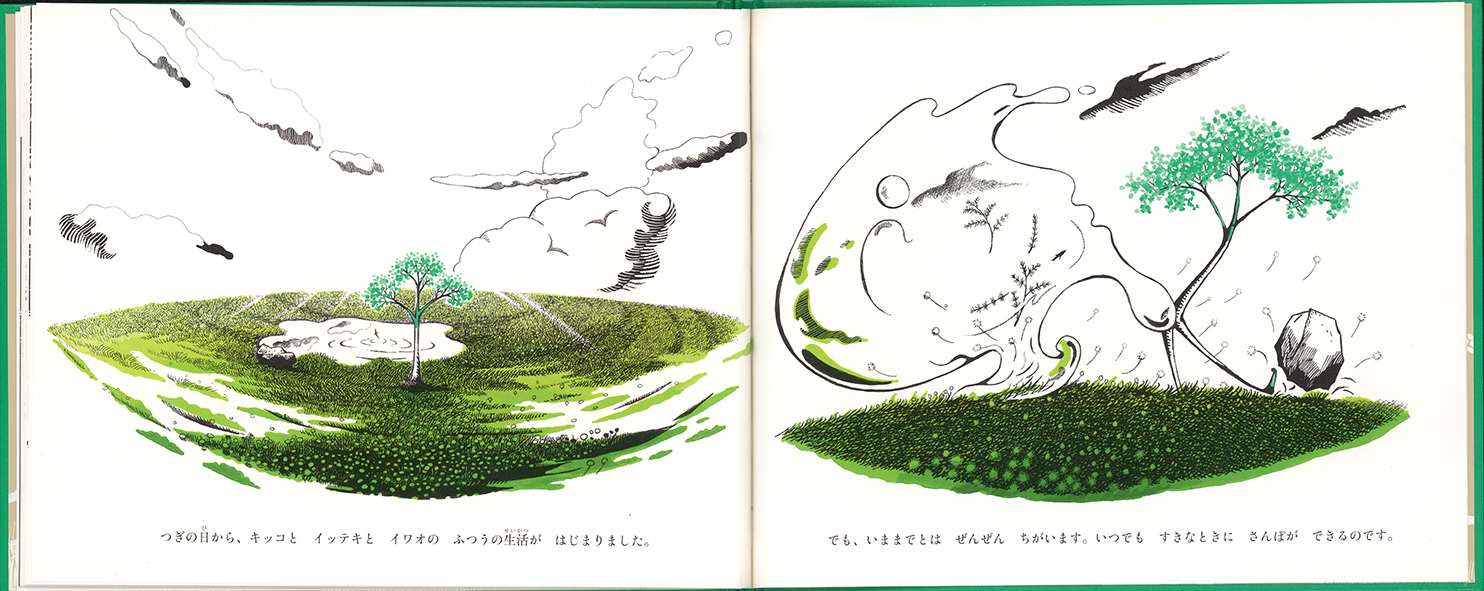
From the following day, Kikko, Itcche and Iwao began their ordinary life. But it was completely different from before. Now they could set off for a walk whenever they wanted, whenever the mood took them.

Čísana Ki
Eiko Kadono, Miho Satake
Kaisei-sha
2023
obálka
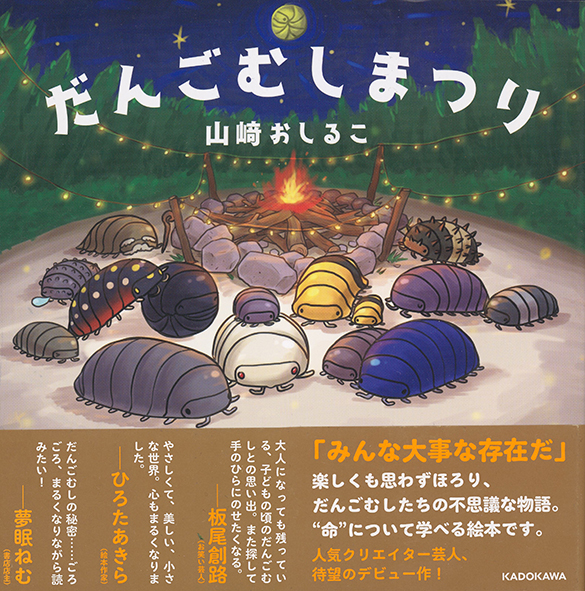
Dangomuši macuri
Yamasaki Oshiruko
Kadokawa, 2024


i
translation
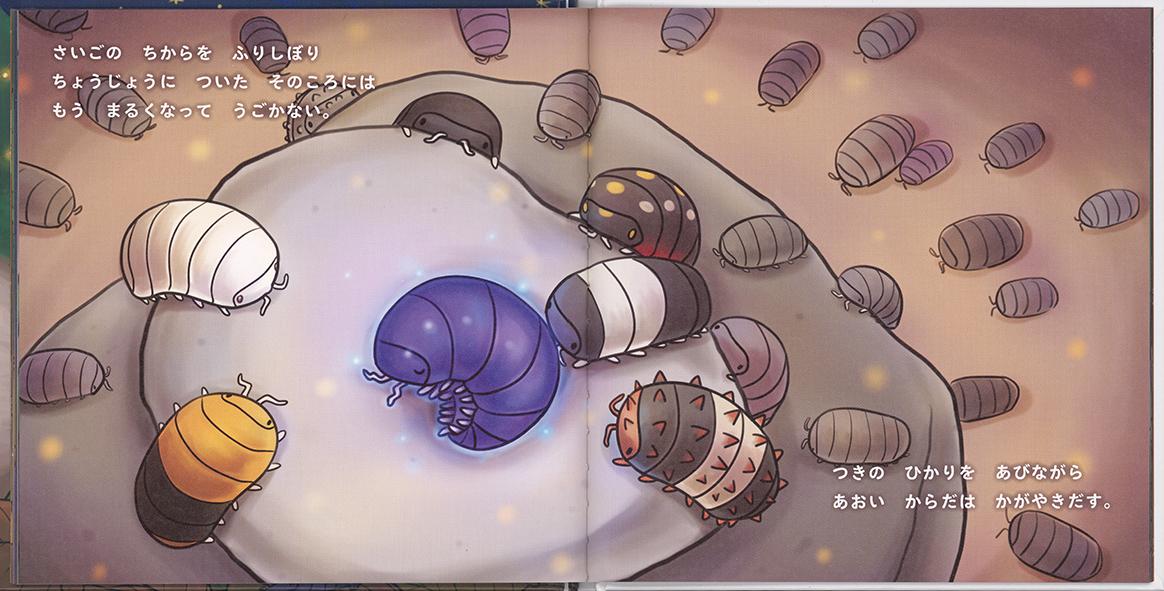
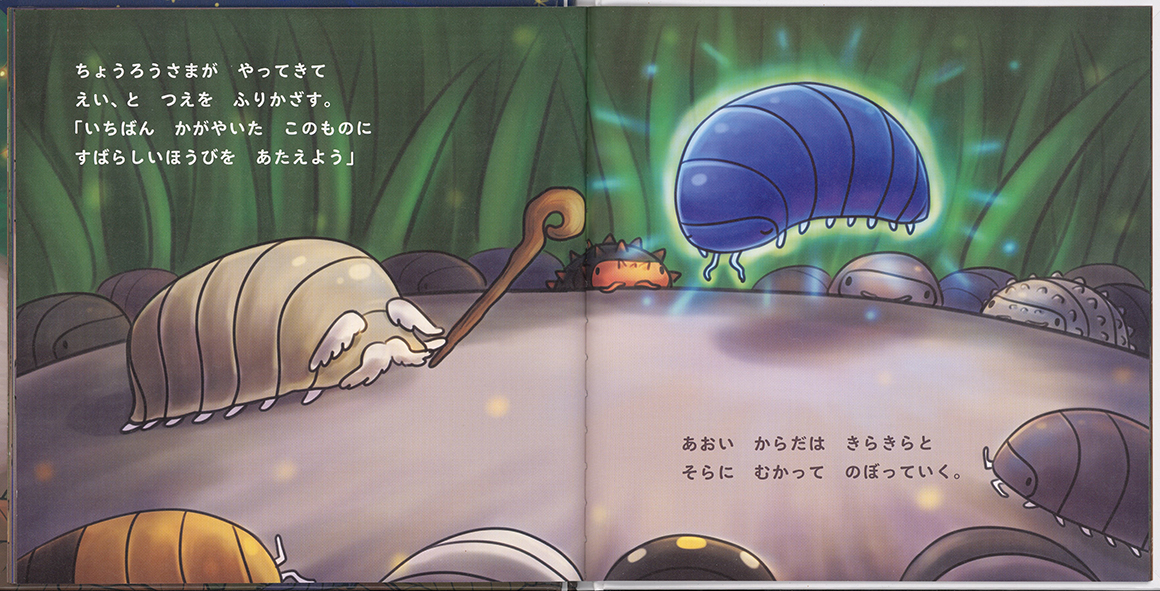
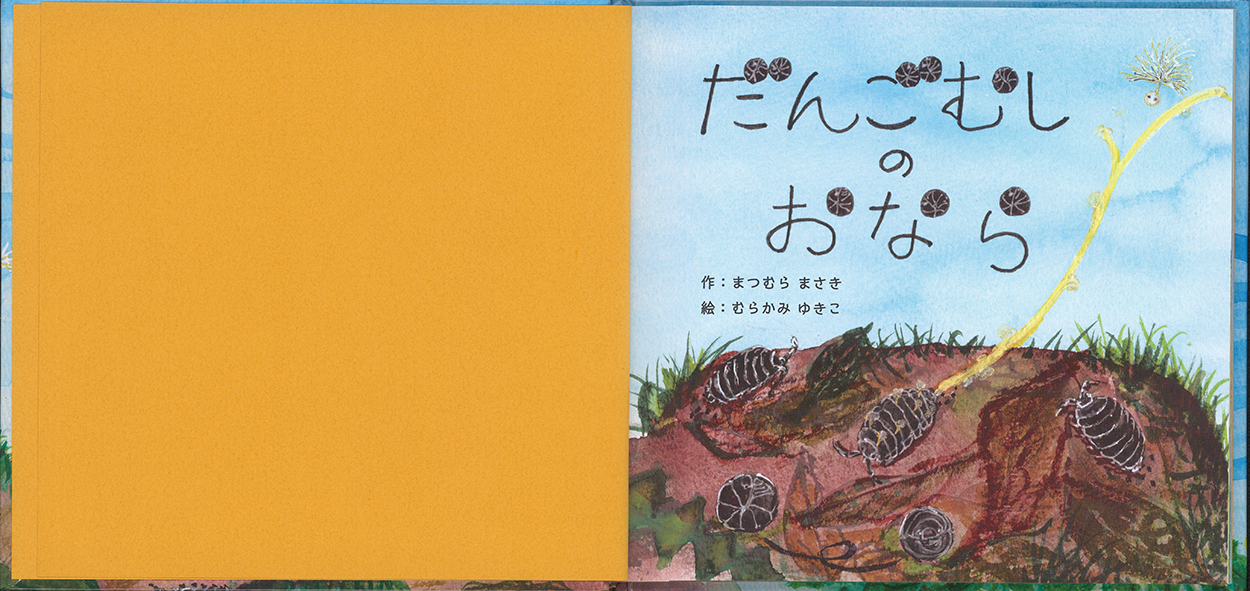
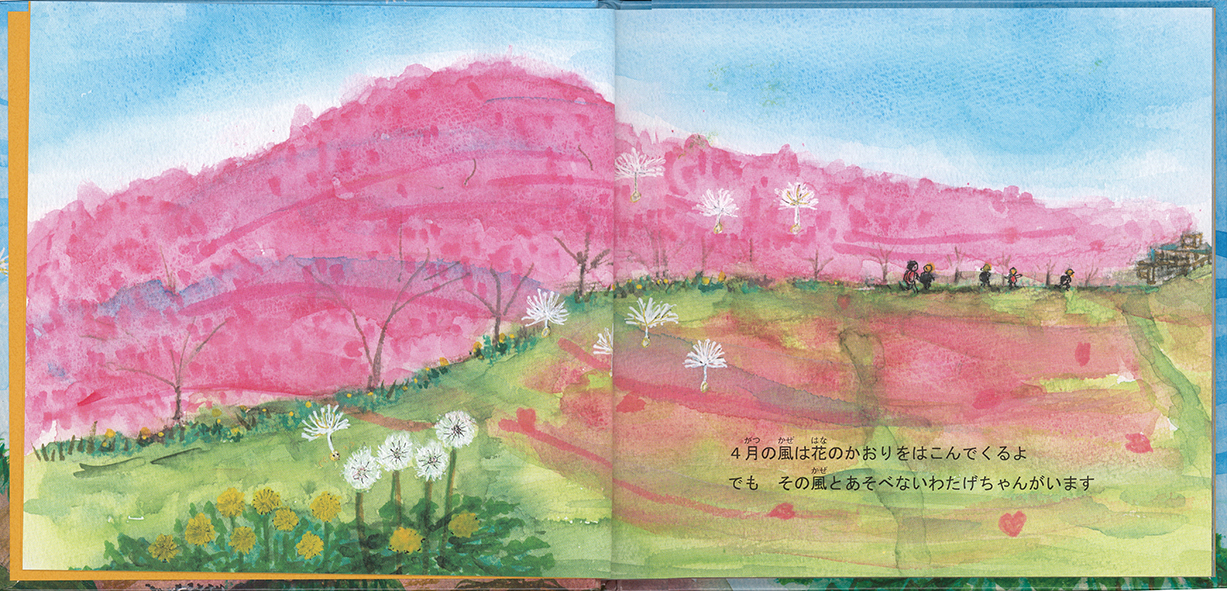
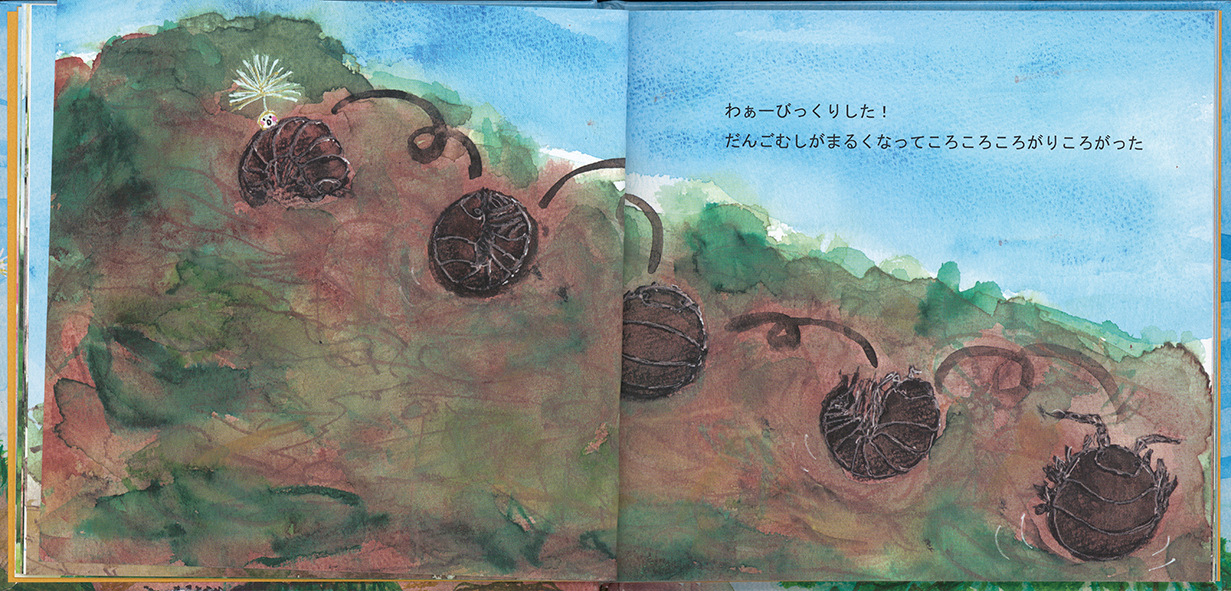
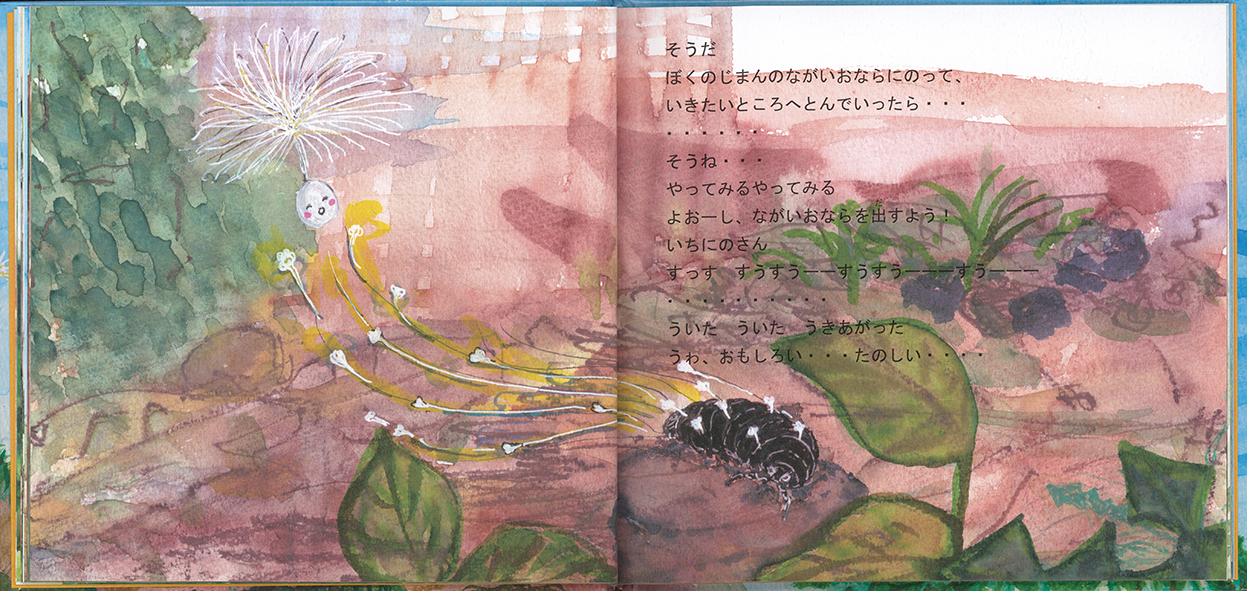
Evening falls, and the pill bugs are preparing for a great celebration. At tonight's celebration, the most radiant creature will receive a wonderful prize. Who will the elder honor with the great reward? YouTuber, musician and pill bug enthusiast Yamasaki Oshiruko has created an extraordinarily sensitive and popular story about death, which has already gone through seven editions.

The Pill Bug Celebration 
Yamasaki Oshiruko

"Every creature matters." A story about pill bugs that is both joyful and moving. A picture book through which children learn about "life." The long-awaited debut of a beloved creator! 

Publisher: KADOKAWA

5
Dangomuši macuri
Yamasaki Oshiruko
Kadokawa, 2024


i
translation
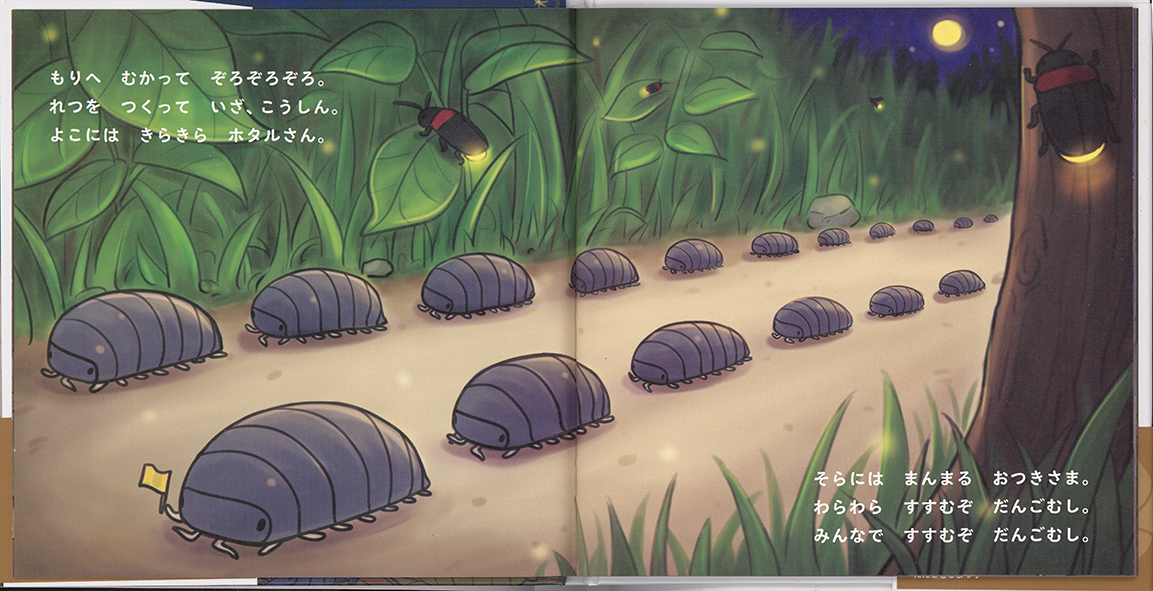
Evening falls, and the pill bugs are preparing for a great celebration. At tonight's celebration, the most radiant creature will receive a wonderful prize. Who will the elder honor with the great reward? YouTuber, musician and pill bug enthusiast Yamasaki Oshiruko has created an extraordinarily sensitive and popular story about death, which has already gone through seven editions.

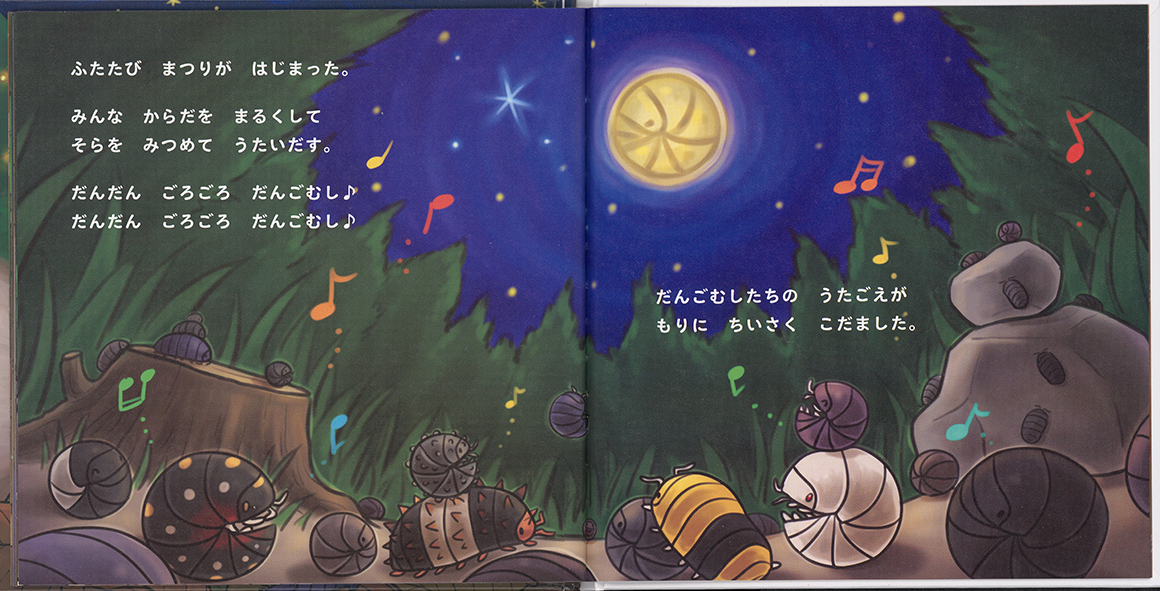
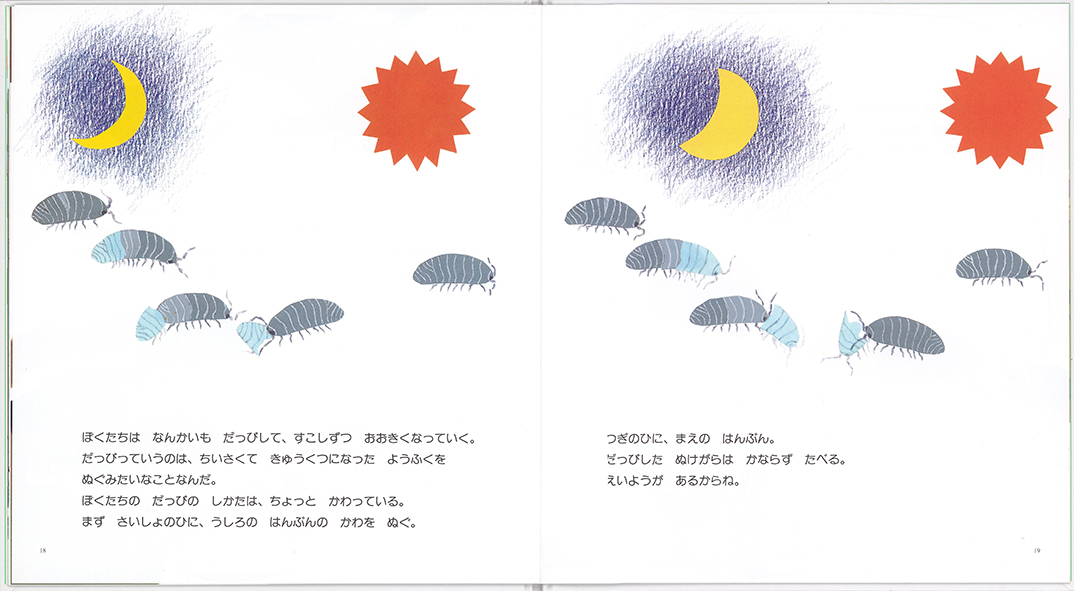
One after another, they head toward the forest. They line up in a row — and march forward! Beside them, fireflies flutter and shimmer. In the sky, a round moon shines. The pill bugs swarm and march. All the pill bugs march together.

7
Dangomuši macuri
Yamasaki Oshiruko
Kadokawa, 2024


i
translation
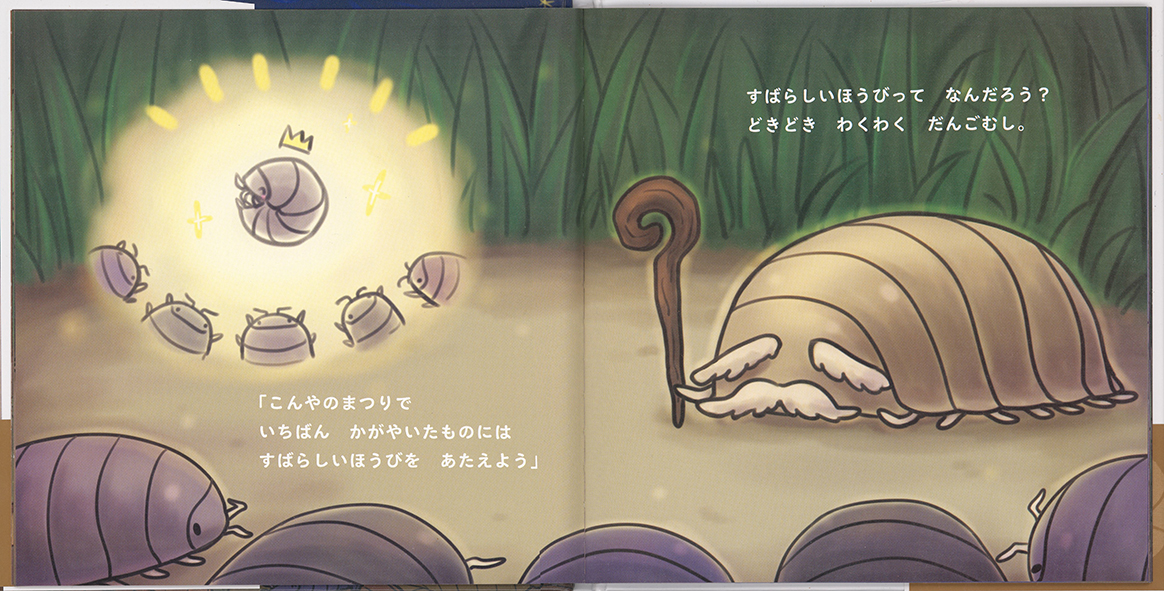
Evening falls, and the pill bugs are preparing for a great celebration. At tonight's celebration, the most radiant creature will receive a wonderful prize. Who will the elder honor with the great reward? YouTuber, musician and pill bug enthusiast Yamasaki Oshiruko has created an extraordinarily sensitive and popular story about death, which has already gone through seven editions.

"To the one who shines brightest of all at tonight's festival, we shall award a wonderful prize!" Whatever could this amazing prize be? Their hearts are pounding and they are filled with excitement — all aquiver with anticipation.

9
Dangomuši macuri
Yamasaki Oshiruko
Kadokawa, 2024


i
translation
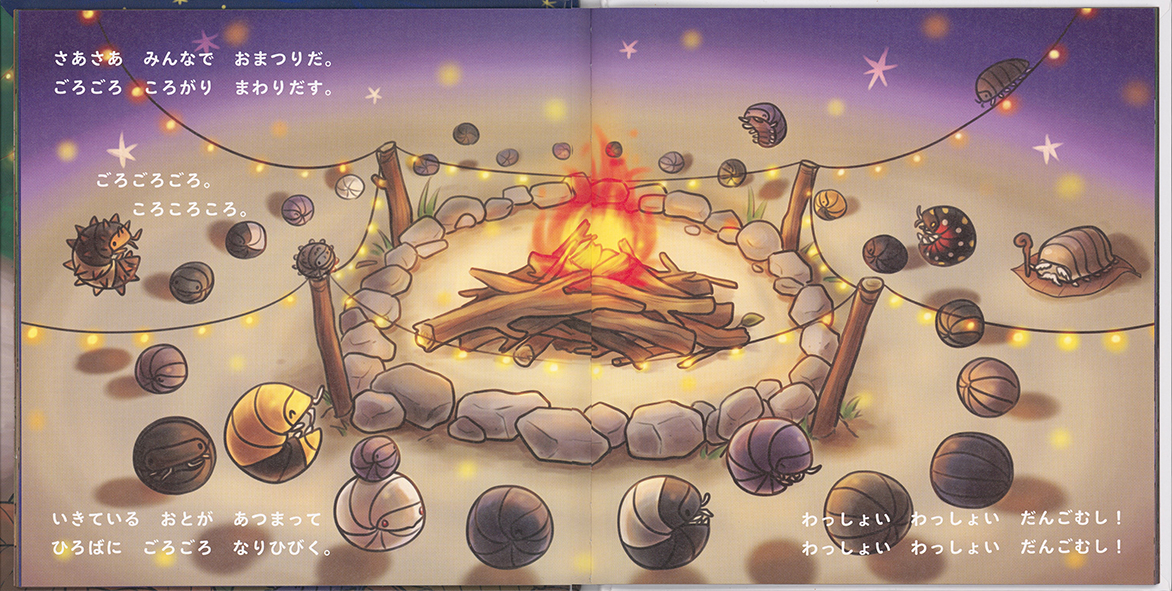
Evening falls, and the pill bugs are preparing for a great celebration. At tonight's celebration, the most radiant creature will receive a wonderful prize. Who will the elder honor with the great reward? YouTuber, musician and pill bug enthusiast Yamasaki Oshiruko has created an extraordinarily sensitive and popular story about death, which has already gone through seven editions.

Come on everyone, the festival begins! They roll and spin around and around. Kutululu. Kutululu. The sounds of life converge and rolling thunder across the whole glade. Hooray, hooray, pill bugs! Hooray, hooray, pill bugs!

12
Dangomuši macuri
Yamasaki Oshiruko
Kadokawa, 2024


i
translation
Evening falls, and the pill bugs are preparing for a great celebration. At tonight's celebration, the most radiant creature will receive a wonderful prize. Who will the elder honor with the great reward? YouTuber, musician and pill bug enthusiast Yamasaki Oshiruko has created an extraordinarily sensitive and popular story about death, which has already gone through seven editions.

She gave her last strength and when she reached the top, she was curled into a ball and no longer moving. Her blue shell, bathed in moonlight, began to shimmer.

13
Dangomuši macuri
Yamasaki Oshiruko
Kadokawa, 2024


i
translation
Evening falls, and the pill bugs are preparing for a great celebration. At tonight's celebration, the most radiant creature will receive a wonderful prize. Who will the elder honor with the great reward? YouTuber, musician and pill bug enthusiast Yamasaki Oshiruko has created an extraordinarily sensitive and popular story about death, which has already gone through seven editions.

The elder came forward and called out "Hey!" and raised his staff. "To the one who shone the brightest, I shall award a wonderful prize." The blue body shimmers and rises up toward the sky.

15
Dangomuši macuri
Yamasaki Oshiruko
Kadokawa, 2024


i
translation
Evening falls, and the pill bugs are preparing for a great celebration. At tonight's celebration, the most radiant creature will receive a wonderful prize. Who will the elder honor with the great reward? YouTuber, musician and pill bug enthusiast Yamasaki Oshiruko has created an extraordinarily sensitive and popular story about death, which has already gone through seven editions.

The festival began again. Everyone curled into a ball, gazed up at the sky and began to sing. Slowly, rolling along, pill bugs. Slowly, rolling along, pill bugs. The song of the pill bugs spread quietly through the forest.

Dangomuši macuri
Yamasaki Oshiruko
Kadokawa
2024
obalka
Kumo no nikkičó
Shinta Cho
Ehonjuku Publishing, 2024


i
translation
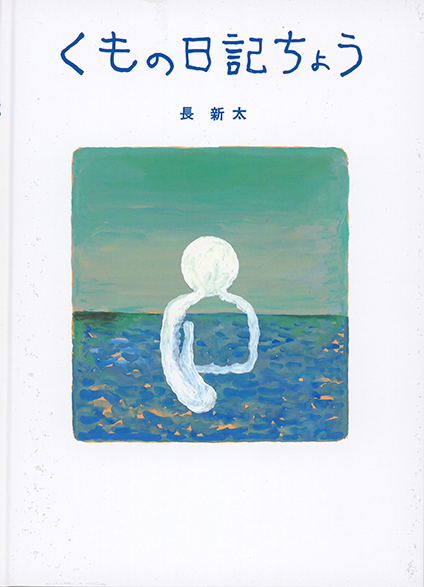
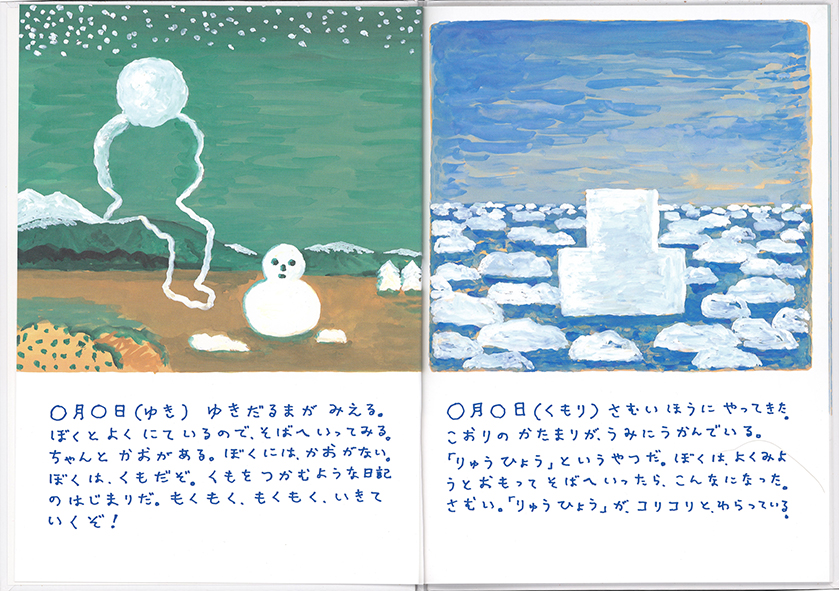
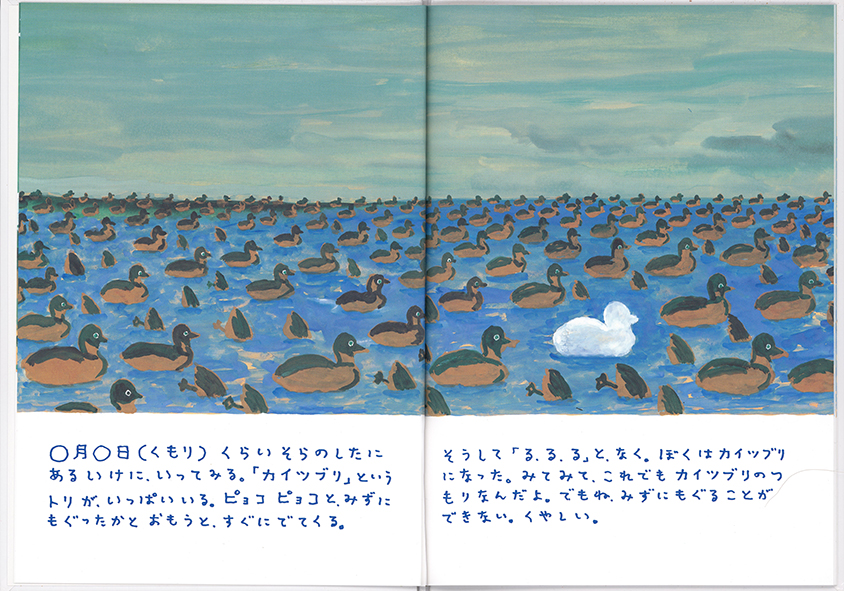
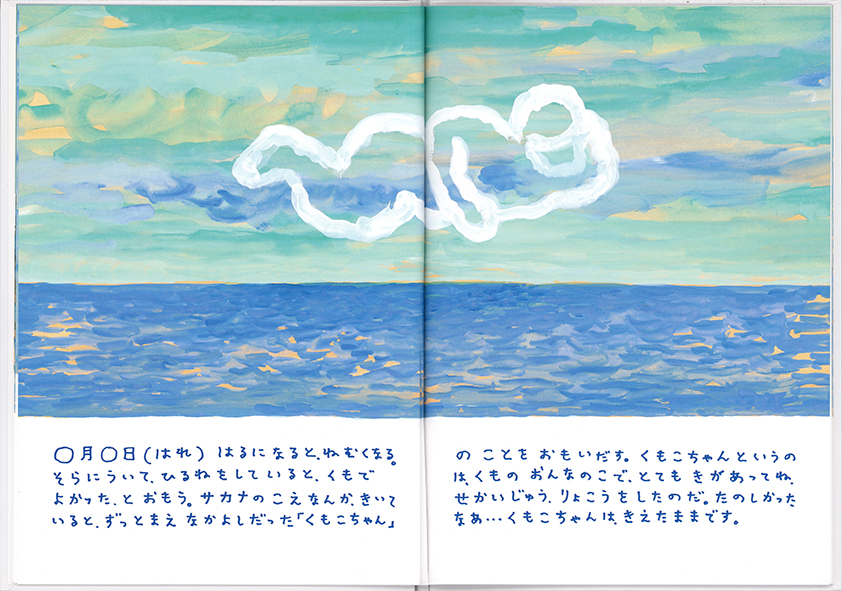
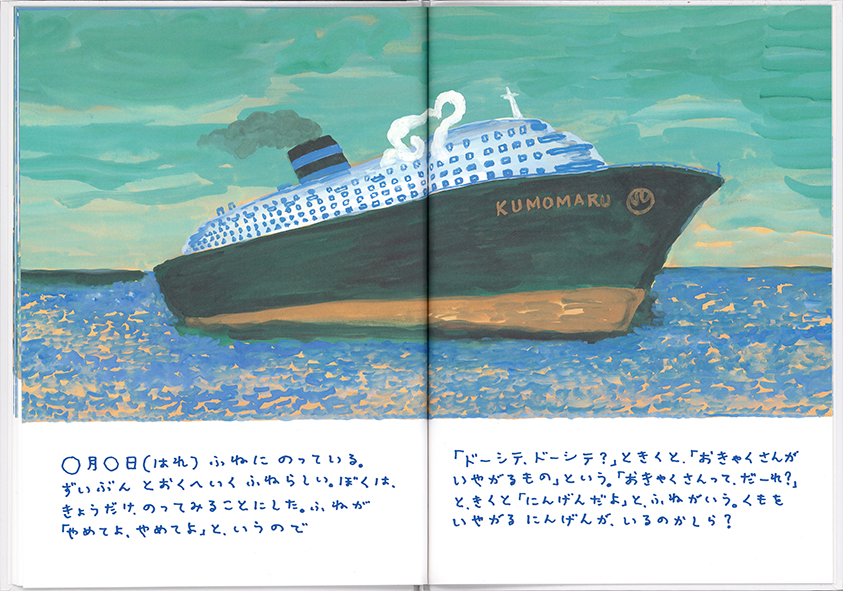
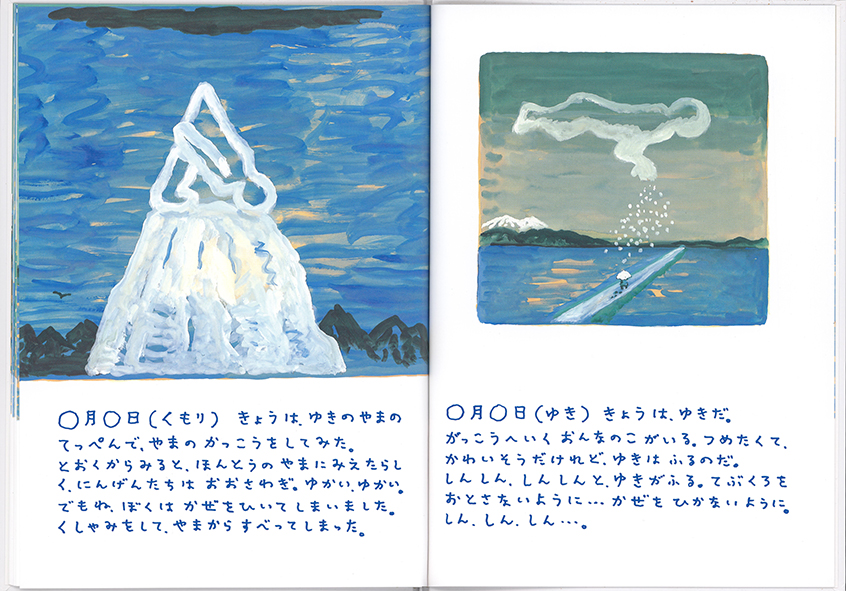
Do you know what life a cloud leads? It watches snowmen, transforms into a block of ice, finds itself a friend, teases people by pretending to be a mountaintop... Clouds are, after all, truly free.

A Cloud's Diary 
Cho Shinta

4
Kumo no nikkičó
Shinta Cho
Ehonjuku Publishing, 2024


i
translation
Do you know what life a cloud leads? It watches snowmen, transforms into a block of ice, finds itself a friend, teases people by pretending to be a mountaintop... Clouds are, after all, truly free.

○. ○. (Snow) I see a snowman. He looks quite a lot like me, so I went closer. He has a nicely made face. I don't have a face. I am a cloud, after all. This is the beginning of a diary by a cloud with no face. Fluffy, fluffy — that's how I'll go on living!

○. ○. (Overcast) I arrived in cold lands. Chunks of ice are floating in the sea. They are called "drift ice." I wanted to get a good look at them, so I moved closer — and this is what happened. It's cold. The "drift ice" crunches and seems to be laughing at me.

5
Kumo no nikkičó
Shinta Cho
Ehonjuku Publishing, 2024


i
translation
Do you know what life a cloud leads? It watches snowmen, transforms into a block of ice, finds itself a friend, teases people by pretending to be a mountaintop... Clouds are, after all, truly free.

○. ○. (Overcast) Under a dark sky there is a blue lake. There are lots of birds called grebes here. They always hop into the water and before I know it, they surface again. And then they call out "ru, ru, ru". I became a grebe. Look, this too is thanks to them. But I cannot dive underwater. That frustrates me.

7
Kumo no nikkičó
Shinta Cho
Ehonjuku Publishing, 2024


i
translation
Do you know what life a cloud leads? It watches snowmen, transforms into a block of ice, finds itself a friend, teases people by pretending to be a mountaintop... Clouds are, after all, truly free.

○. ○. (Sunny) When spring comes, the snow melts. I am glad that I can float through the sky. I don't even want to think about grebes anymore. We will be friends forever, Kumoko-chan. I think of her. Kumoko-chan was that creature — a cloud dinosaur. Her name was Ryoko-chan. I hope she is alright... But Kumoko-chan is gone.

12
Kumo no nikkičó
Shinta Cho
Ehonjuku Publishing, 2024


i
translation
Do you know what life a cloud leads? It watches snowmen, transforms into a block of ice, finds itself a friend, teases people by pretending to be a mountaintop... Clouds are, after all, truly free.

○. ○. (Sunny) I am on a ship. It looks like it is sailing very far away. I decided to disappear and hitch a ride on it. But my ears tell me: "Stop, stop." I hear "dónde, dónde" and someone says: "That is something the passengers don't like." "Passengers? And who are they?" I ask. "People," comes the answer. Can it really be that there are people who are bothered even by clouds?

13
Kumo no nikkičó
Shinta Cho
Ehonjuku Publishing, 2024


i
translation
Do you know what life a cloud leads? It watches snowmen, transforms into a block of ice, finds itself a friend, teases people by pretending to be a mountaintop... Clouds are, after all, truly free.

○. ○. (Overcast) Today I tried resting on the peak of a snowy mountain. From a distance it apparently looked like a real mountain, and people were quite stirred up about it. That was fun. But I couldn't hold it — I sneezed and the mountain slid away.

○. ○. (Snow) Today it is snowing. I would love to see the happy faces of everyone going to school, but the snow must fall. Quietly, quietly it snows. I hope nobody loses their mittens... and I hope nobody catches a cold. Quietly... quietly... quietly...

17
Kumo no nikkičó
Shinta Cho
Ehonjuku Publishing, 2024


i
translation
Do you know what life a cloud leads? It watches snowmen, transforms into a block of ice, finds itself a friend, teases people by pretending to be a mountaintop... Clouds are, after all, truly free.

-

Kumo no nikkičó
Shinta Cho
Ehonjuku Publishing
2024
neko no sétá
Neko no sétá
Kenji Oikawa & Mayuko Takeuchi
Taizo Mizutani, 2016


i
translation
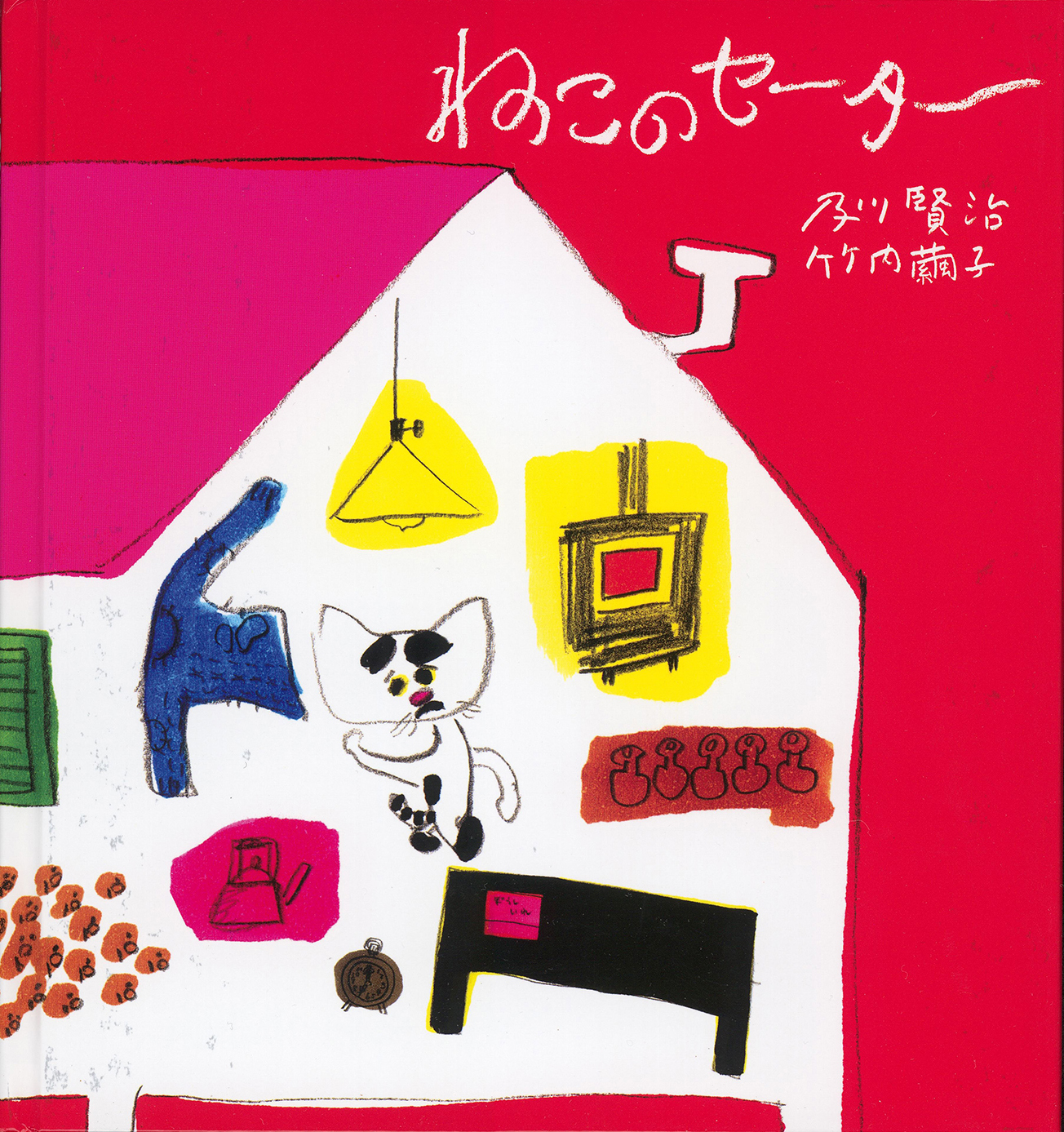
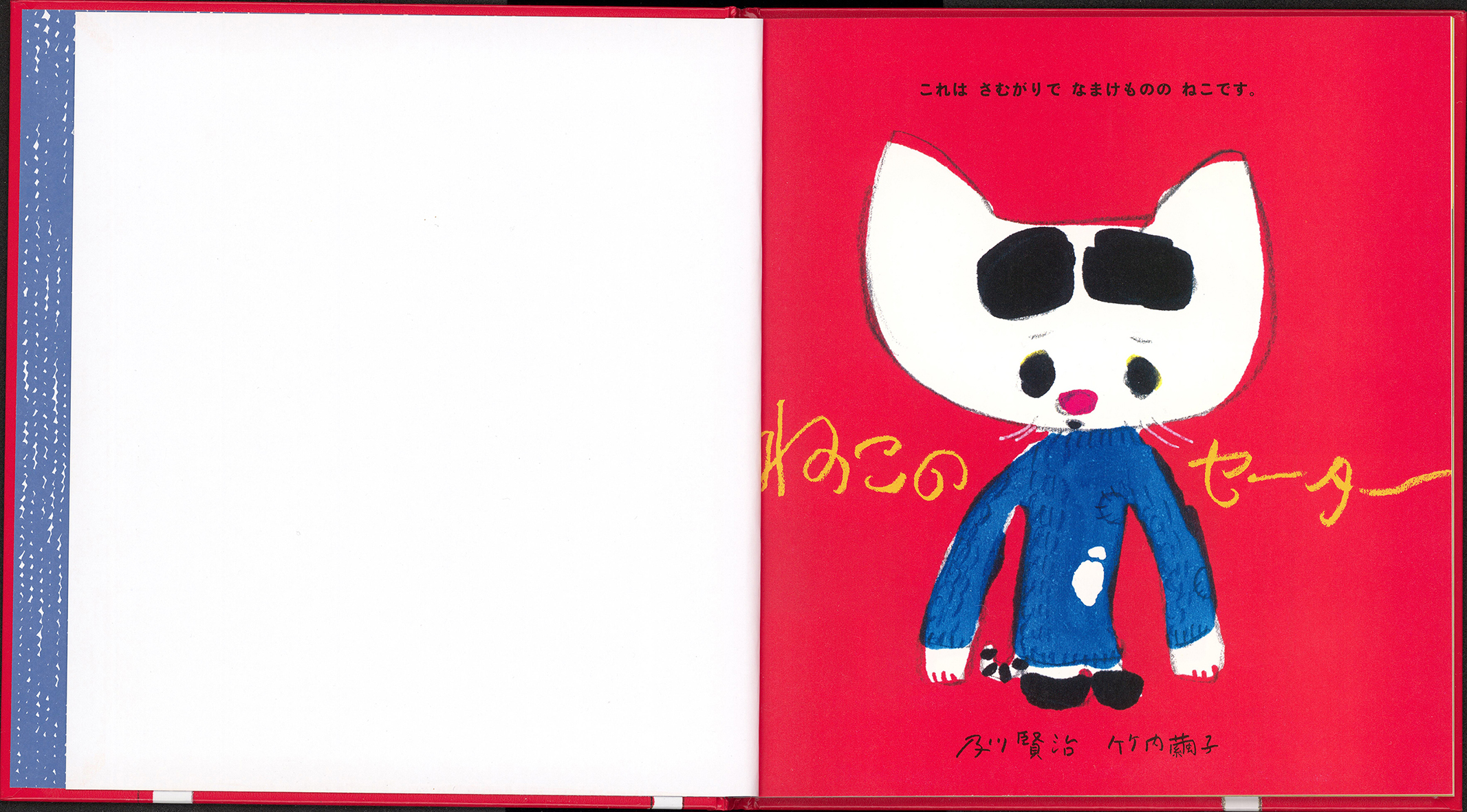
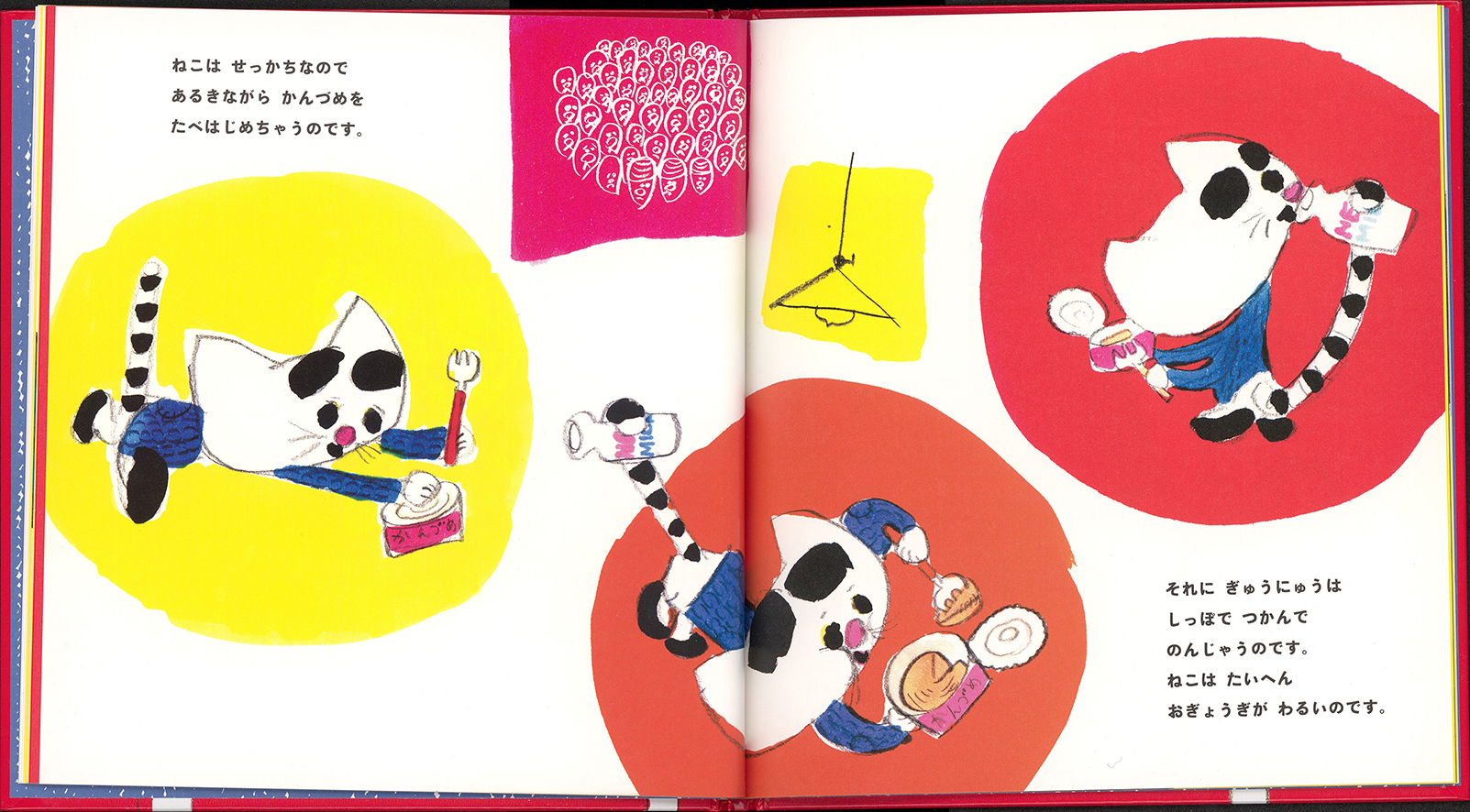
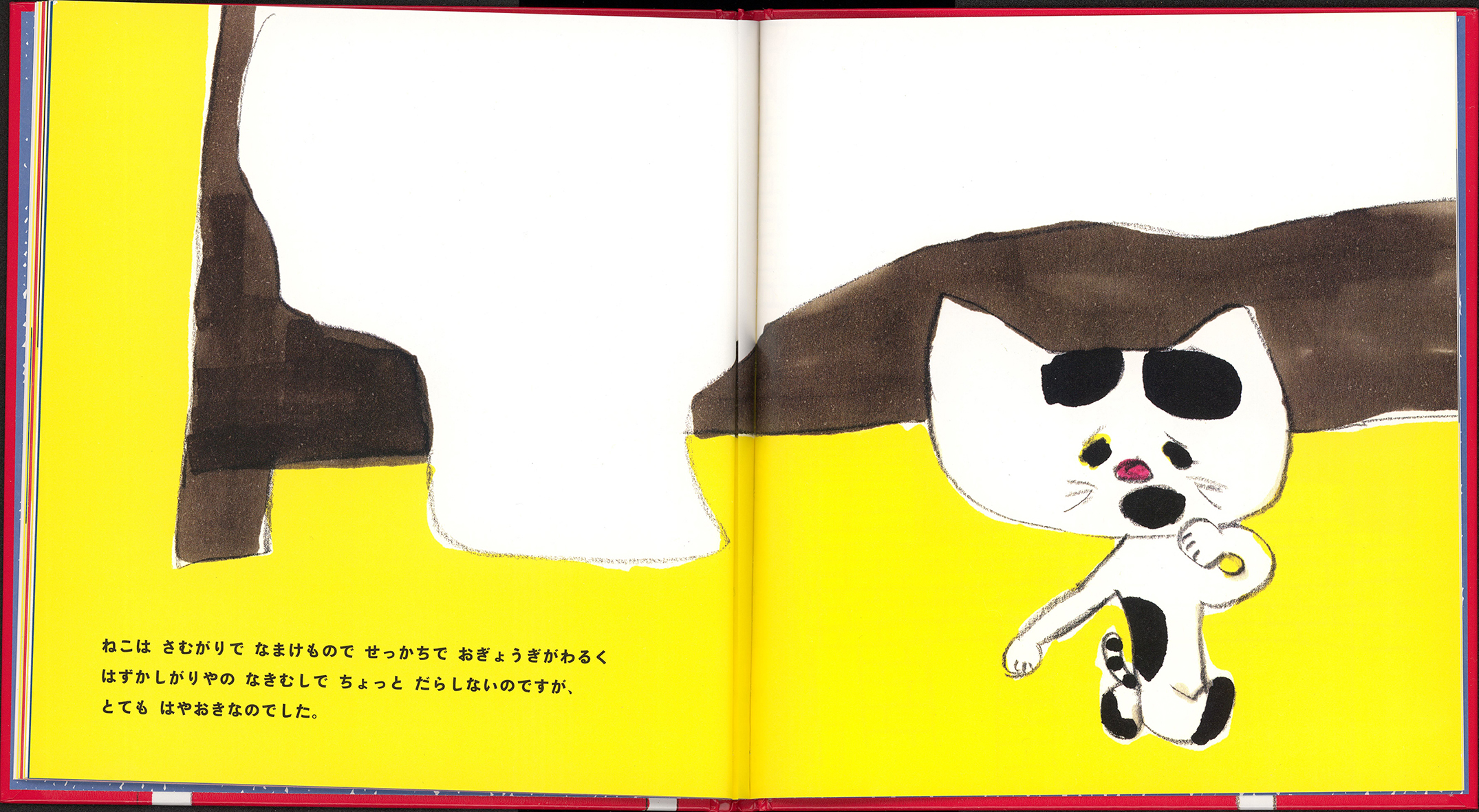
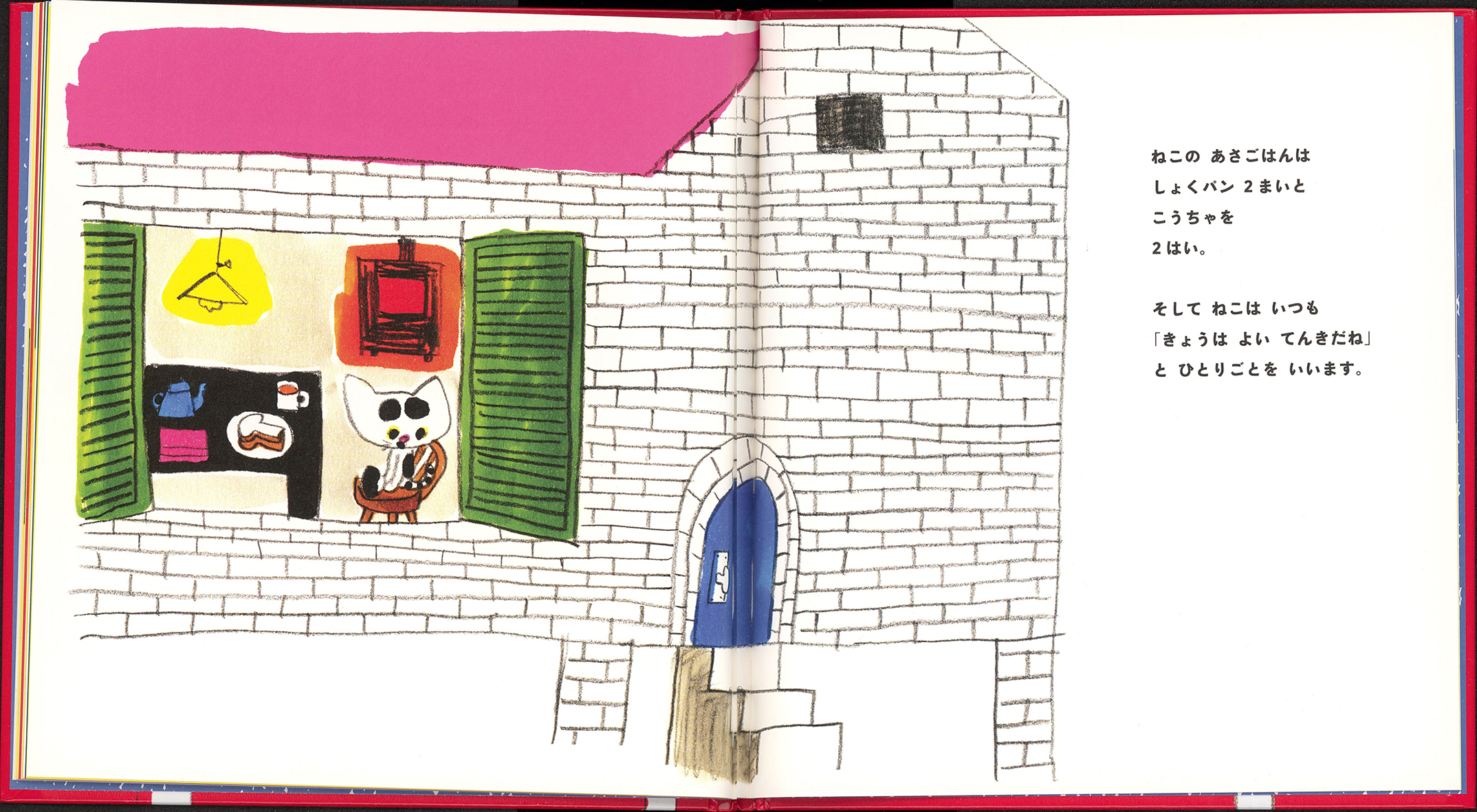
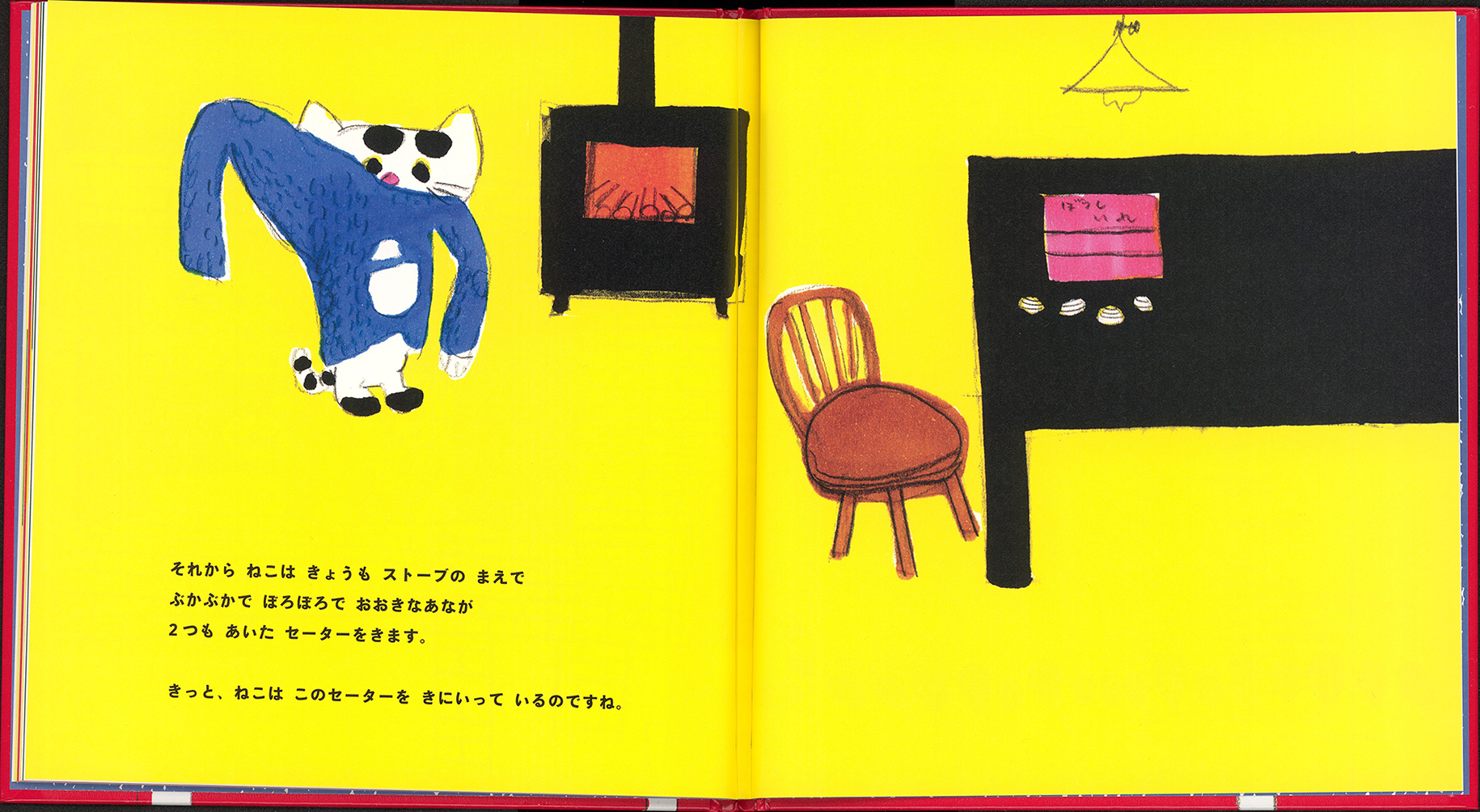
An always cold, lazy, messy and impatient cat wears a worn-out sweater with two big holes. Despite being always cold, she never takes it off. She also has a job: putting acorn caps on acorns. She greets each acorn politely, and when the cap is placed on, the acorn lets out a little squeak... Are the acorns perhaps a little mischievous after all? A picture book by the creative duo 100% ORANGE, who work across illustration, picture books, manga, anime and more.

Cat's Sweater

0
Neko no sétá
Kenji Oikawa & Mayuko Takeuchi
Taizo Mizutani, 2016


i
translation
An always cold, lazy, messy and impatient cat wears a worn-out sweater with two big holes. Despite being always cold, she never takes it off. She also has a job: putting acorn caps on acorns. She greets each acorn politely, and when the cap is placed on, the acorn lets out a little squeak... Are the acorns perhaps a little mischievous after all? A picture book by the creative duo 100% ORANGE, who work across illustration, picture books, manga, anime and more.

-

1
Neko no sétá
Kenji Oikawa & Mayuko Takeuchi
Taizo Mizutani, 2016


i
translation
An always cold, lazy, messy and impatient cat wears a worn-out sweater with two big holes. Despite being always cold, she never takes it off. She also has a job: putting acorn caps on acorns. She greets each acorn politely, and when the cap is placed on, the acorn lets out a little squeak... Are the acorns perhaps a little mischievous after all? A picture book by the creative duo 100% ORANGE, who work across illustration, picture books, manga, anime and more.

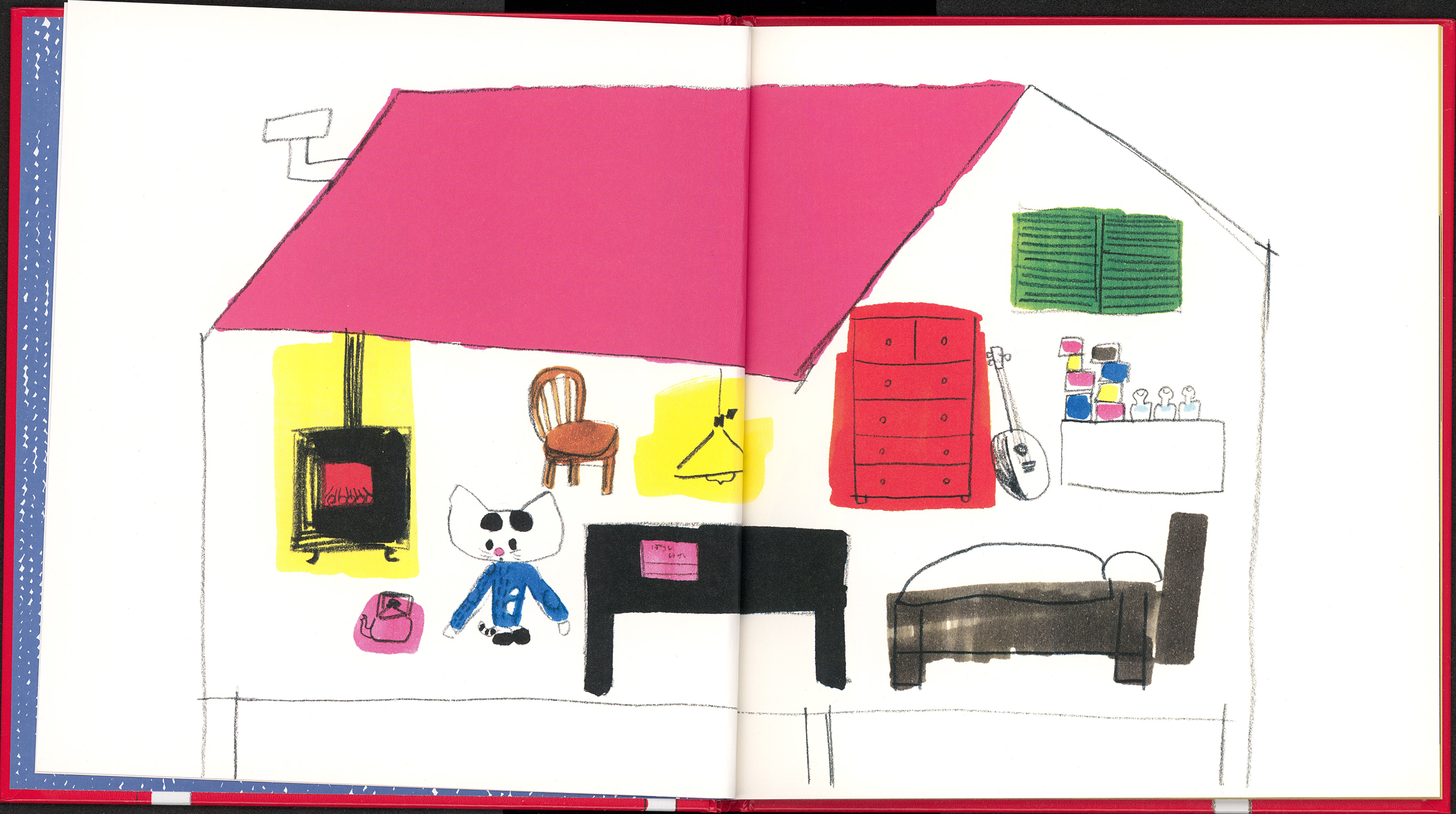
This is an always cold, lazy cat. 
The Cat's Sweater

2
Neko no sétá
Kenji Oikawa & Mayuko Takeuchi
Taizo Mizutani, 2016


i
translation
An always cold, lazy, messy and impatient cat wears a worn-out sweater with two big holes. Despite being always cold, she never takes it off. She also has a job: putting acorn caps on acorns. She greets each acorn politely, and when the cap is placed on, the acorn lets out a little squeak... Are the acorns perhaps a little mischievous after all? A picture book by the creative duo 100% ORANGE, who work across illustration, picture books, manga, anime and more.

-

3
Neko no sétá
Kenji Oikawa & Mayuko Takeuchi
Taizo Mizutani, 2016


i
translation
An always cold, lazy, messy and impatient cat wears a worn-out sweater with two big holes. Despite being always cold, she never takes it off. She also has a job: putting acorn caps on acorns. She greets each acorn politely, and when the cap is placed on, the acorn lets out a little squeak... Are the acorns perhaps a little mischievous after all? A picture book by the creative duo 100% ORANGE, who work across illustration, picture books, manga, anime and more.

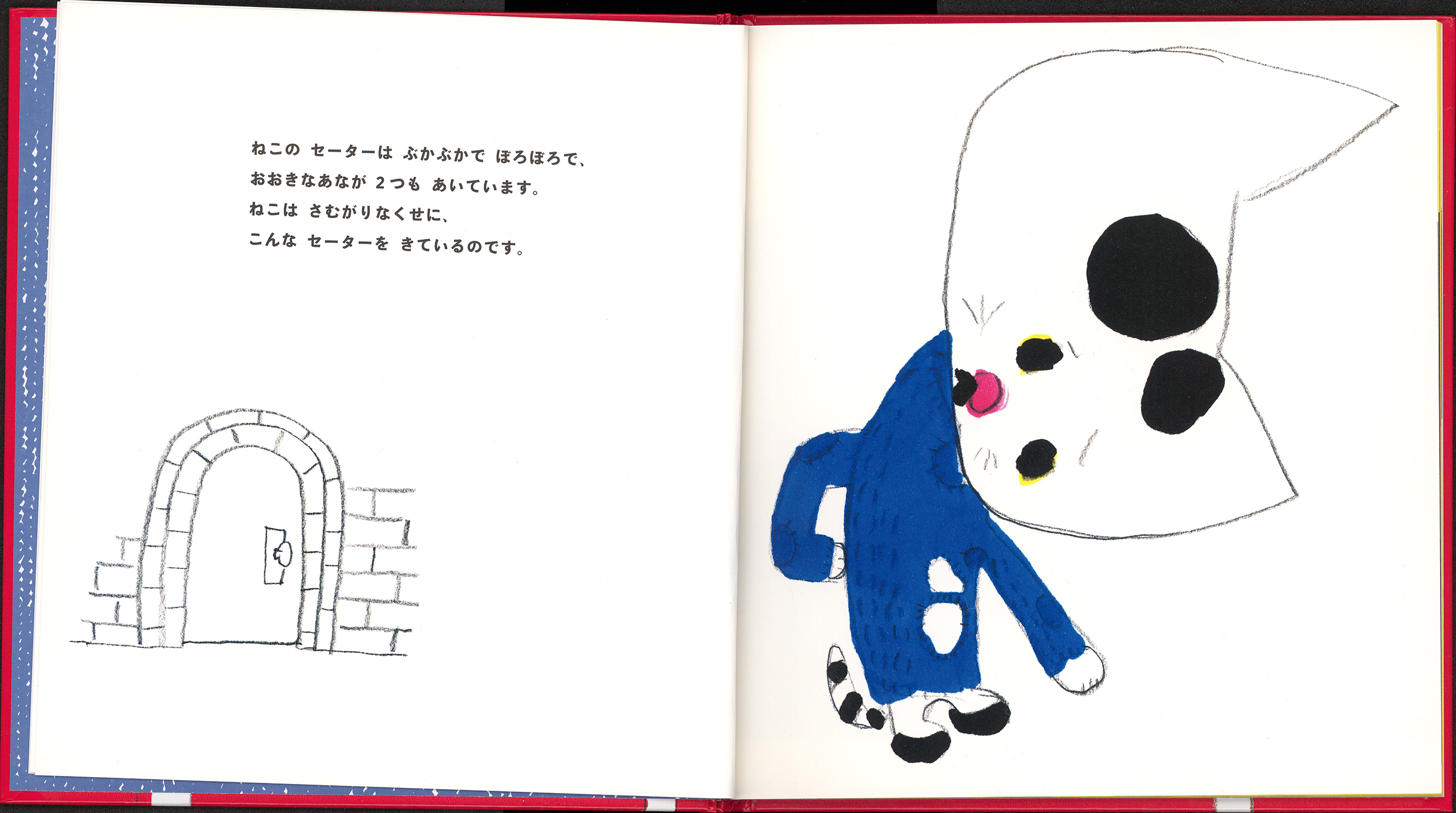
She wears a worn and tattered sweater with two big holes. Even though she is always cold, she keeps wearing it anyway.

4
Neko no sétá
Kenji Oikawa & Mayuko Takeuchi
Taizo Mizutani, 2016


i
translation
An always cold, lazy, messy and impatient cat wears a worn-out sweater with two big holes. Despite being always cold, she never takes it off. She also has a job: putting acorn caps on acorns. She greets each acorn politely, and when the cap is placed on, the acorn lets out a little squeak... Are the acorns perhaps a little mischievous after all? A picture book by the creative duo 100% ORANGE, who work across illustration, picture books, manga, anime and more.

[box of caps] 

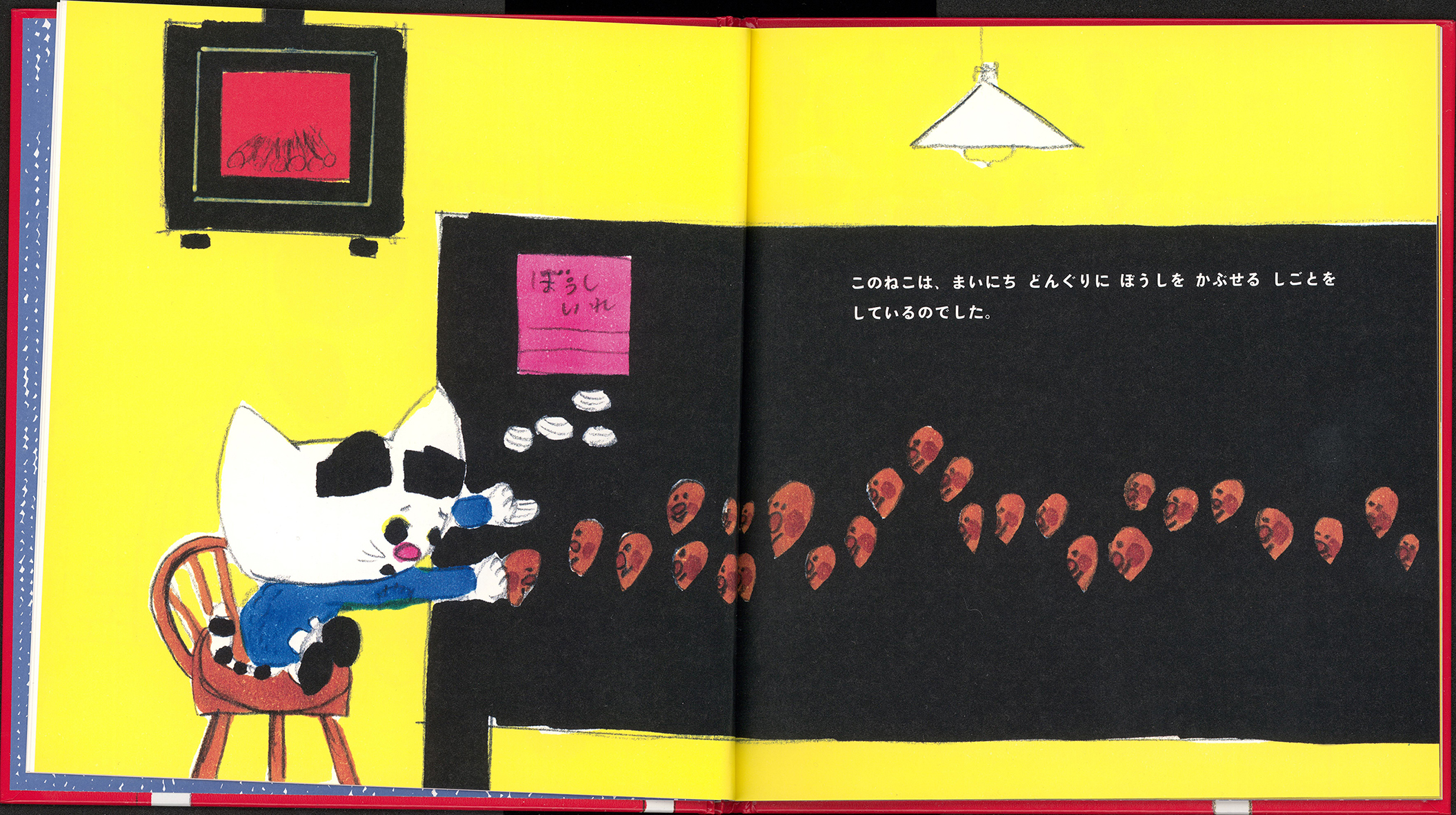
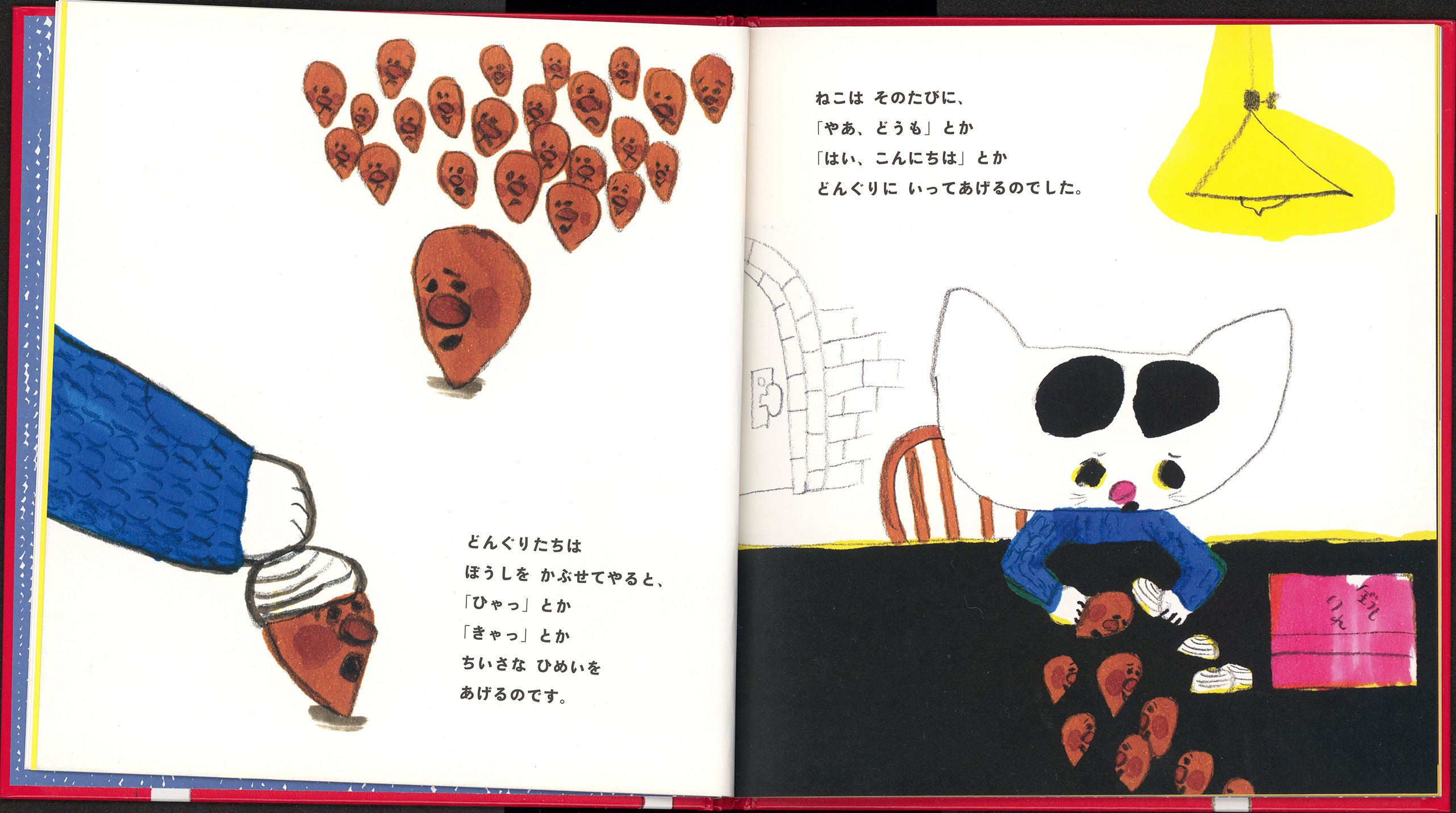
Her job is to put caps on acorns every day.

5
Neko no sétá
Kenji Oikawa & Mayuko Takeuchi
Taizo Mizutani, 2016


i
translation
An always cold, lazy, messy and impatient cat wears a worn-out sweater with two big holes. Despite being always cold, she never takes it off. She also has a job: putting acorn caps on acorns. She greets each acorn politely, and when the cap is placed on, the acorn lets out a little squeak... Are the acorns perhaps a little mischievous after all? A picture book by the creative duo 100% ORANGE, who work across illustration, picture books, manga, anime and more.

Every time she puts a cap on an acorn, they let out a tiny cry: oh! eeee! And the cat would always greet the acorns: Hello, good day, and so on. [box of caps]

6
Neko no sétá
Kenji Oikawa & Mayuko Takeuchi
Taizo Mizutani, 2016


i
translation
An always cold, lazy, messy and impatient cat wears a worn-out sweater with two big holes. Despite being always cold, she never takes it off. She also has a job: putting acorn caps on acorns. She greets each acorn politely, and when the cap is placed on, the acorn lets out a little squeak... Are the acorns perhaps a little mischievous after all? A picture book by the creative duo 100% ORANGE, who work across illustration, picture books, manga, anime and more.

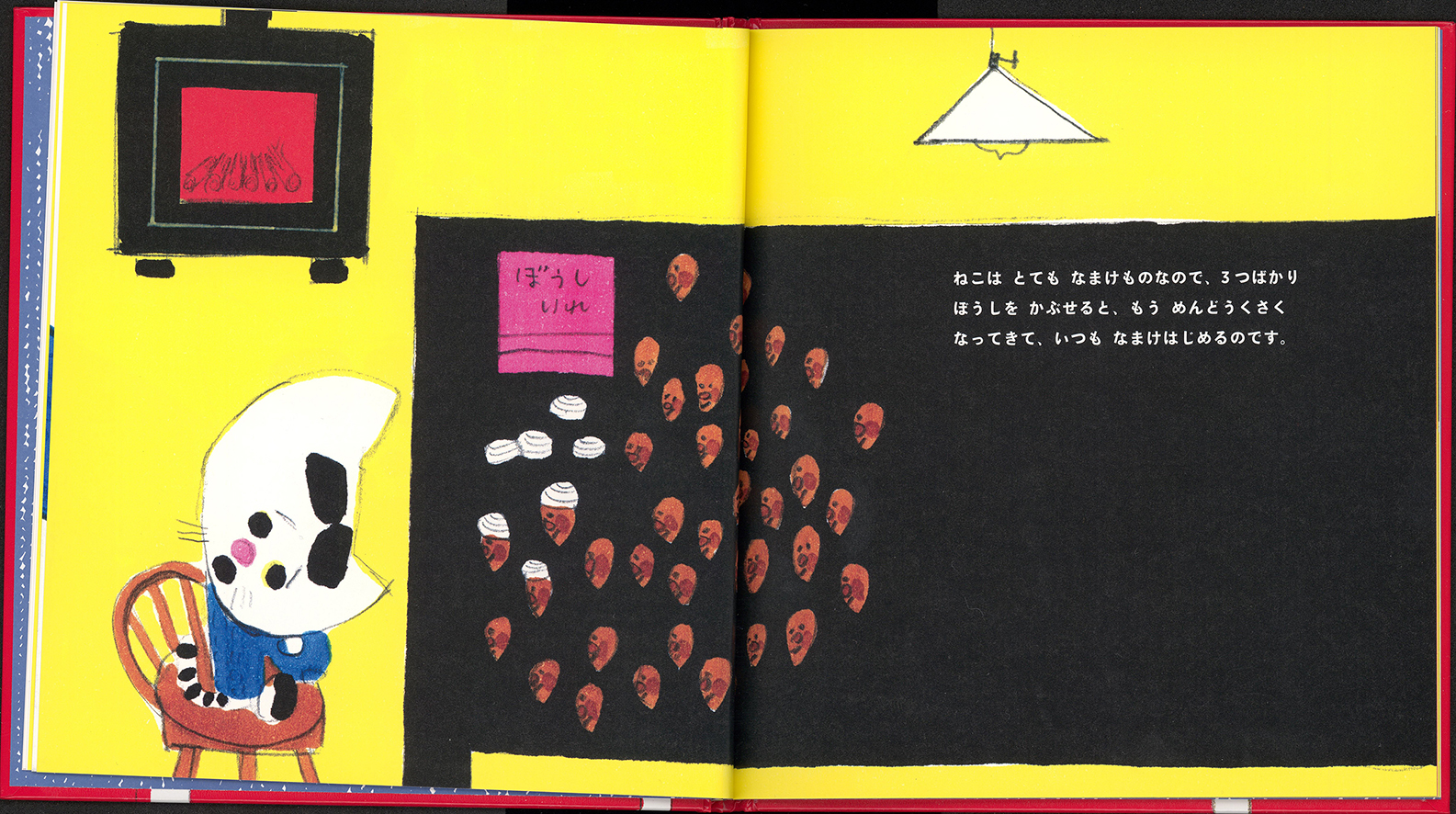
But the cat is terribly lazy, and so after just three caps she loses interest and starts slacking off.

7
Neko no sétá
Kenji Oikawa & Mayuko Takeuchi
Taizo Mizutani, 2016


i
translation
An always cold, lazy, messy and impatient cat wears a worn-out sweater with two big holes. Despite being always cold, she never takes it off. She also has a job: putting acorn caps on acorns. She greets each acorn politely, and when the cap is placed on, the acorn lets out a little squeak... Are the acorns perhaps a little mischievous after all? A picture book by the creative duo 100% ORANGE, who work across illustration, picture books, manga, anime and more.

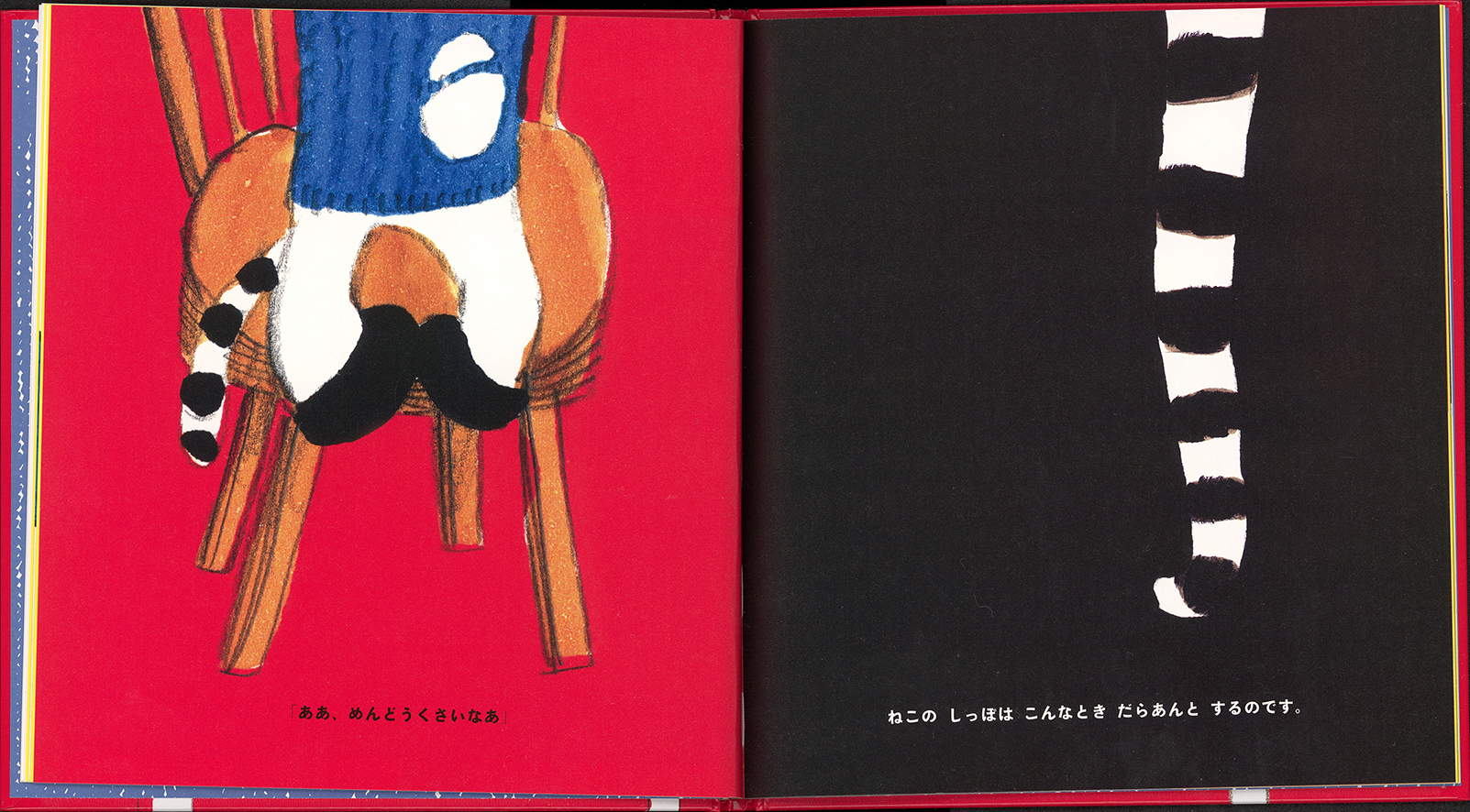
Oh dear, this is so boring. Her tail always droops.

8
Neko no sétá
Kenji Oikawa & Mayuko Takeuchi
Taizo Mizutani, 2016


i
translation
An always cold, lazy, messy and impatient cat wears a worn-out sweater with two big holes. Despite being always cold, she never takes it off. She also has a job: putting acorn caps on acorns. She greets each acorn politely, and when the cap is placed on, the acorn lets out a little squeak... Are the acorns perhaps a little mischievous after all? A picture book by the creative duo 100% ORANGE, who work across illustration, picture books, manga, anime and more.

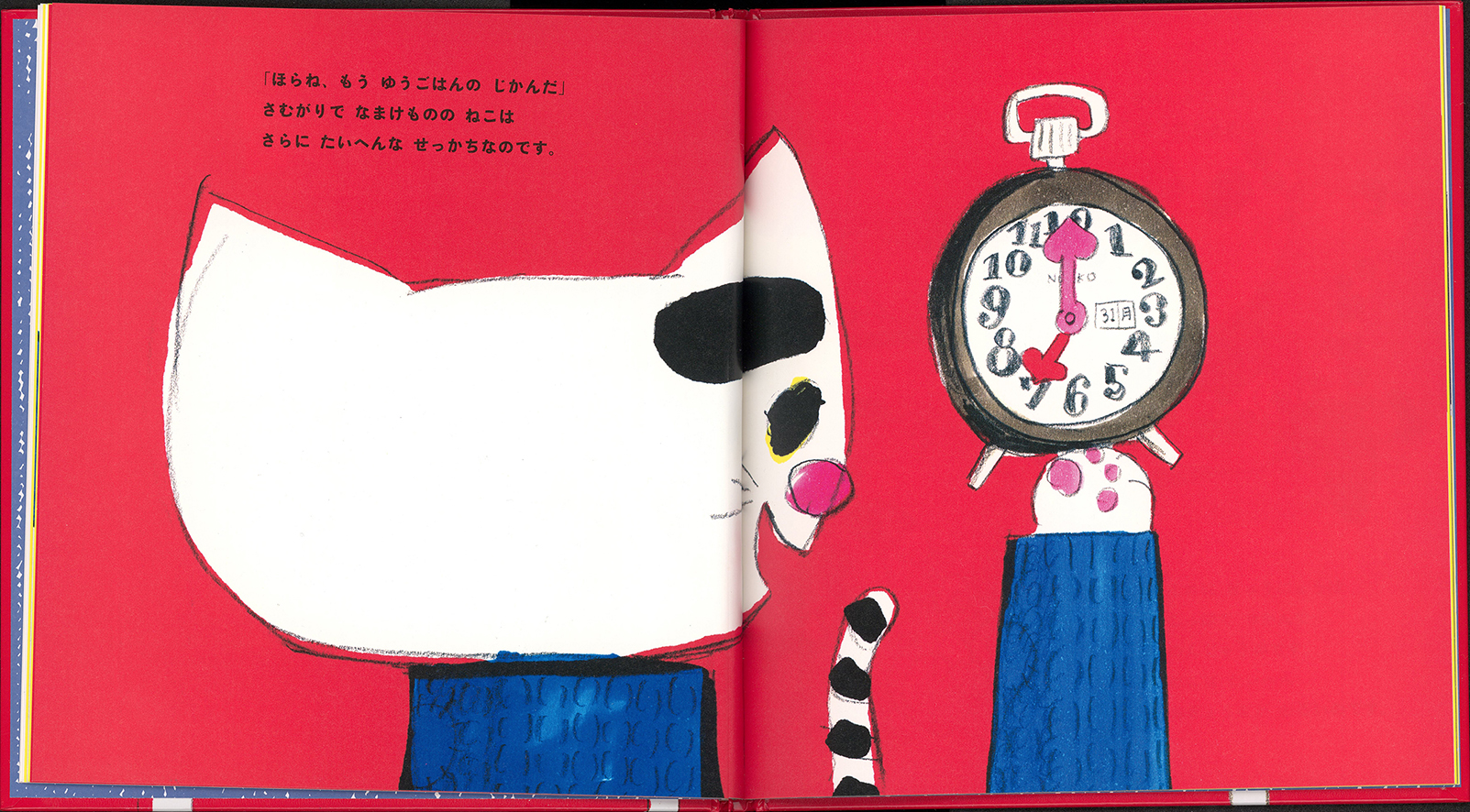
Hey, it's already time for dinner. This cold, lazy cat is impatient on top of it all.

9
Neko no sétá
Kenji Oikawa & Mayuko Takeuchi
Taizo Mizutani, 2016


i
translation
An always cold, lazy, messy and impatient cat wears a worn-out sweater with two big holes. Despite being always cold, she never takes it off. She also has a job: putting acorn caps on acorns. She greets each acorn politely, and when the cap is placed on, the acorn lets out a little squeak... Are the acorns perhaps a little mischievous after all? A picture book by the creative duo 100% ORANGE, who work across illustration, picture books, manga, anime and more.

Because she is so impatient, she opens her tin can while walking. And when she drinks her milk, she always holds the bowl with her tail. She has terrible manners.

10
Neko no sétá
Kenji Oikawa & Mayuko Takeuchi
Taizo Mizutani, 2016


i
translation
An always cold, lazy, messy and impatient cat wears a worn-out sweater with two big holes. Despite being always cold, she never takes it off. She also has a job: putting acorn caps on acorns. She greets each acorn politely, and when the cap is placed on, the acorn lets out a little squeak... Are the acorns perhaps a little mischievous after all? A picture book by the creative duo 100% ORANGE, who work across illustration, picture books, manga, anime and more.

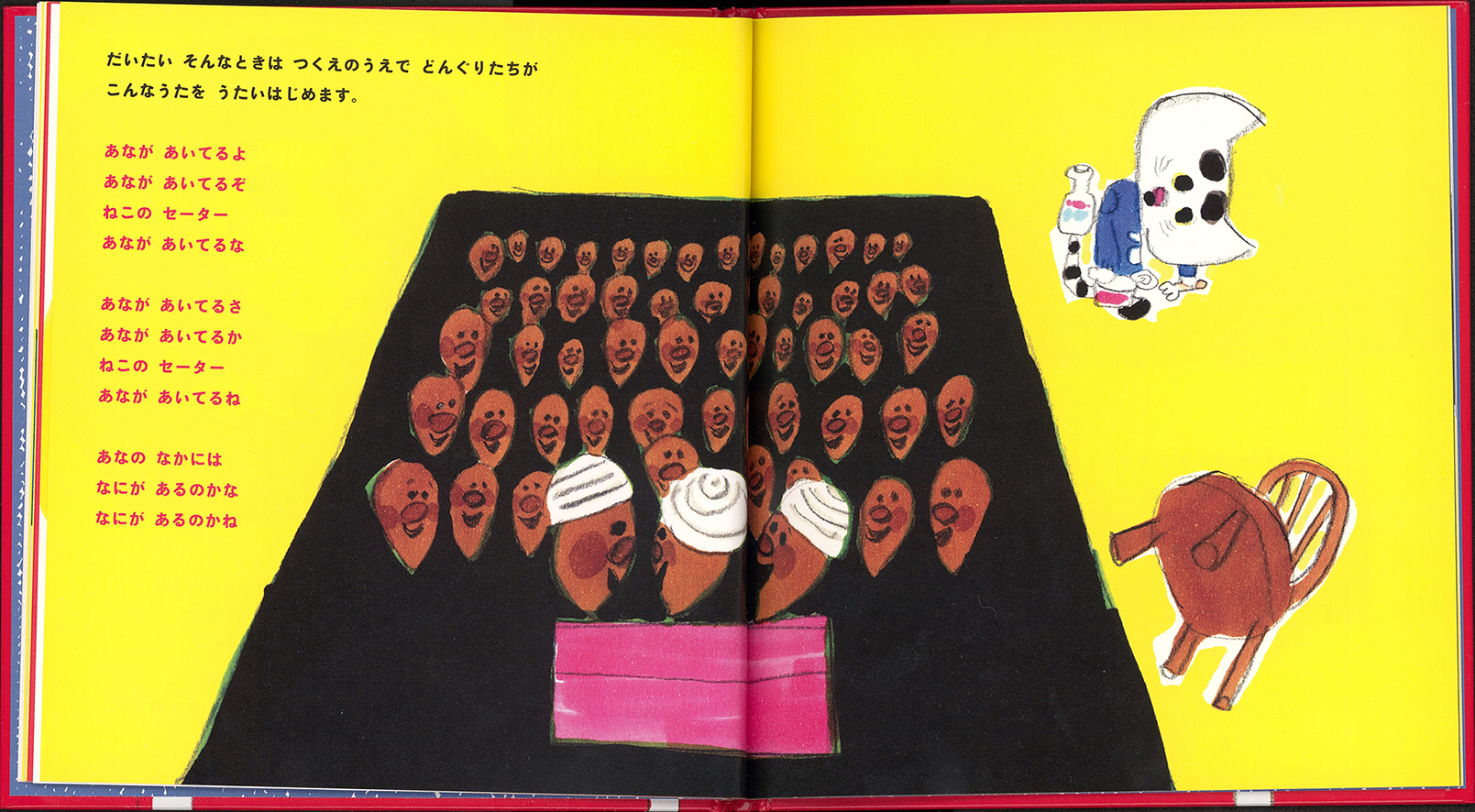
And at that moment the acorns on the table usually start singing this song: It's full of holes! It's full of holes!! The cat's sweater is full of holes. It's full of holes. It's full of holes! The cat's sweater is full of holes. What could be hiding in those holes, what could be hiding in them.

11
Neko no sétá
Kenji Oikawa & Mayuko Takeuchi
Taizo Mizutani, 2016


i
translation
An always cold, lazy, messy and impatient cat wears a worn-out sweater with two big holes. Despite being always cold, she never takes it off. She also has a job: putting acorn caps on acorns. She greets each acorn politely, and when the cap is placed on, the acorn lets out a little squeak... Are the acorns perhaps a little mischievous after all? A picture book by the creative duo 100% ORANGE, who work across illustration, picture books, manga, anime and more.

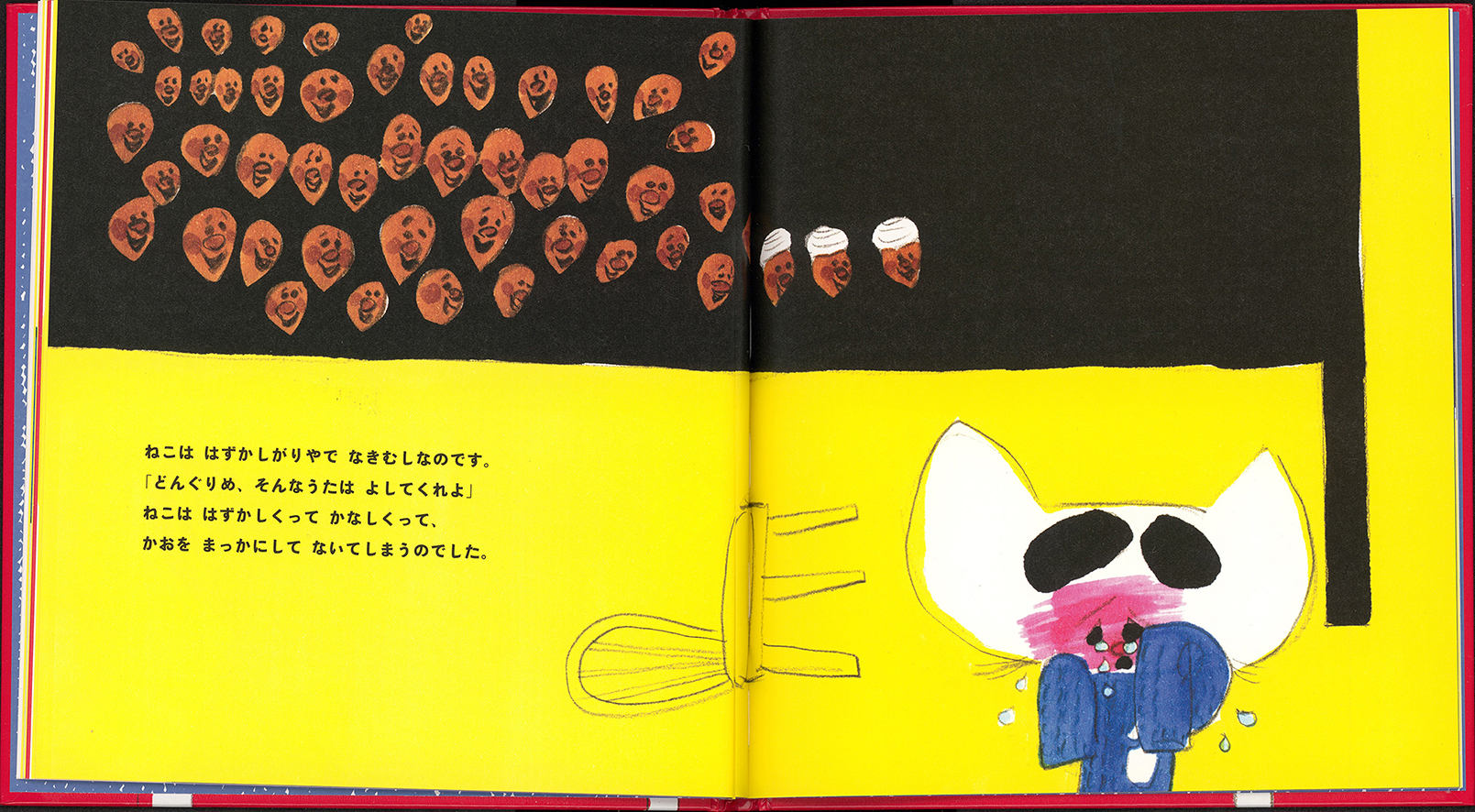
The cat is a crybaby and a shrinking violet. "You acorns! Stop that song." The cat is so ashamed and sad that she turns completely red and bursts into tears.

12
Neko no sétá
Kenji Oikawa & Mayuko Takeuchi
Taizo Mizutani, 2016


i
translation
An always cold, lazy, messy and impatient cat wears a worn-out sweater with two big holes. Despite being always cold, she never takes it off. She also has a job: putting acorn caps on acorns. She greets each acorn politely, and when the cap is placed on, the acorn lets out a little squeak... Are the acorns perhaps a little mischievous after all? A picture book by the creative duo 100% ORANGE, who work across illustration, picture books, manga, anime and more.

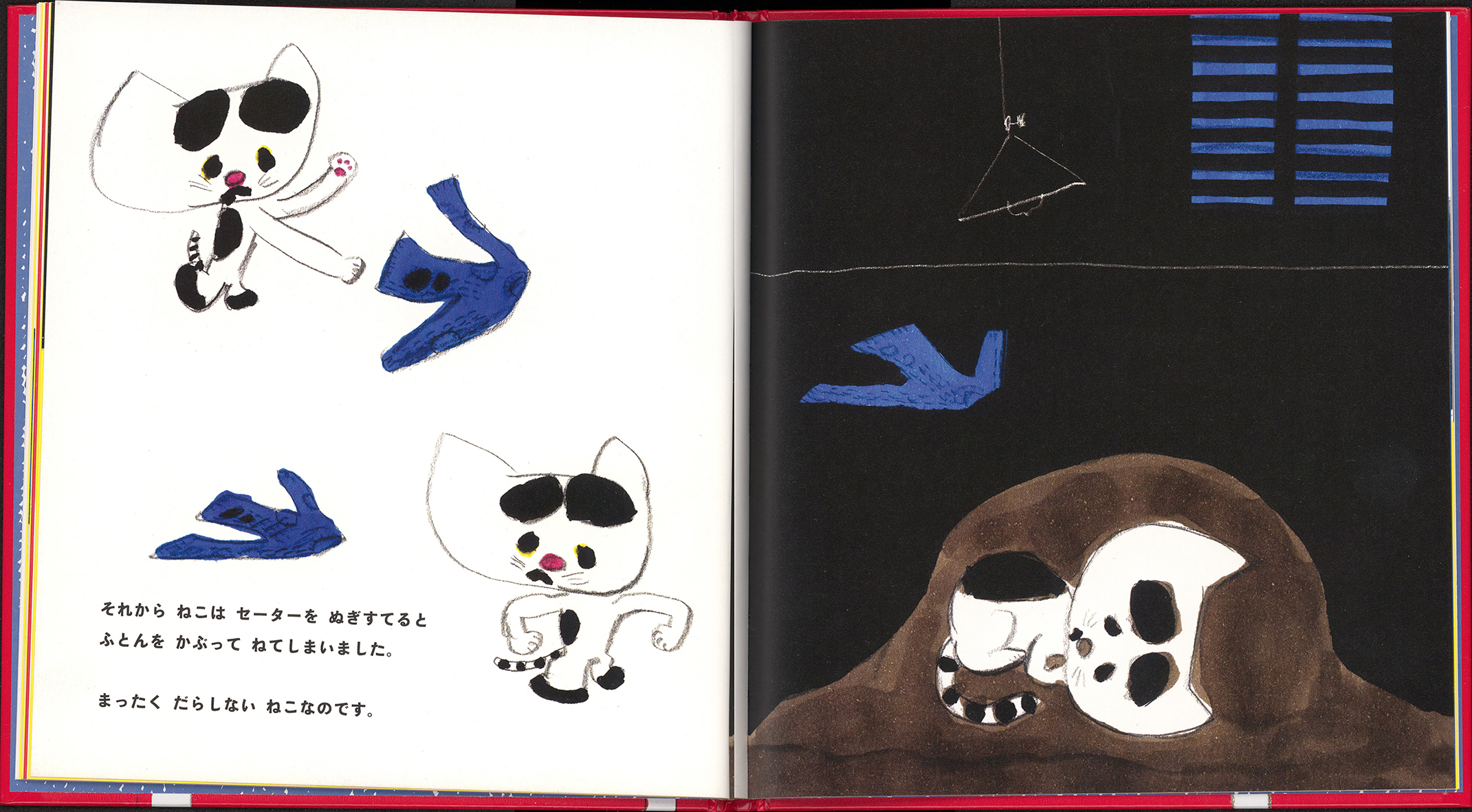
The cat pulled off her sweater, threw it on the floor and crawled under the duvet. She really is a terribly messy cat.

13
Neko no sétá
Kenji Oikawa & Mayuko Takeuchi
Taizo Mizutani, 2016


i
translation
An always cold, lazy, messy and impatient cat wears a worn-out sweater with two big holes. Despite being always cold, she never takes it off. She also has a job: putting acorn caps on acorns. She greets each acorn politely, and when the cap is placed on, the acorn lets out a little squeak... Are the acorns perhaps a little mischievous after all? A picture book by the creative duo 100% ORANGE, who work across illustration, picture books, manga, anime and more.

-

14
Neko no sétá
Kenji Oikawa & Mayuko Takeuchi
Taizo Mizutani, 2016


i
translation
An always cold, lazy, messy and impatient cat wears a worn-out sweater with two big holes. Despite being always cold, she never takes it off. She also has a job: putting acorn caps on acorns. She greets each acorn politely, and when the cap is placed on, the acorn lets out a little squeak... Are the acorns perhaps a little mischievous after all? A picture book by the creative duo 100% ORANGE, who work across illustration, picture books, manga, anime and more.

Even though she was always cold, lazy, impatient, badly behaved, shy, crybaby and a little messy, she always got up very early.

15
Neko no sétá
Kenji Oikawa & Mayuko Takeuchi
Taizo Mizutani, 2016


i
translation
An always cold, lazy, messy and impatient cat wears a worn-out sweater with two big holes. Despite being always cold, she never takes it off. She also has a job: putting acorn caps on acorns. She greets each acorn politely, and when the cap is placed on, the acorn lets out a little squeak... Are the acorns perhaps a little mischievous after all? A picture book by the creative duo 100% ORANGE, who work across illustration, picture books, manga, anime and more.

A cat's breakfast is two loaves of bread and two cups of tea. And the cat always says to herself: "Today is a lovely day."

16
Neko no sétá
Kenji Oikawa & Mayuko Takeuchi
Taizo Mizutani, 2016


i
translation
An always cold, lazy, messy and impatient cat wears a worn-out sweater with two big holes. Despite being always cold, she never takes it off. She also has a job: putting acorn caps on acorns. She greets each acorn politely, and when the cap is placed on, the acorn lets out a little squeak... Are the acorns perhaps a little mischievous after all? A picture book by the creative duo 100% ORANGE, who work across illustration, picture books, manga, anime and more.

And today too, in front of the stove, the cat put on her worn and tattered sweater with two big holes. The cat must really love that sweater very much.

17
Neko no sétá
Kenji Oikawa & Mayuko Takeuchi
Taizo Mizutani, 2016


i
translation
An always cold, lazy, messy and impatient cat wears a worn-out sweater with two big holes. Despite being always cold, she never takes it off. She also has a job: putting acorn caps on acorns. She greets each acorn politely, and when the cap is placed on, the acorn lets out a little squeak... Are the acorns perhaps a little mischievous after all? A picture book by the creative duo 100% ORANGE, who work across illustration, picture books, manga, anime and more.

-

18
Neko no sétá
Kenji Oikawa & Mayuko Takeuchi
Taizo Mizutani, 2016


i
translation
An always cold, lazy, messy and impatient cat wears a worn-out sweater with two big holes. Despite being always cold, she never takes it off. She also has a job: putting acorn caps on acorns. She greets each acorn politely, and when the cap is placed on, the acorn lets out a little squeak... Are the acorns perhaps a little mischievous after all? A picture book by the creative duo 100% ORANGE, who work across illustration, picture books, manga, anime and more.

-

19
Neko no sétá
Kenji Oikawa & Mayuko Takeuchi
Taizo Mizutani, 2016


i
translation
An always cold, lazy, messy and impatient cat wears a worn-out sweater with two big holes. Despite being always cold, she never takes it off. She also has a job: putting acorn caps on acorns. She greets each acorn politely, and when the cap is placed on, the acorn lets out a little squeak... Are the acorns perhaps a little mischievous after all? A picture book by the creative duo 100% ORANGE, who work across illustration, picture books, manga, anime and more.

-

Neko no sétá
Kenji Oikawa & Mayuko Takeuchi
Taizo Mizutani
2016
obálka
Donguri kaigi
Susumu Koya, Ken Katayama
Fukuinkan Šoten, 1993


i
translation
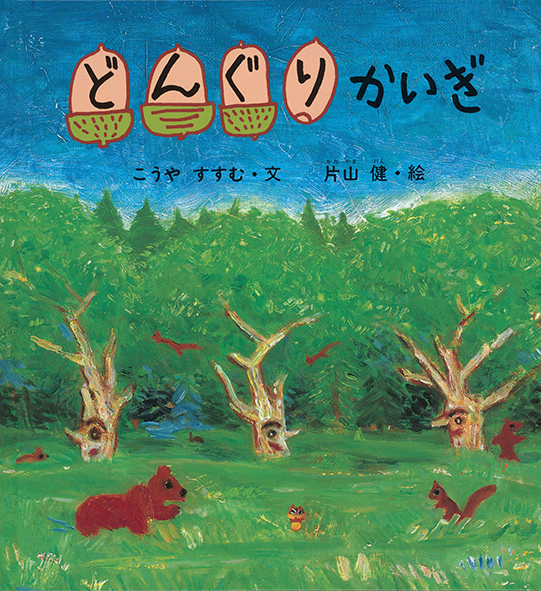
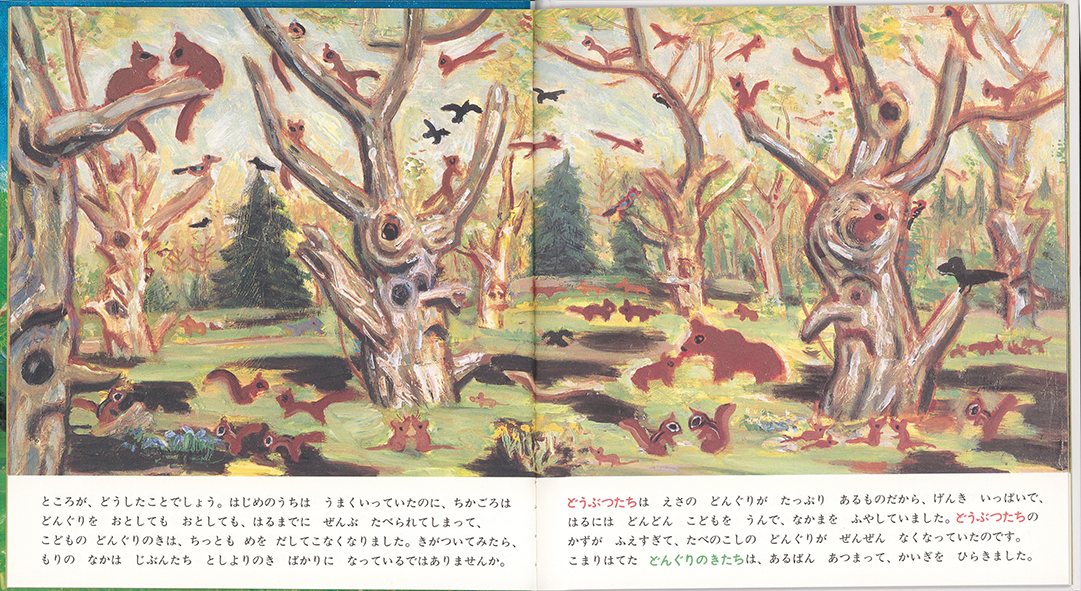
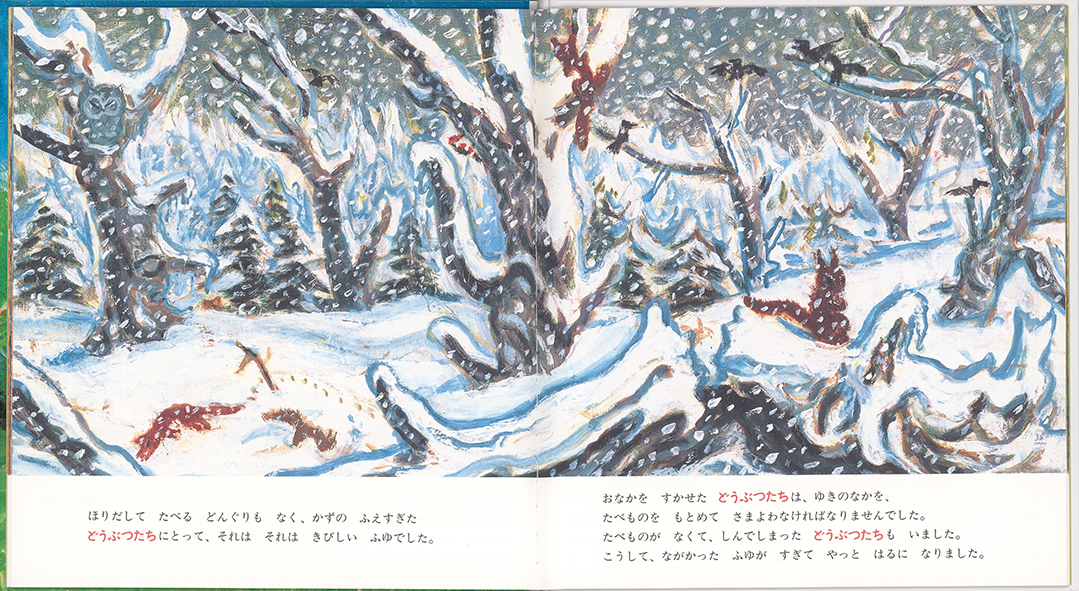
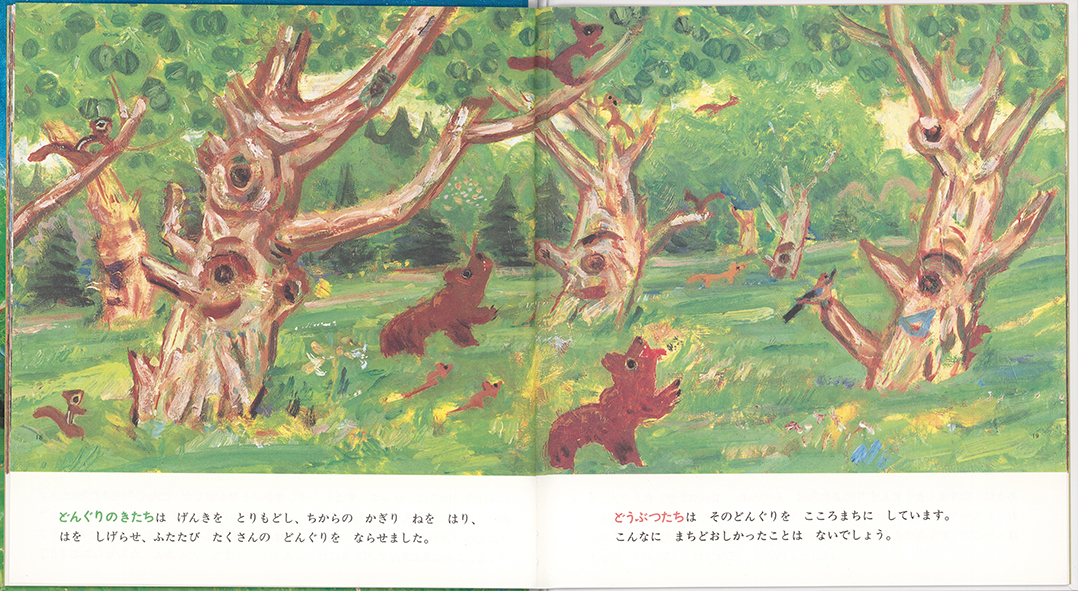
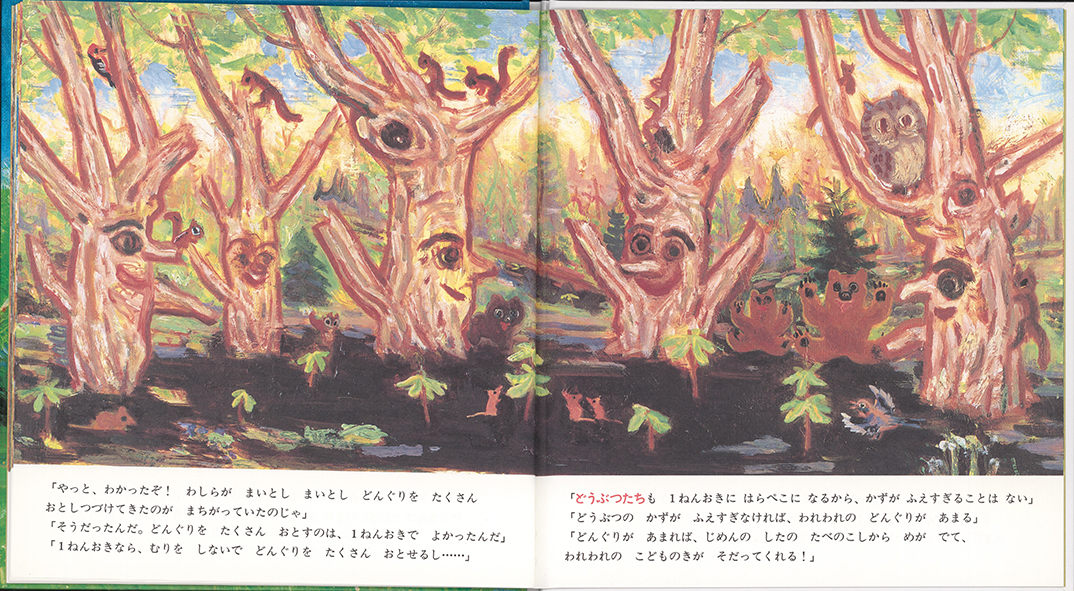
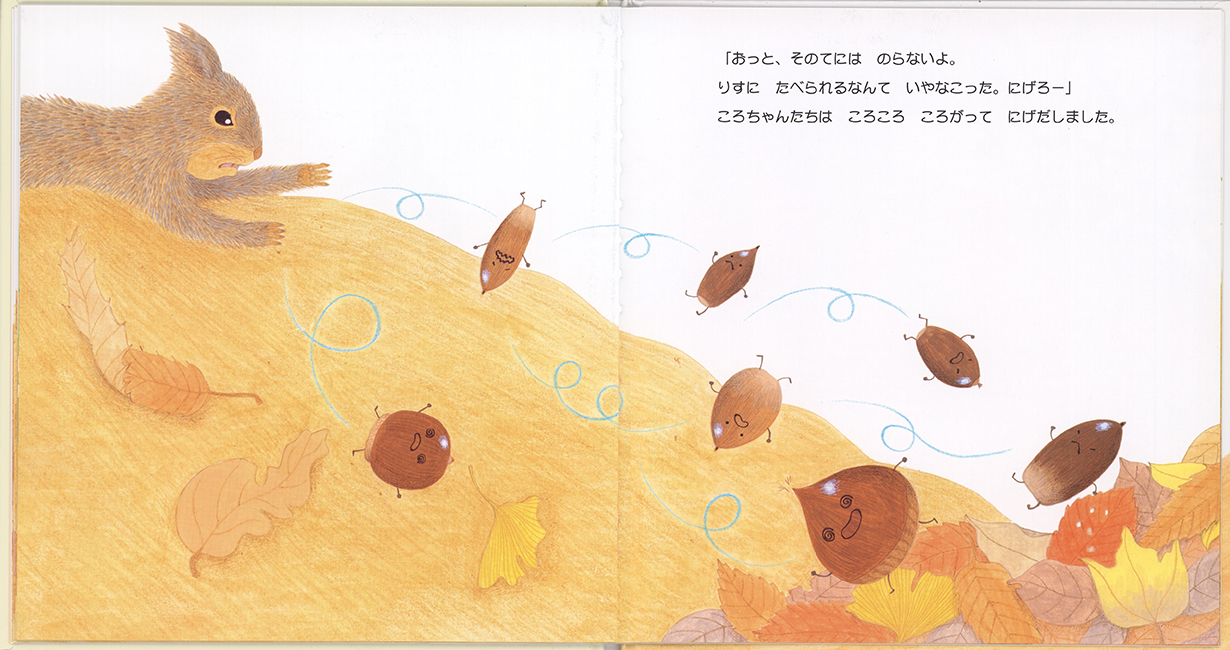
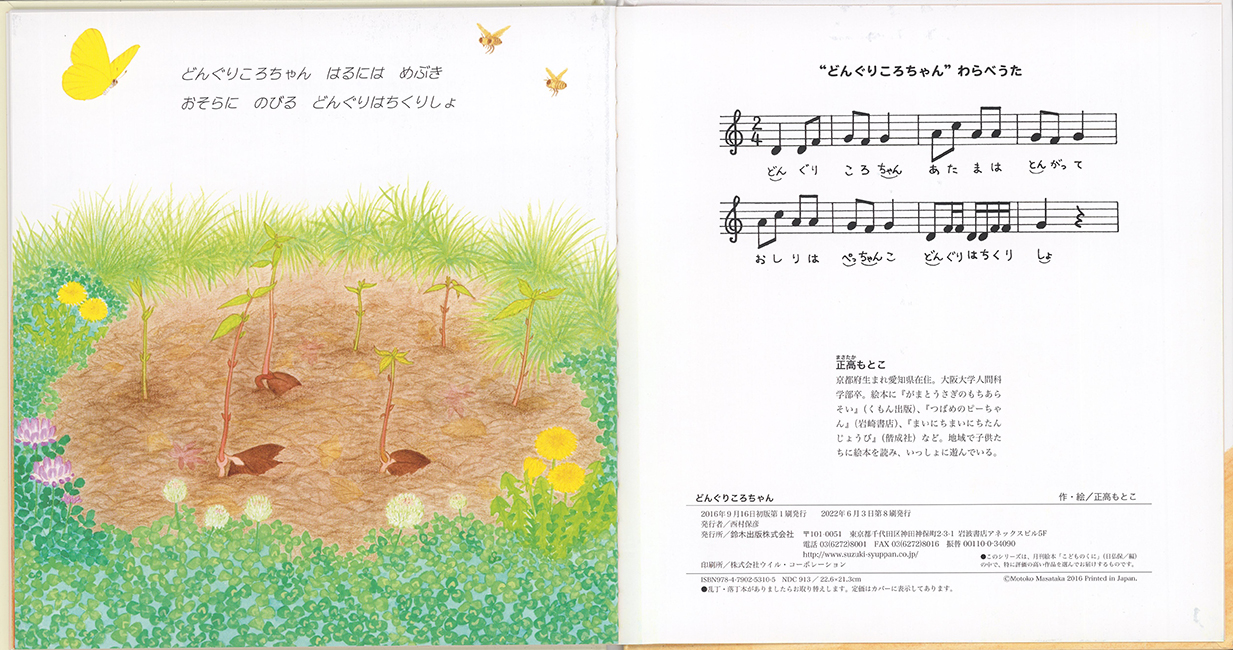
In an oak forest, sometimes many small trees sprout, and in some years there are desperately few. Why is this? The oaks deliberate on how to coordinate with the populations of animals that eat acorns over winter, and how to establish harmony in the forest.

The Acorn Conference 
Text: Susumu Koya, Illustrations: Yoshiko Saito

2
Donguri kaigi
Susumu Koya, Ken Katayama
Fukuinkan Šoten, 1993


i
translation
In an oak forest, sometimes many small trees sprout, and in some years there are desperately few. Why is this? The oaks deliberate on how to coordinate with the populations of animals that eat acorns over winter, and how to establish harmony in the forest.

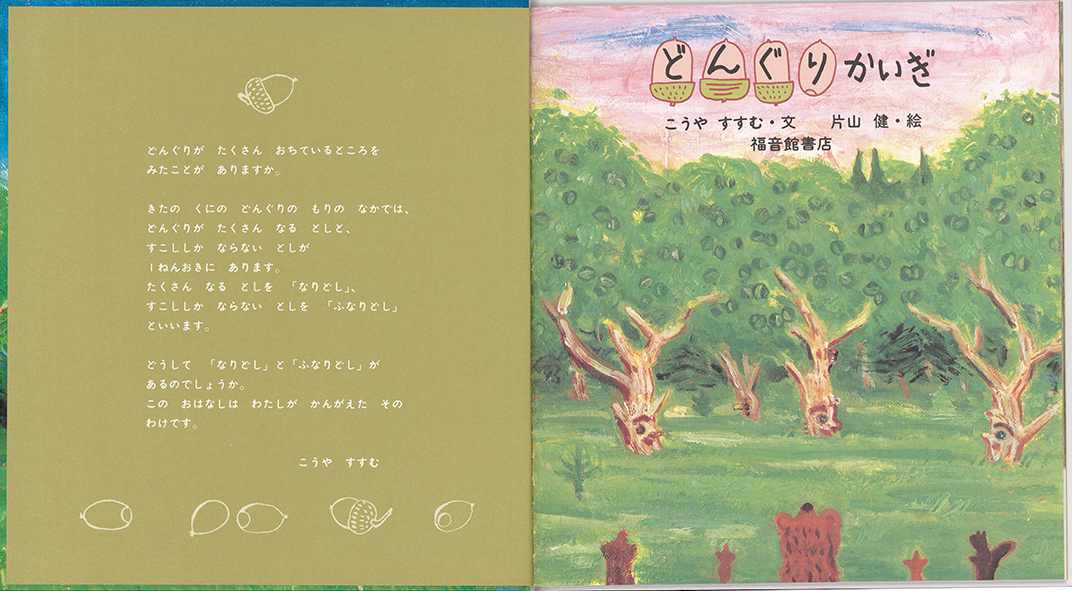
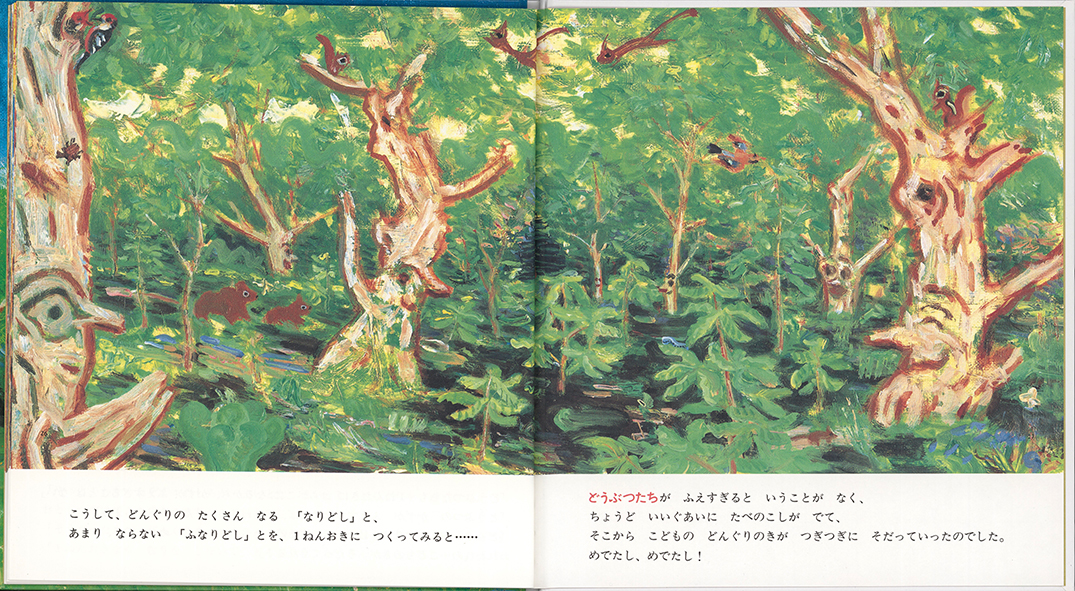
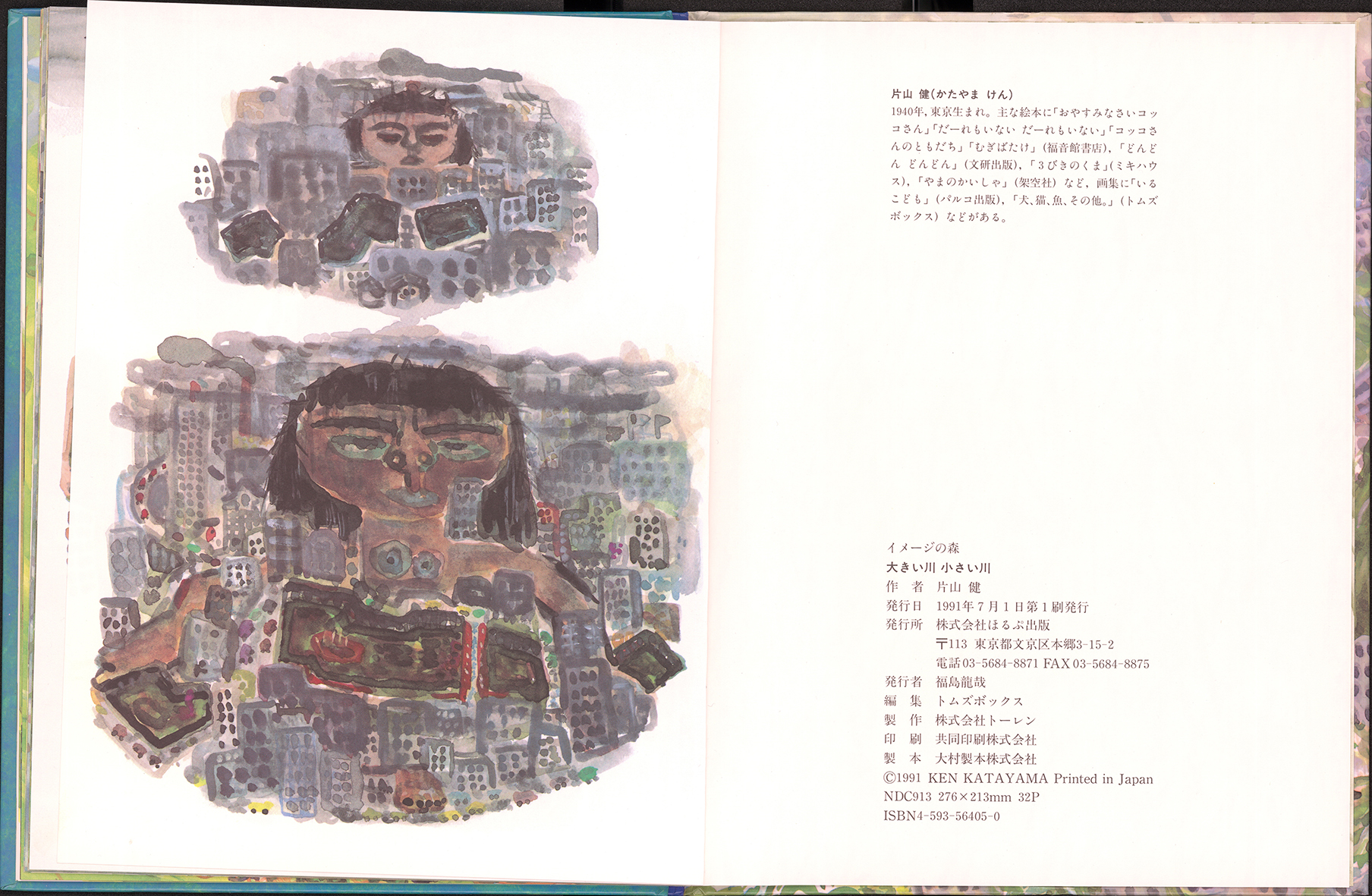
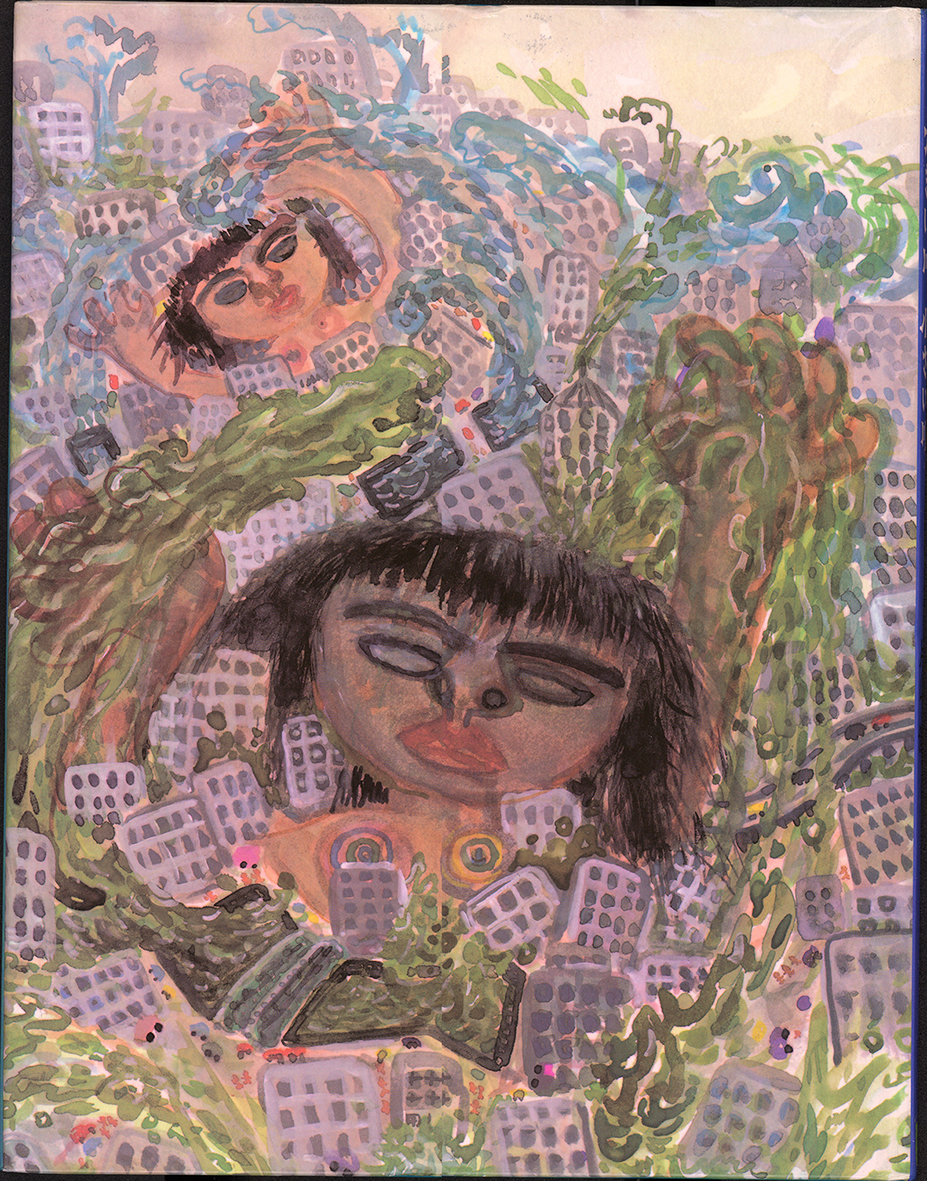
Have you ever seen a place where there are lots of acorns on the ground? In an oak forest in a northern land, there are years when many acorns grow, and years when only a few grow — and these years alternate. A year when there are many is called a "year of plenty," and a year when there are few is called a "year of poor harvest." Why are there "years of plenty" and "years of poor harvest"? This story is my explanation of that question.

The Acorn Conference 
Text: Susumu Koya 
Illustrations: Ken Katayama 
Publisher: Fukuinkan Shoten

3
Donguri kaigi
Susumu Koya, Ken Katayama
Fukuinkan Šoten, 1993


i
translation
In an oak forest, sometimes many small trees sprout, and in some years there are desperately few. Why is this? The oaks deliberate on how to coordinate with the populations of animals that eat acorns over winter, and how to establish harmony in the forest.

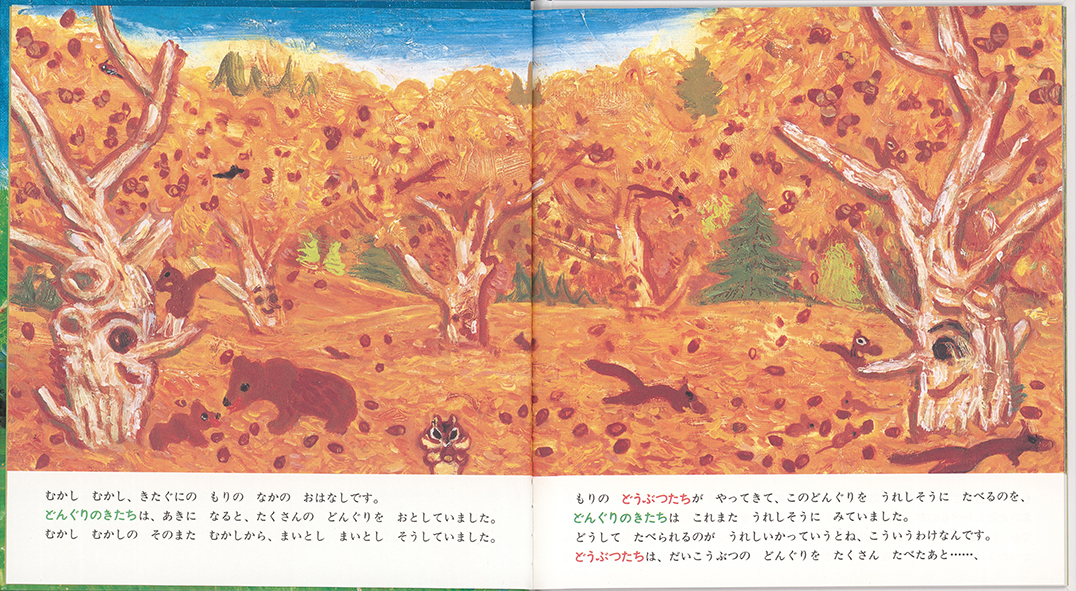
Once upon a time, this story took place in a forest in a northern land. When autumn came, the oak trees dropped plenty of acorns. And so they had done every year, since time immemorial. The forest animals would come and eat the acorns with delight, and the oak trees would watch with delight too. Why were they pleased to see their acorns being eaten? There is a reason for that. For when the animals eat plenty of their beloved acorns...

5
Donguri kaigi
Susumu Koya, Ken Katayama
Fukuinkan Šoten, 1993


i
translation
In an oak forest, sometimes many small trees sprout, and in some years there are desperately few. Why is this? The oaks deliberate on how to coordinate with the populations of animals that eat acorns over winter, and how to establish harmony in the forest.

But what happened? At first everything worked well, but lately, even though acorns kept falling and falling, by spring they had all been eaten, and young oak trees had stopped sprouting altogether. When the oaks took notice, they found that the forest was full of nothing but themselves — old trees. The animals had plenty of acorns, were full of energy, and in spring kept giving birth to more and more young, multiplying all the while. Their numbers had grown so great that not a single acorn was left uneaten. One evening, the desperate oaks gathered together and called a meeting.

9
Donguri kaigi
Susumu Koya, Ken Katayama
Fukuinkan Šoten, 1993


i
translation
In an oak forest, sometimes many small trees sprout, and in some years there are desperately few. Why is this? The oaks deliberate on how to coordinate with the populations of animals that eat acorns over winter, and how to establish harmony in the forest.

There were no more acorns to dig up and eat, and for the overpopulated animals it was a truly harsh winter. The hungry animals had to wander through the snow in search of food. Some of them perished without finding any. And so the long winter passed, and spring finally came.

11
Donguri kaigi
Susumu Koya, Ken Katayama
Fukuinkan Šoten, 1993


i
translation
In an oak forest, sometimes many small trees sprout, and in some years there are desperately few. Why is this? The oaks deliberate on how to coordinate with the populations of animals that eat acorns over winter, and how to establish harmony in the forest.

The oaks regained their strength, spread their roots as wide as they could, unfurled their leaves and once again bore plenty of acorns. The animals could hardly wait for those acorns. Perhaps they had never looked forward to anything as much as this.

14
Donguri kaigi
Susumu Koya, Ken Katayama
Fukuinkan Šoten, 1993


i
translation
In an oak forest, sometimes many small trees sprout, and in some years there are desperately few. Why is this? The oaks deliberate on how to coordinate with the populations of animals that eat acorns over winter, and how to establish harmony in the forest.

"We've finally figured it out! Dropping plenty of acorns every single year was our mistake." "That's right. It would be enough to drop acorns abundantly just once every two years." "If it's once every two years, we won't exhaust ourselves and we'll be able to drop plenty of acorns..." "And the animals will go hungry once every two years too, so their numbers won't grow out of control." "If their numbers don't grow out of control, our acorns will remain." "And if some acorns are left over, new shoots will sprout from the fallen, damp remains and grow into our children — new trees!"

15
Donguri kaigi
Susumu Koya, Ken Katayama
Fukuinkan Šoten, 1993


i
translation
In an oak forest, sometimes many small trees sprout, and in some years there are desperately few. Why is this? The oaks deliberate on how to coordinate with the populations of animals that eat acorns over winter, and how to establish harmony in the forest.

And so they tried alternating a year of many acorns ("a year of plenty") with a year of few ("a year of scarcity"), every other year… The animals no longer multiplied out of control, there was always just enough left uneaten, and from that, one by one, young oak trees grew. And all was well.

Donguri kaigi
Susumu Koya, Ken Katayama
Fukuinkan Šoten
1993
obálka
Gadan godan
Mizumaru Anzai
Fukuinkan Shoten, 2010


i
translation
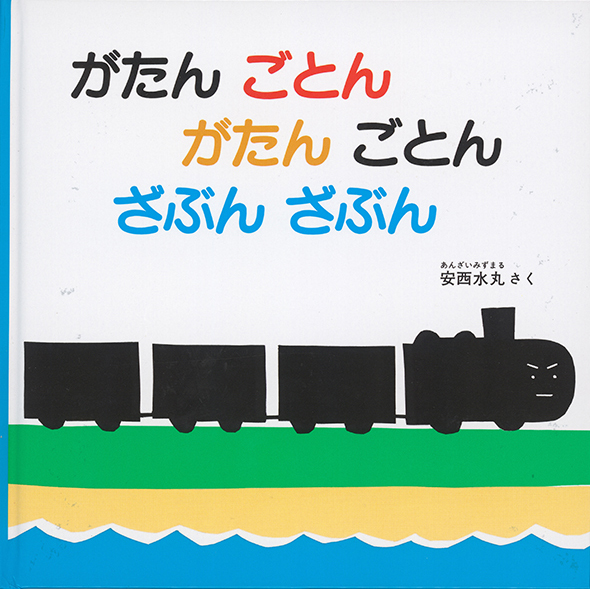
A book for the youngest readers, about a train travelling along the beach picking up passengers. Anyone can be a passenger — everything is alive!

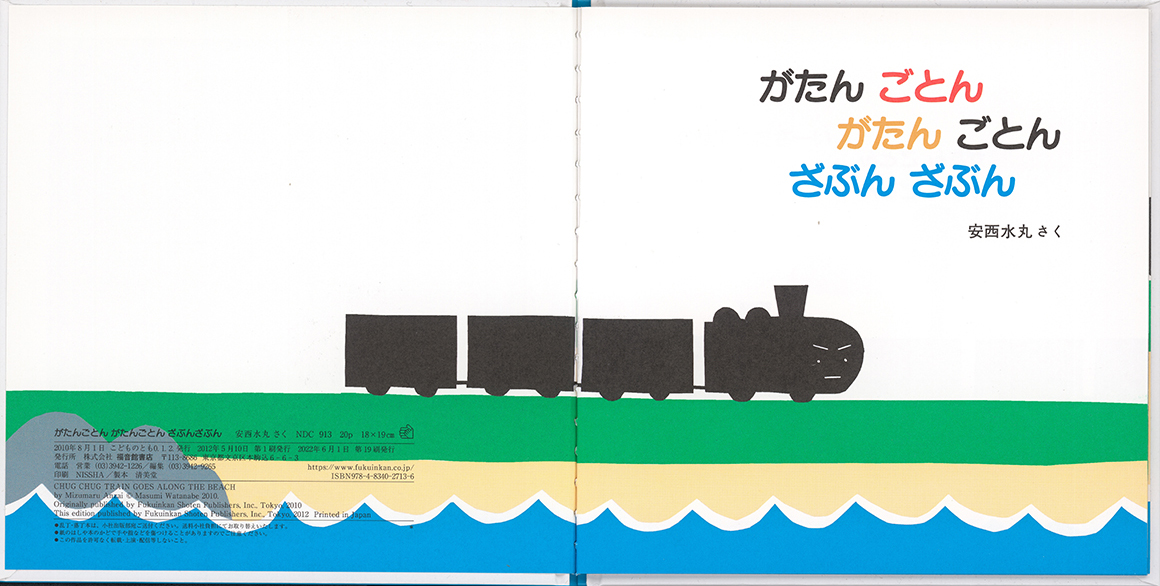
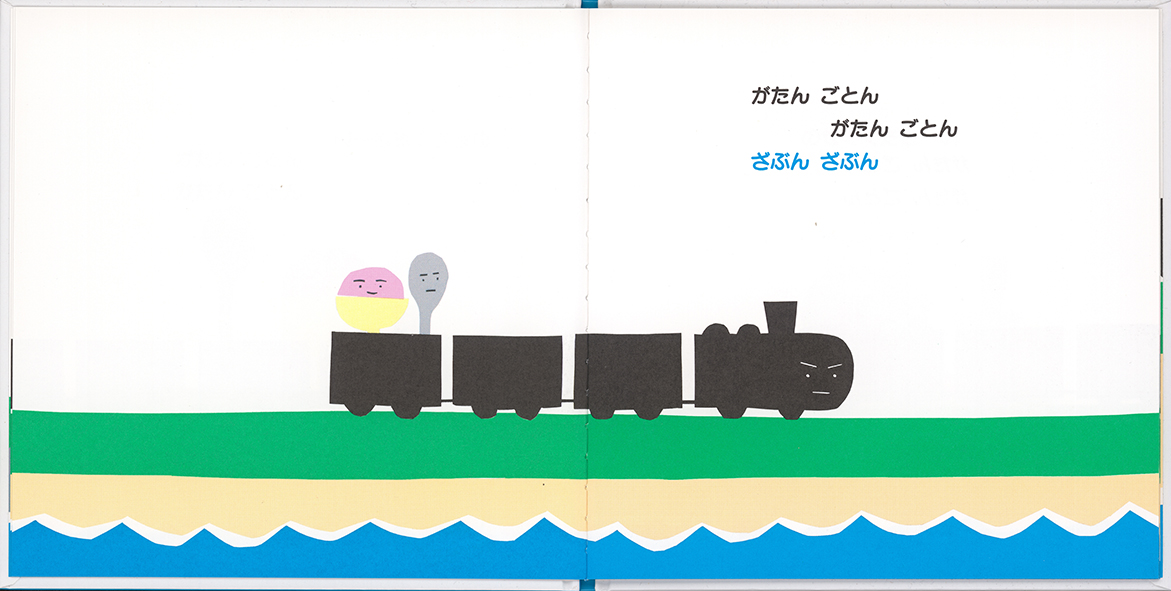
Clickety-clack, clickety-clack

2
Gadan godan
Mizumaru Anzai
Fukuinkan Shoten, 2010


i
translation
A book for the youngest readers, about a train travelling along the beach picking up passengers. Anyone can be a passenger — everything is alive!

Clickety-clack, clickety-clack
Splash splash

Author: Anzai Mizumaru

6
Gadan godan
Mizumaru Anzai
Fukuinkan Shoten, 2010


i
translation
A book for the youngest readers, about a train travelling along the beach picking up passengers. Anyone can be a passenger — everything is alive!

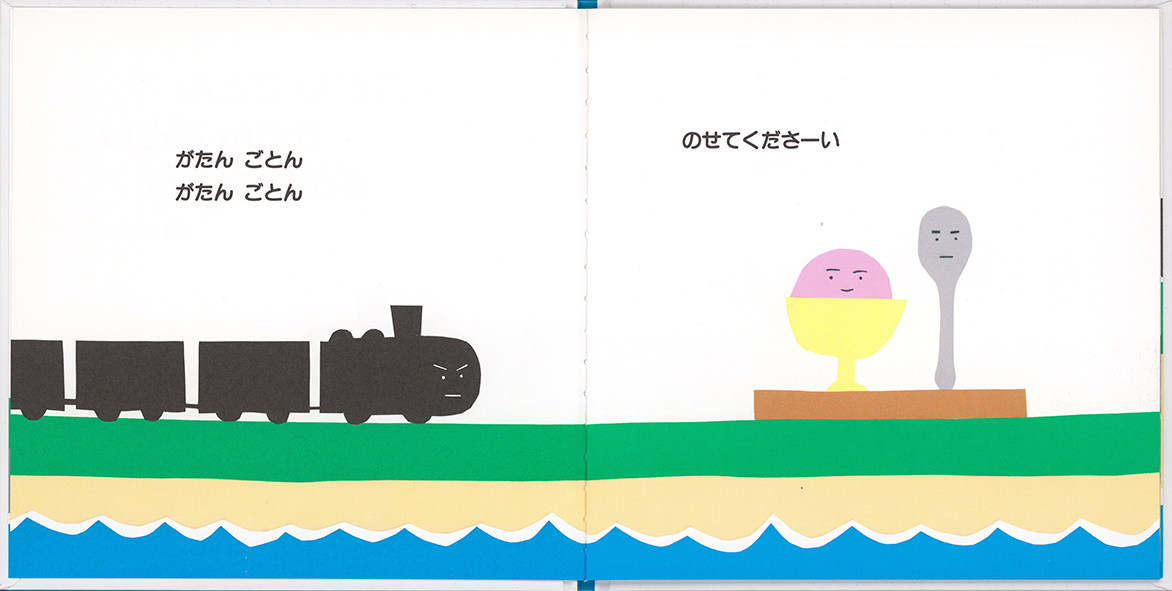
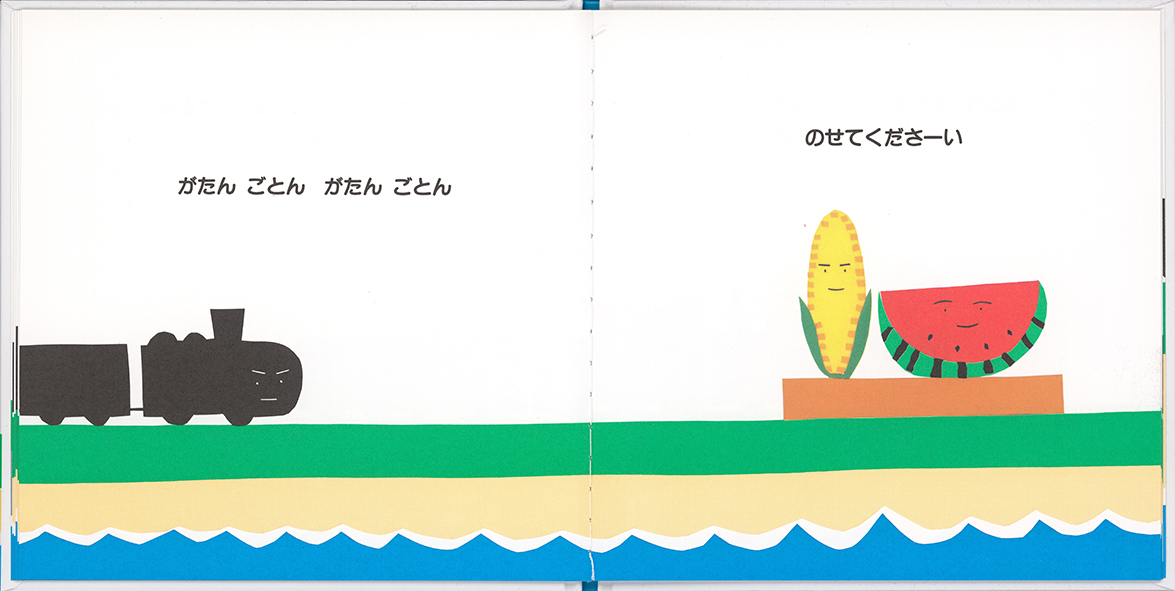
Clickety-clack, clickety-clack 
Please, take us aboard!

7
Gadan godan
Mizumaru Anzai
Fukuinkan Shoten, 2010


i
translation
A book for the youngest readers, about a train travelling along the beach picking up passengers. Anyone can be a passenger — everything is alive!

Clickety-clack, clickety-clack
Splash splash

8
Gadan godan
Mizumaru Anzai
Fukuinkan Shoten, 2010


i
translation
A book for the youngest readers, about a train travelling along the beach picking up passengers. Anyone can be a passenger — everything is alive!

Clickety-clack, clickety-clack 
Please, take us aboard!

81
Gadan godan
Mizumaru Anzai
Fukuinkan Shoten, 2010


i
translation
A book for the youngest readers, about a train travelling along the beach picking up passengers. Anyone can be a passenger — everything is alive!

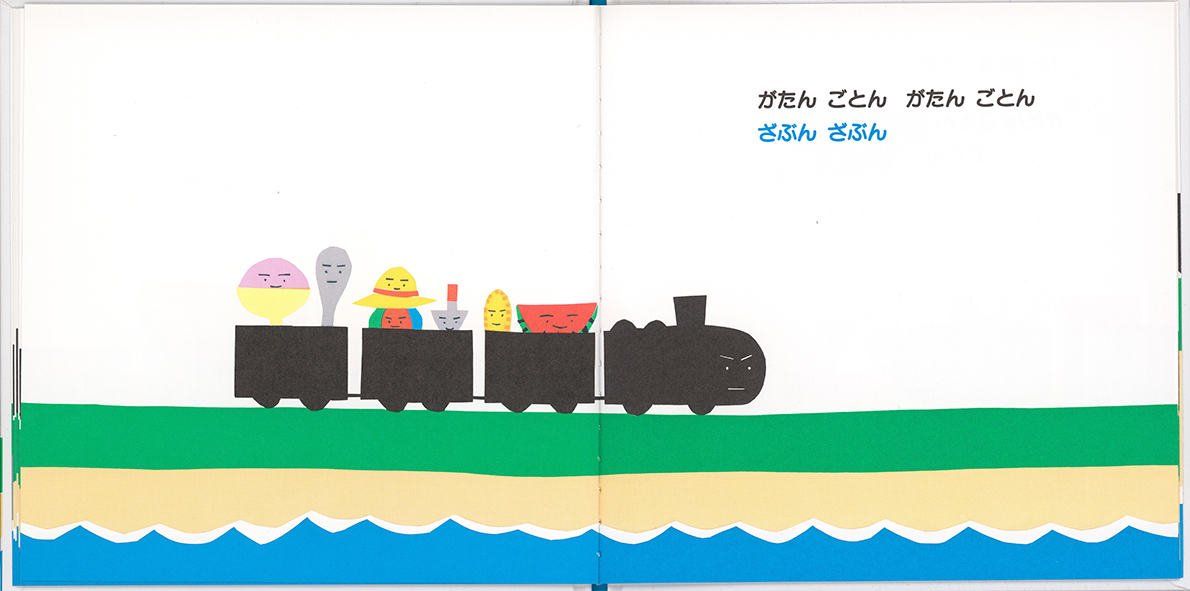
Clickety-clack, clickety-clack
Splash splash

85
Gadan godan
Mizumaru Anzai
Fukuinkan Shoten, 2010


i
translation
A book for the youngest readers, about a train travelling along the beach picking up passengers. Anyone can be a passenger — everything is alive!

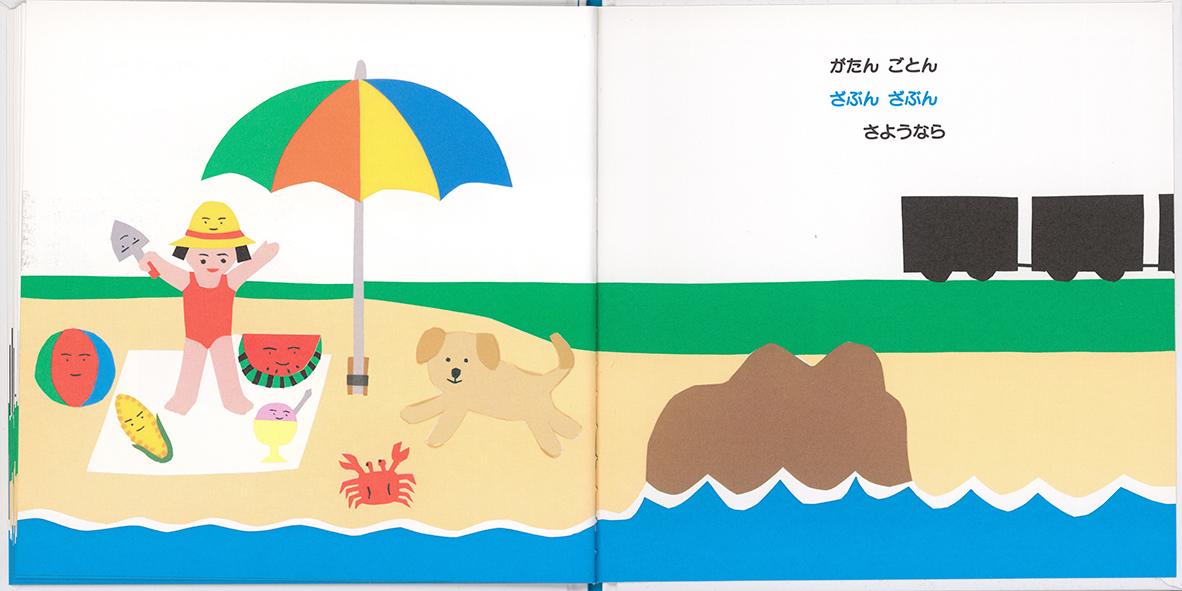
Clickety-clack
Good bye

86
Gadan godan
Mizumaru Anzai
Fukuinkan Shoten, 2010


i
translation
A book for the youngest readers, about a train travelling along the beach picking up passengers. Anyone can be a passenger — everything is alive!

-

Gadan godan
Mizumaru Anzai
Fukuinkan Shoten
2010
obalka
Jama ga aruita jo
Šinta Čó
Aki Šobo Co., 2018


i
translation
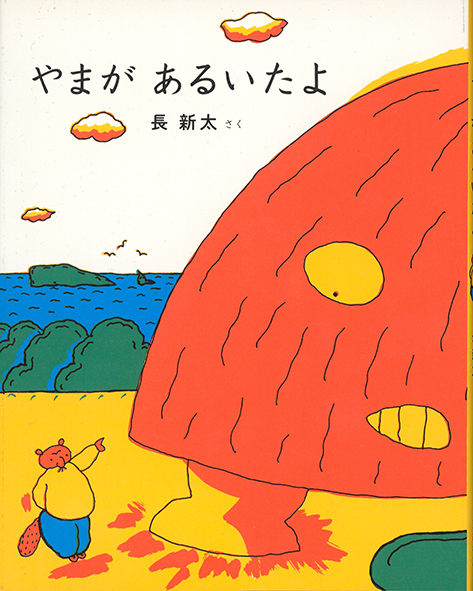
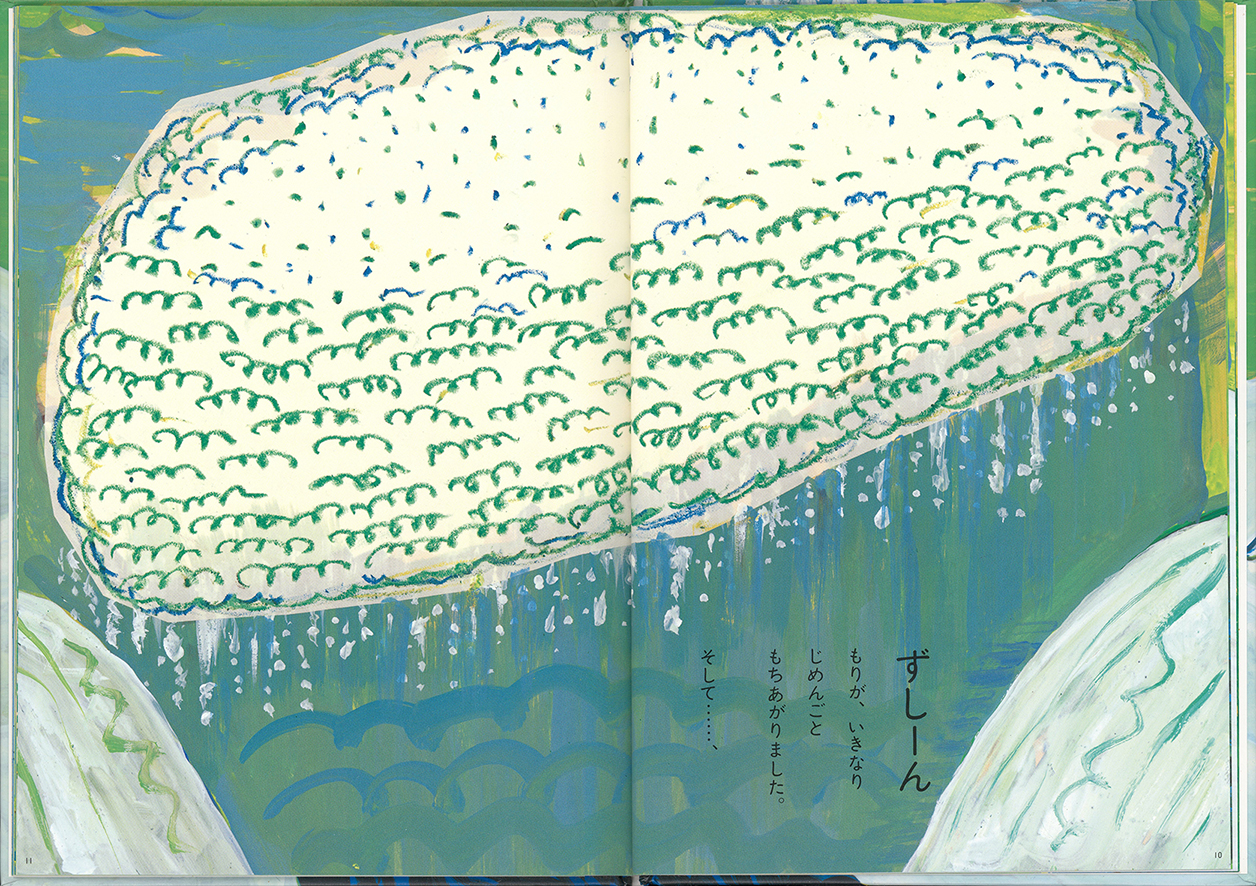
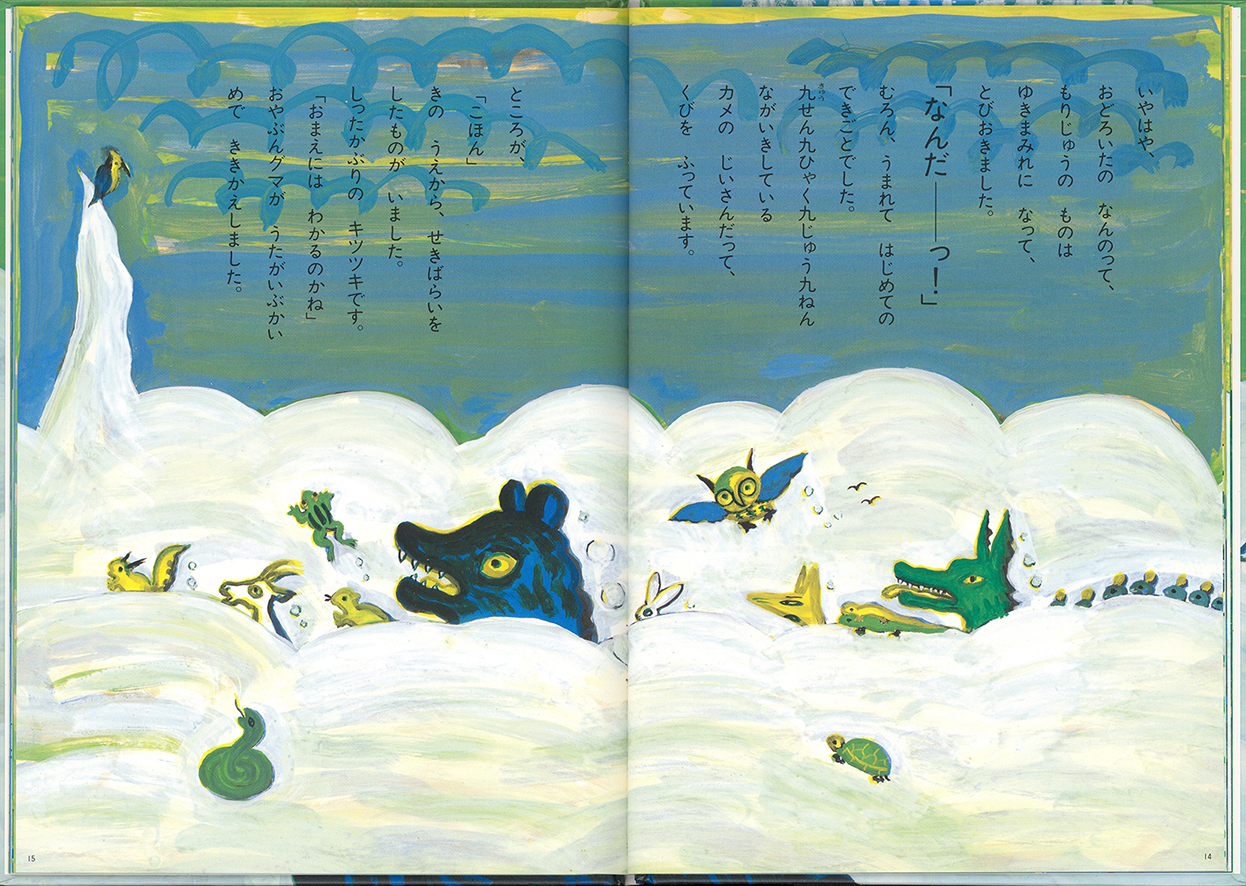
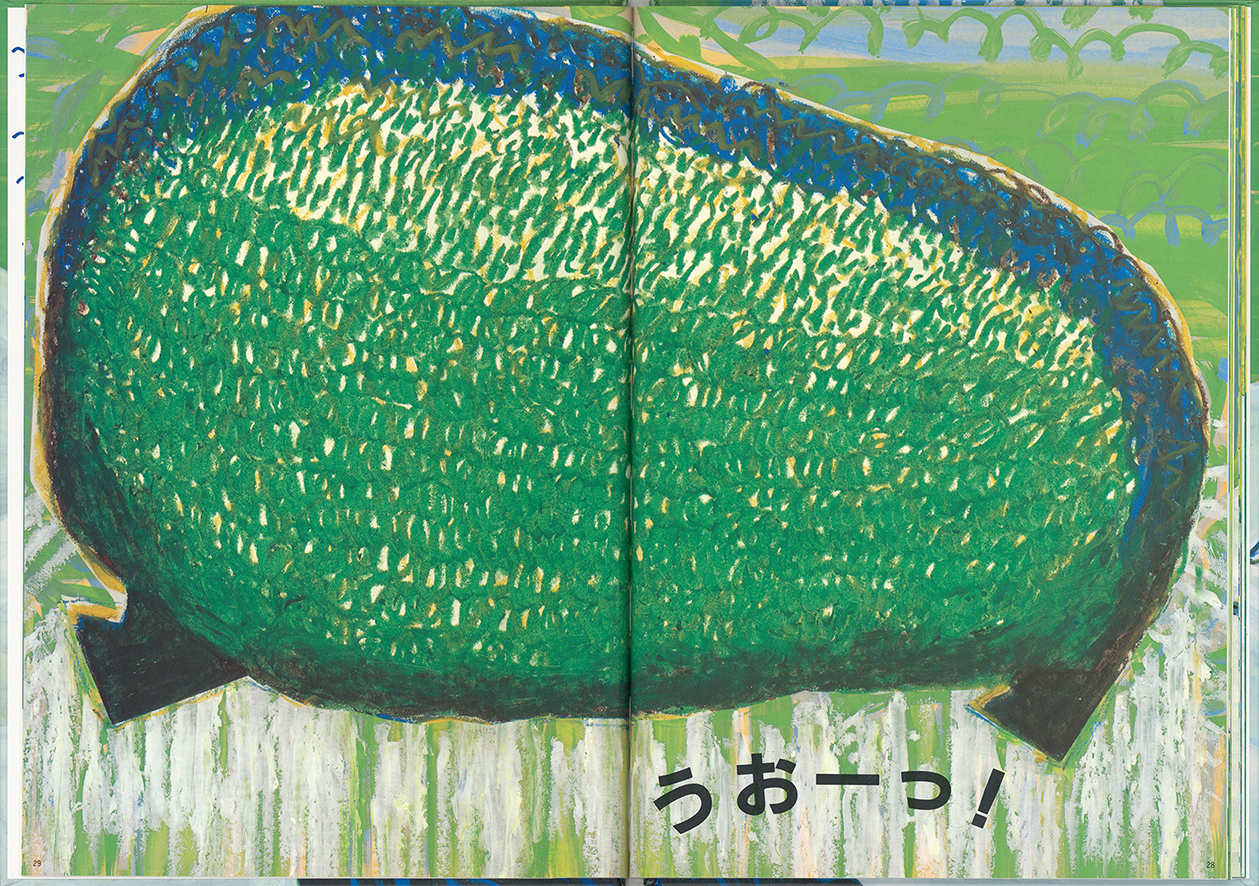
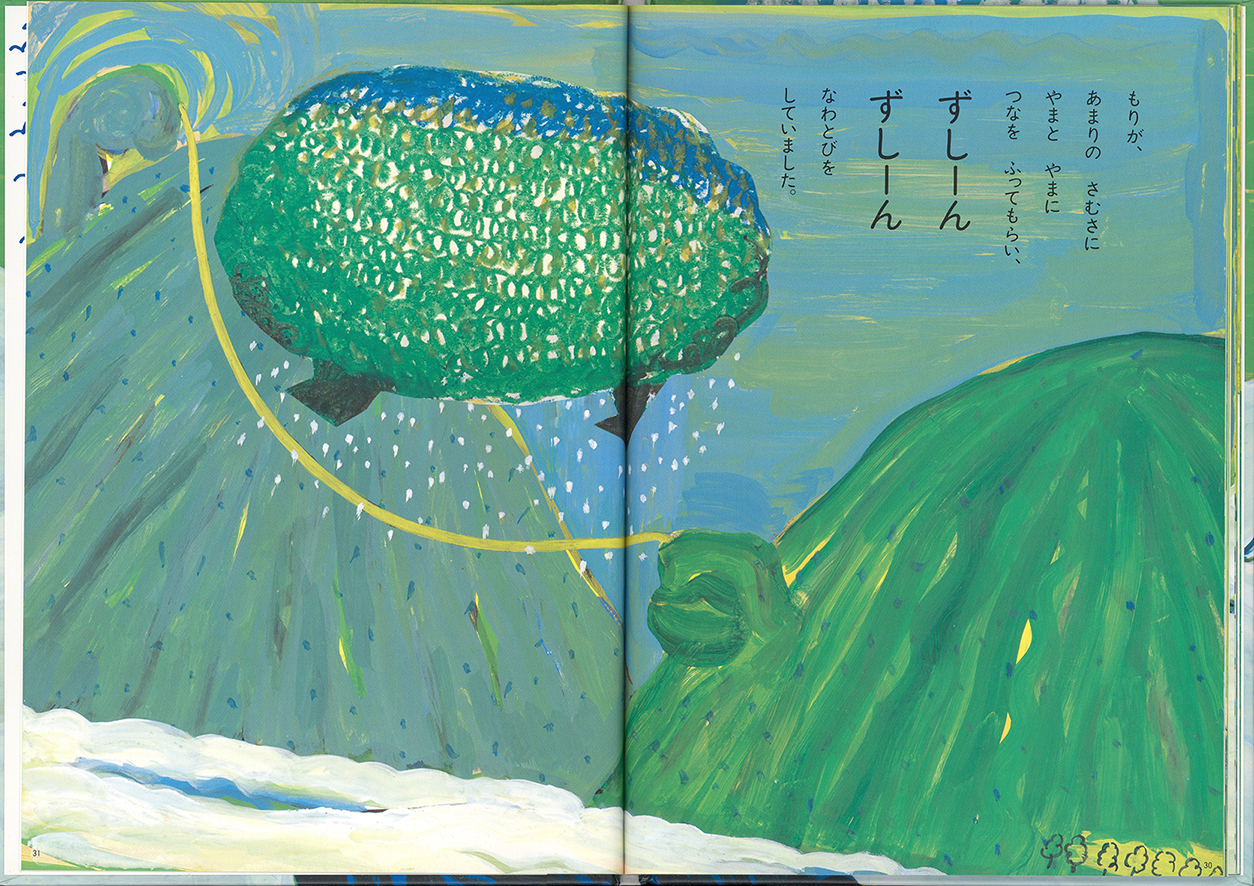
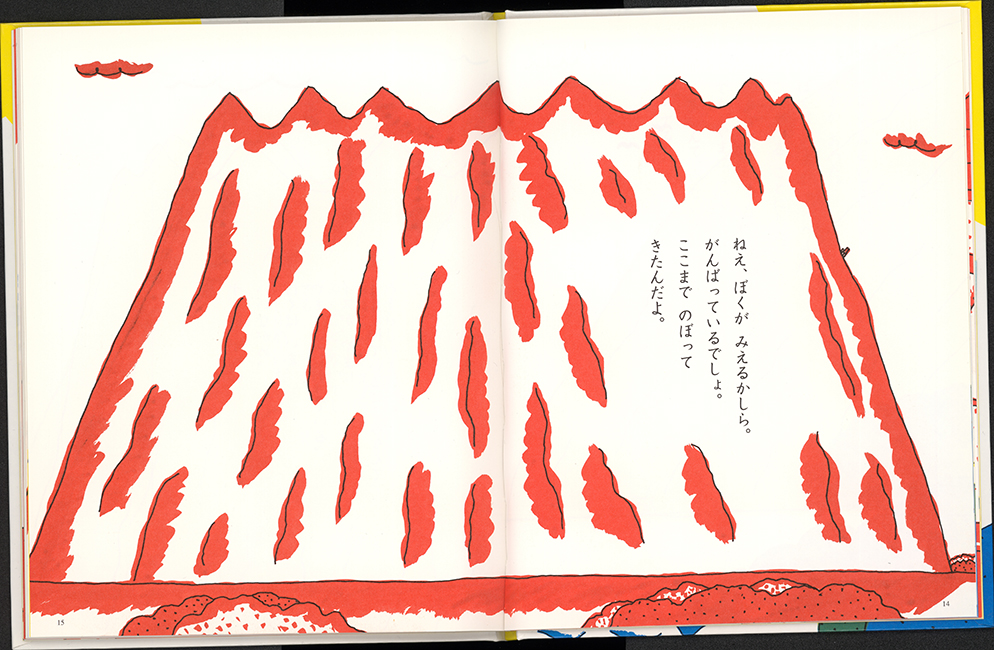
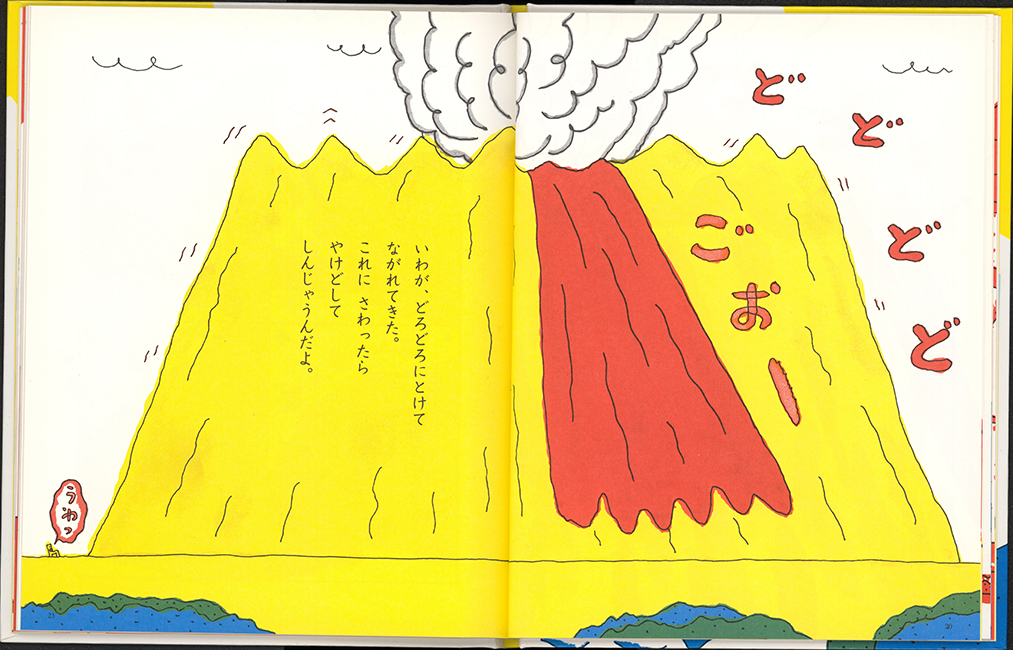
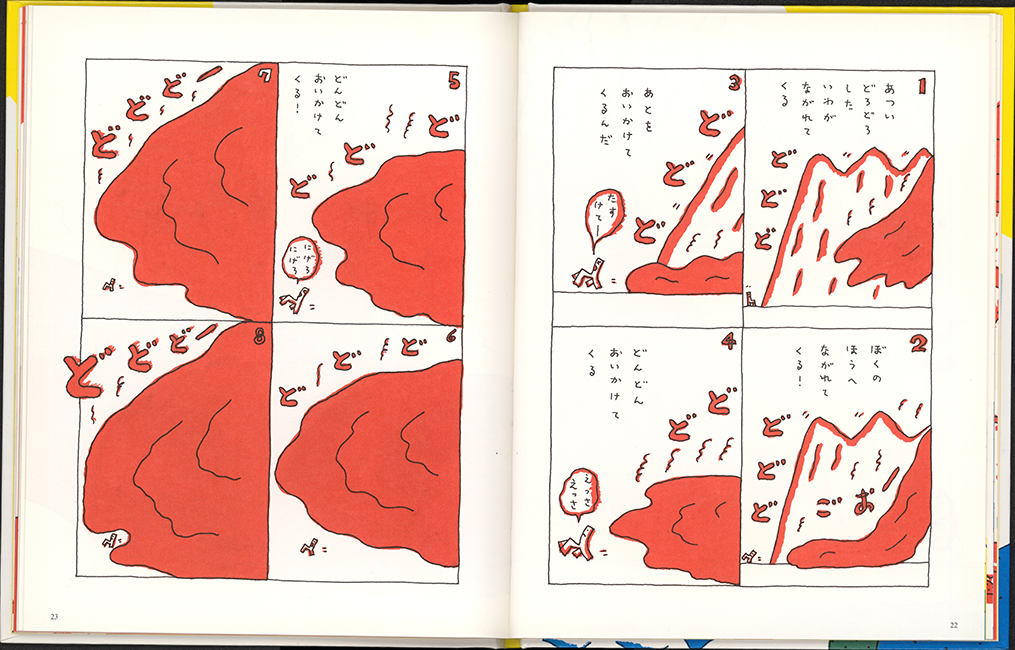
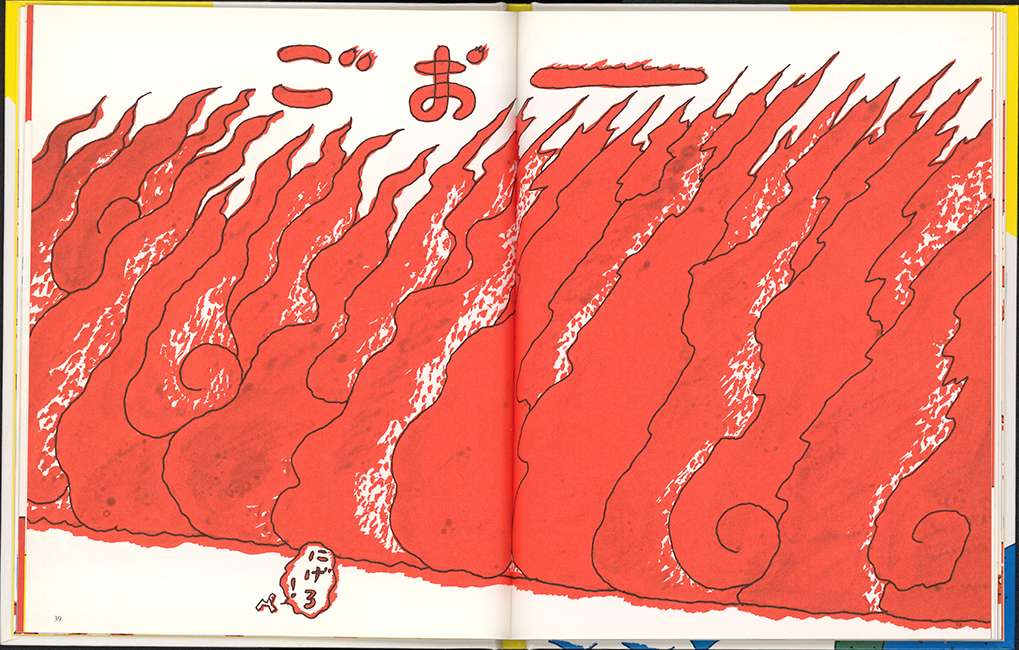
One morning, an elderly raccoon dog discovers an enormous footprint in front of the mountain where he lives. How strange! Soon, eerie sounds begin to echo through the air. What kind of monster could be making them? It must be close — he trembles with fear. It turns out, however, that it is the mountain itself that has been going on walks — and in this story, the mountain is very much a second protagonist, with its own sovereignty and its own agenda. Such a walk, it turns out, feels rather like an earthquake. And what chaos ensues when a mountain decides to wrestle another mountain — or worse, develops a taste for it... Terrible! At least for the humans.

The Mountain Goes for a Walk 
Cho Shinta

4
Jama ga aruita jo
Šinta Čó
Aki Šobo Co., 2018


i
translation
One morning, an elderly raccoon dog discovers an enormous footprint in front of the mountain where he lives. How strange! Soon, eerie sounds begin to echo through the air. What kind of monster could be making them? It must be close — he trembles with fear. It turns out, however, that it is the mountain itself that has been going on walks — and in this story, the mountain is very much a second protagonist, with its own sovereignty and its own agenda. Such a walk, it turns out, feels rather like an earthquake. And what chaos ensues when a mountain decides to wrestle another mountain — or worse, develops a taste for it... Terrible! At least for the humans.

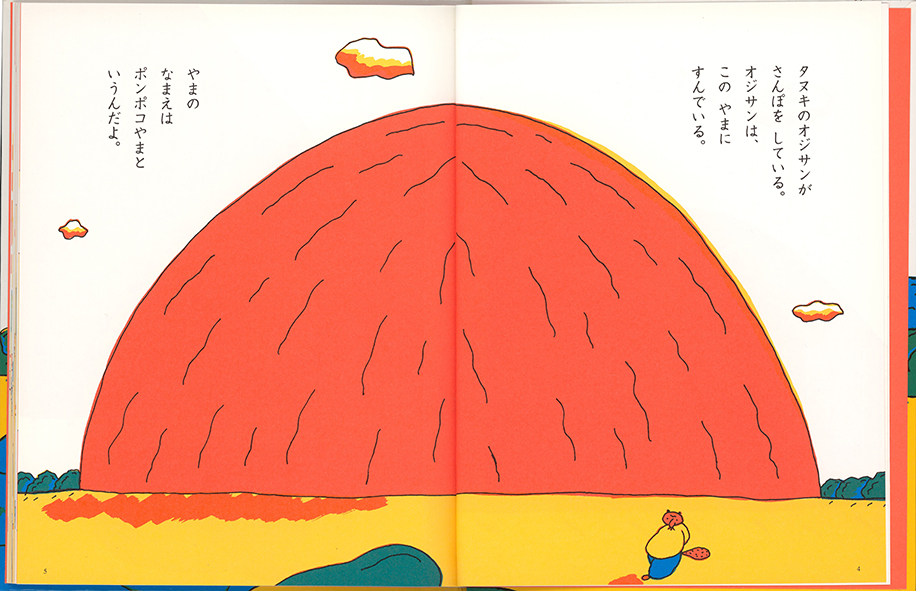
4/ Uncle Raccoon went out for a walk. He lives on this mountain.
5/ This place is called Raccoon Mountain.

5
Jama ga aruita jo
Šinta Čó
Aki Šobo Co., 2018


i
translation
One morning, an elderly raccoon dog discovers an enormous footprint in front of the mountain where he lives. How strange! Soon, eerie sounds begin to echo through the air. What kind of monster could be making them? It must be close — he trembles with fear. It turns out, however, that it is the mountain itself that has been going on walks — and in this story, the mountain is very much a second protagonist, with its own sovereignty and its own agenda. Such a walk, it turns out, feels rather like an earthquake. And what chaos ensues when a mountain decides to wrestle another mountain — or worse, develops a taste for it... Terrible! At least for the humans.

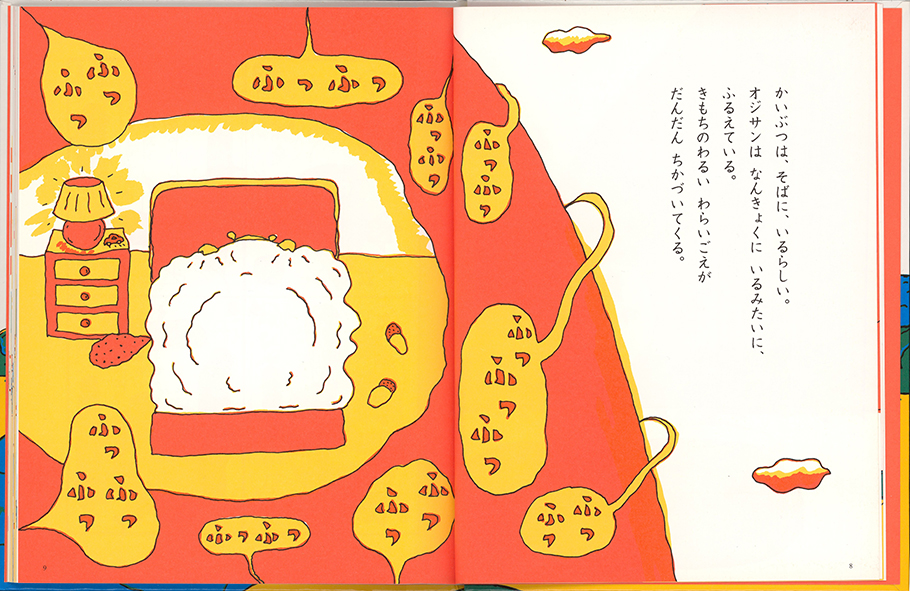
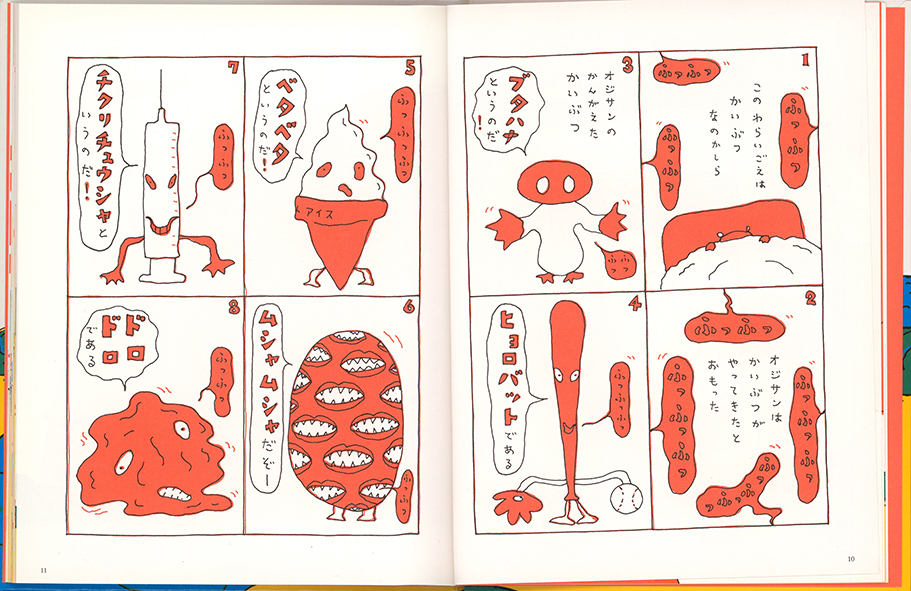
8/ There must be a monster somewhere nearby. Uncle was shaking like in Antarctica. And that disgusting laughter kept getting closer. “chi chi chi chi chi”

6
Jama ga aruita jo
Šinta Čó
Aki Šobo Co., 2018


i
translation
One morning, an elderly raccoon dog discovers an enormous footprint in front of the mountain where he lives. How strange! Soon, eerie sounds begin to echo through the air. What kind of monster could be making them? It must be close — he trembles with fear. It turns out, however, that it is the mountain itself that has been going on walks — and in this story, the mountain is very much a second protagonist, with its own sovereignty and its own agenda. Such a walk, it turns out, feels rather like an earthquake. And what chaos ensues when a mountain decides to wrestle another mountain — or worse, develops a taste for it... Terrible! At least for the humans.

10/
1/ chi chi chi chi
does that laughter belong to the monster?

2/ chi chi chi chi
Uncle thought the monster was already here

3/ this is how he imagined it:
they call me Pigsty

4/ chi chi chi chi
I am Věchálka

11/
5/ chi chi chi chi
my name is Skull

6/ chi chi chi chi
I am Chewie

7/ chi chi chi chi
they call me Little-Stabber

8/ chi chi chi chi
I am Sludge

11
Jama ga aruita jo
Šinta Čó
Aki Šobo Co., 2018


i
translation
One morning, an elderly raccoon dog discovers an enormous footprint in front of the mountain where he lives. How strange! Soon, eerie sounds begin to echo through the air. What kind of monster could be making them? It must be close — he trembles with fear. It turns out, however, that it is the mountain itself that has been going on walks — and in this story, the mountain is very much a second protagonist, with its own sovereignty and its own agenda. Such a walk, it turns out, feels rather like an earthquake. And what chaos ensues when a mountain decides to wrestle another mountain — or worse, develops a taste for it... Terrible! At least for the humans.

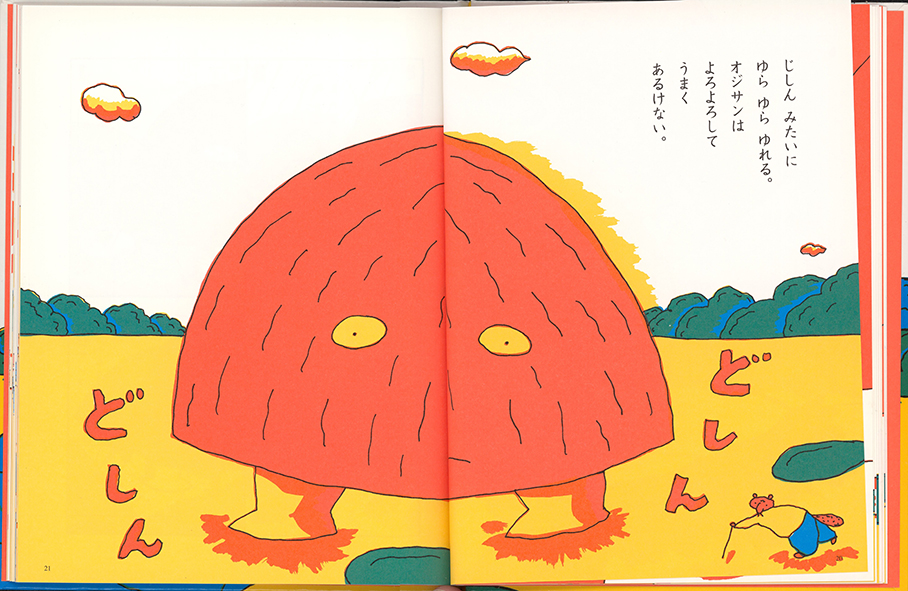
20/ It looks like an earthquake. Uncle can barely walk and is staggering.

25
Jama ga aruita jo
Šinta Čó
Aki Šobo Co., 2018


i
translation
One morning, an elderly raccoon dog discovers an enormous footprint in front of the mountain where he lives. How strange! Soon, eerie sounds begin to echo through the air. What kind of monster could be making them? It must be close — he trembles with fear. It turns out, however, that it is the mountain itself that has been going on walks — and in this story, the mountain is very much a second protagonist, with its own sovereignty and its own agenda. Such a walk, it turns out, feels rather like an earthquake. And what chaos ensues when a mountain decides to wrestle another mountain — or worse, develops a taste for it... Terrible! At least for the humans.

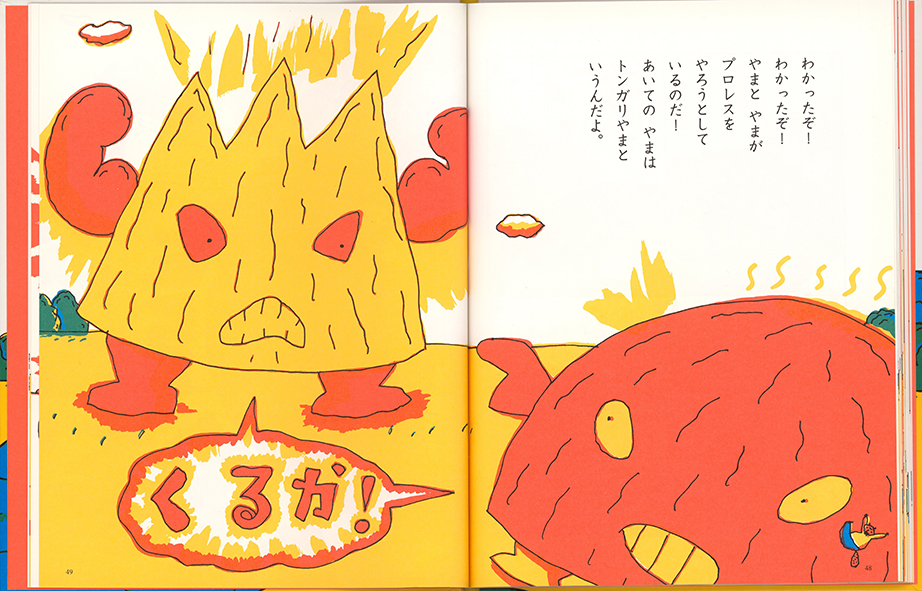
48/ Aha! Aha! The mountains are trying to wrestle each other!
The other mountain is called Pointy Mountain. “Come on.”

27
Jama ga aruita jo
Šinta Čó
Aki Šobo Co., 2018


i
translation
One morning, an elderly raccoon dog discovers an enormous footprint in front of the mountain where he lives. How strange! Soon, eerie sounds begin to echo through the air. What kind of monster could be making them? It must be close — he trembles with fear. It turns out, however, that it is the mountain itself that has been going on walks — and in this story, the mountain is very much a second protagonist, with its own sovereignty and its own agenda. Such a walk, it turns out, feels rather like an earthquake. And what chaos ensues when a mountain decides to wrestle another mountain — or worse, develops a taste for it... Terrible! At least for the humans.

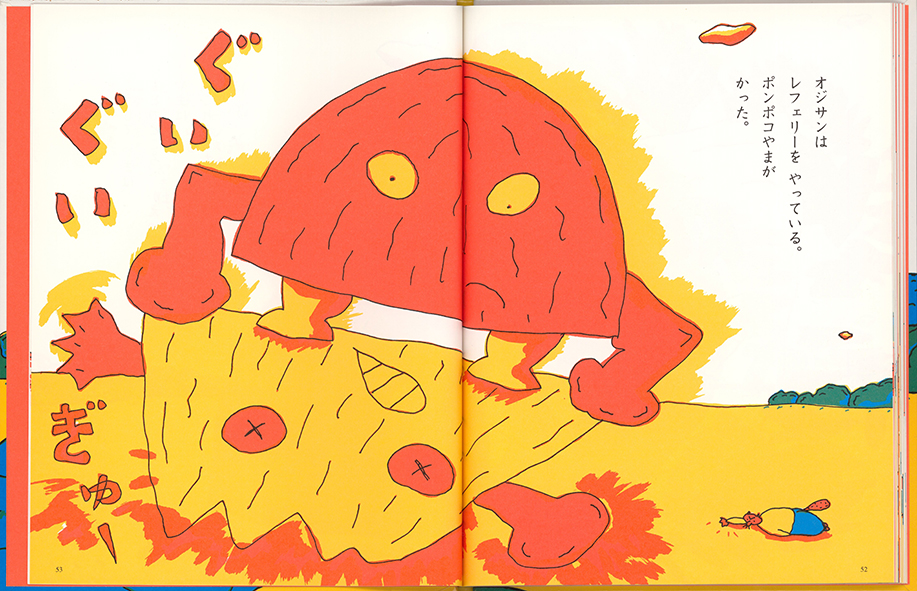
Uncle is the referee. Raccoon Mountain won.

SQUISH! CRUSH! WRIIING!!!

29
Jama ga aruita jo
Šinta Čó
Aki Šobo Co., 2018


i
translation
One morning, an elderly raccoon dog discovers an enormous footprint in front of the mountain where he lives. How strange! Soon, eerie sounds begin to echo through the air. What kind of monster could be making them? It must be close — he trembles with fear. It turns out, however, that it is the mountain itself that has been going on walks — and in this story, the mountain is very much a second protagonist, with its own sovereignty and its own agenda. Such a walk, it turns out, feels rather like an earthquake. And what chaos ensues when a mountain decides to wrestle another mountain — or worse, develops a taste for it... Terrible! At least for the humans.

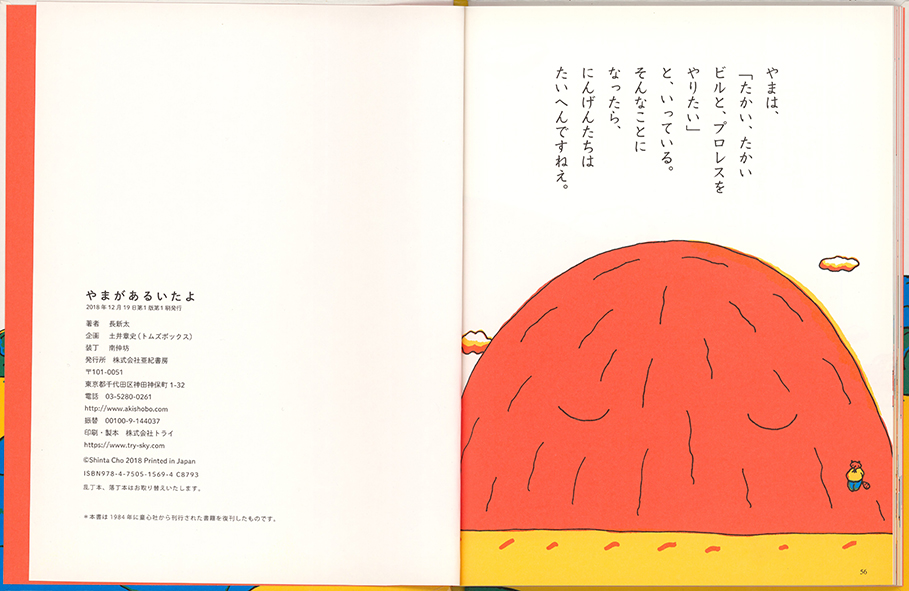
The mountain says: "I want to wrestle a tall, tall building." If that were ever to happen, humans would really have a terrible time of it!

Jama ga aruita jo
Šinta Čó
Aki Šobo Co.
2018
Tobe batta
Tobe batta
Seizó Tadžima
Kajsej-ša, 1988


i
translation
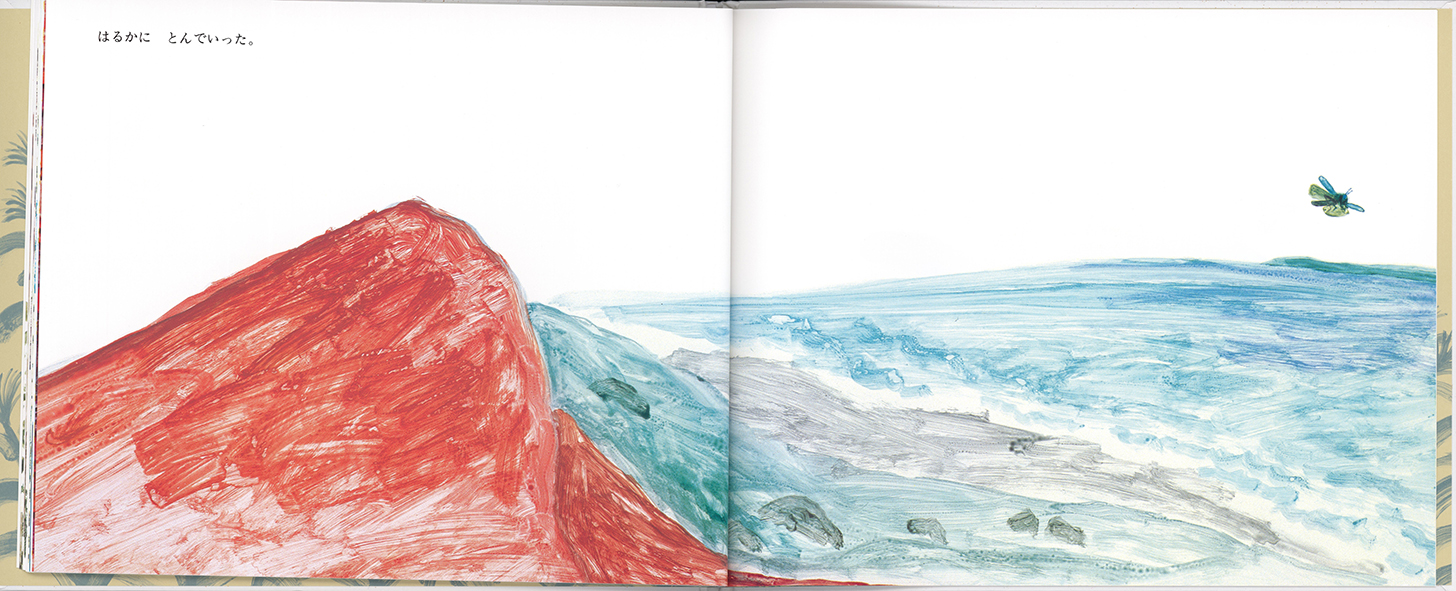
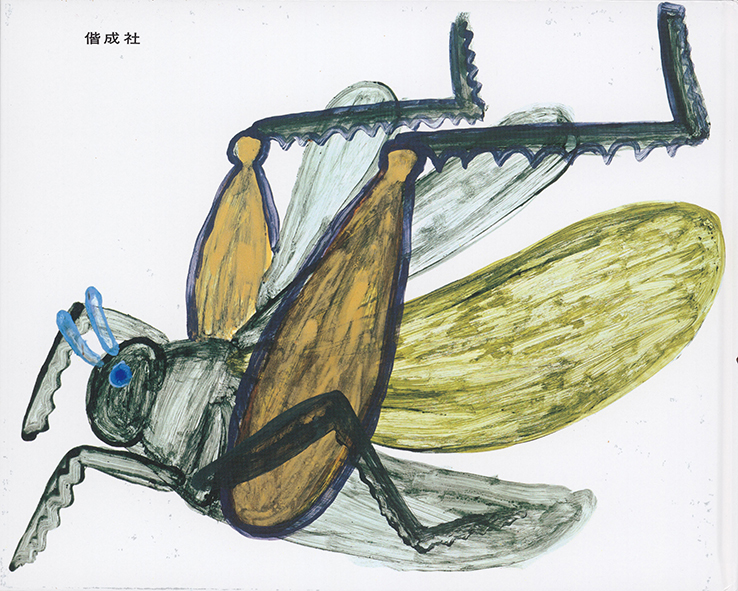
Fly, Grasshopper, Fly!

Fly, Grasshopper, Fly! 
Seizō Tajima

9
Tobe batta
Seizó Tadžima
Kajsej-ša, 1988


i
translation
Fly, Grasshopper, Fly!

At last, the snake found her after all.

10
Tobe batta
Seizó Tadžima
Kajsej-ša, 1988


i
translation
Fly, Grasshopper, Fly!

Just at that moment, a praying mantis leapt at him.

12
Tobe batta
Seizó Tadžima
Kajsej-ša, 1988


i
translation
Fly, Grasshopper, Fly!

He tore through the spider's web and the spider itself — and the grasshopper flies on.

14
Tobe batta
Seizó Tadžima
Kajsej-ša, 1988


i
translation
Fly, Grasshopper, Fly!

The grasshopper burst through the clouds high above her and climbed higher than anything else. But she could go no further. She began to fall… lower and lower.

18
Tobe batta
Seizó Tadžima
Kajsej-ša, 1988


i
translation
Fly, Grasshopper, Fly!

But the grasshopper didn't care what anyone said. She was so happy to be flying on her own strength that she could barely contain her joy. She flew higher and higher. On her own wings, wherever she wanted to go, carried by the wind, she flew on.

19
Tobe batta
Seizó Tadžima
Kajsej-ša, 1988


i
translation
Fly, Grasshopper, Fly!

The grasshopper flew across the wasteland.

20
Tobe batta
Seizó Tadžima
Kajsej-ša, 1988


i
translation
Fly, Grasshopper, Fly!

She flew on into the far distance.

21
Tobe batta
Seizó Tadžima
Kajsej-ša, 1988


i
translation
Fly, Grasshopper, Fly!

-

23
Tobe batta
Seizó Tadžima
Kajsej-ša, 1988


i
translation
Fly, Grasshopper, Fly!

-

Tobe batta
Seizó Tadžima
Kajsej-ša
1988
obálka
Dangomuši no onara
Masaki Macumura, Jukiko Murakami
Kjóto Šimbun, 2021


i
translation
Pill Bug's Fart

Pill Bug's Fart

Text: Masaki Macumura
Illustration: Jukiko Murakami

2
Dangomuši no onara
Masaki Macumura, Jukiko Murakami
Kjóto Šimbun, 2021


i
translation
Pill Bug's Fart

Pill Bug's Fart

Text: Masaki Macumura
Illustration: Jukiko Murakami

3
Dangomuši no onara
Masaki Macumura, Jukiko Murakami
Kjóto Šimbun, 2021


i
translation
Pill Bug's Fart

April wind carries the scent of flowers. But there is one dandelion seed that cannot play with the wind.

10
Dangomuši no onara
Masaki Macumura, Jukiko Murakami
Kjóto Šimbun, 2021


i
translation
Pill Bug's Fart

Oh my, what a fright! 
The pill bug curled into a ball and rolled, and rolled, and rolled down the hill.

12
Dangomuši no onara
Masaki Macumura, Jukiko Murakami
Kjóto Šimbun, 2021


i
translation
Pill Bug's Fart

"Hey! I'll ride on a great big fart and fly wherever I want!" 
"Let's give it a try!" 
"Watch out, here comes a long one! One, two, three — fssss… fúúúú…"

"I'm flying! I'm flying! I'm lifting off! Woo, this is so fun… this is amazing!"

16
Dangomuši no onara
Masaki Macumura, Jukiko Murakami
Kjóto Šimbun, 2021


i
translation
Pill Bug's Fart

"Wait… which wind?" 
"That one over there?" 
"Or this one?"

18
Dangomuši no onara
Masaki Macumura, Jukiko Murakami
Kjóto Šimbun, 2021


i
translation
Pill Bug's Fart

"Everyone — don't laugh at the little seed and don't tease it. The little seed is just trying to catch the wind."

22
Dangomuši no onara
Masaki Macumura, Jukiko Murakami
Kjóto Šimbun, 2021


i
translation
Pill Bug's Fart

Carried by the wind, the little seed traced "thank you" across the sky together with its friends, and then scattered joyfully into the world.

Dangomuši no onara
Masaki Macumura, Jukiko Murakami
Kjóto Šimbun
2021
8
Osoba no kuki wa naze akai
Momoko Ishii, Shigeru Hatsuyama
Iwanami Šoten, ?


i
translation
Why are buckwheat stems red?

Why are buckwheat stems red?

Iwanami Publishing

1
Osoba no kuki wa naze akai
Momoko Ishii, Shigeru Hatsuyama
Iwanami Šoten, ?


i
translation
Why are buckwheat stems red?

Once upon a time, long, long ago, in the days when grass and trees still spoke, this story took place. It was a cold winter's day. By a great river, a buckwheat plant and a reed were talking together. Then an old man came toward them, leaning on a staff. When he reached them, he stopped and said: "Where is the bridge across this river? Please, tell me. I have been looking for it for some time, but I cannot find it."

2
Osoba no kuki wa naze akai
Momoko Ishii, Shigeru Hatsuyama
Iwanami Šoten, ?


i
translation
Why are buckwheat stems red?

Soon the river water rose up around the buckwheat. Time and again it seemed she would fall. Her legs were trembling. Yet she tried to hold on — so that the old man would not get wet. Higher and higher she lifted the river above herself, straining with all her might. And at last she reached the other bank. When she came to where there were no more stones, she carefully set the old man down on the ground.

4
Osoba no kuki wa naze akai
Momoko Ishii, Shigeru Hatsuyama
Iwanami Šoten, ?


i
translation
Why are buckwheat stems red?

"Well now, you are truly a praiseworthy young one. I will hide nothing from you — I am the one who gave you your body. I am the one who walks the world in winter and summer, watching how everyone fares. You are a young one who does not fear the winter cold. Perhaps you have done me a kindness. And so from now on I shall let you grow beautifully and swiftly under the summer sun." But the disagreeable, cold-fearing wheat must go on enduring the winter chill. When the old man had finished speaking, he took up his staff once more and went on his way.

Osoba no kuki wa naze akai
Momoko Ishii, Shigeru Hatsuyama
Iwanami Šoten
?
1
Boku, dangomuši
Jukihisa Tokuda, Kjoshi Takahashi
Fukuinkan Shoten, 2005


i
translation
The book Me, a Pill Bug tells the story of the life cycle of these tiny crustaceans that live quietly among us. Readers will discover what pill bugs eat, why we call them "nature's cleaners," how they shed their skin, and where they hide when winter comes. The cut-paper illustrations invite children to look at the ordinary world around them through the eyes of a creature smaller than a fingernail, yet one that plays an important role in nature.

Me, pill bug
Jukihisa Tokuda, Kjoši Takahaši 

3
Boku, dangomuši
Jukihisa Tokuda, Kjoshi Takahashi
Fukuinkan Shoten, 2005


i
translation
The book Me, a Pill Bug tells the story of the life cycle of these tiny crustaceans that live quietly among us. Readers will discover what pill bugs eat, why we call them "nature's cleaners," how they shed their skin, and where they hide when winter comes. The cut-paper illustrations invite children to look at the ordinary world around them through the eyes of a creature smaller than a fingernail, yet one that plays an important role in nature.

Hey! Hello. Do you know what I am? A ball? No, no, that's wrong.

I am a pill bug. My real size is this small, look.

4
Boku, dangomuši
Jukihisa Tokuda, Kjoshi Takahashi
Fukuinkan Shoten, 2005


i
translation
The book Me, a Pill Bug tells the story of the life cycle of these tiny crustaceans that live quietly among us. Readers will discover what pill bugs eat, why we call them "nature's cleaners," how they shed their skin, and where they hide when winter comes. The cut-paper illustrations invite children to look at the ordinary world around them through the eyes of a creature smaller than a fingernail, yet one that plays an important role in nature.

We pill bugs are more comfortable living in town than in thickets or forests. Why, you ask? You'll understand once you take a closer look at our lives.

5
Boku, dangomuši
Jukihisa Tokuda, Kjoshi Takahashi
Fukuinkan Shoten, 2005


i
translation
The book Me, a Pill Bug tells the story of the life cycle of these tiny crustaceans that live quietly among us. Readers will discover what pill bugs eat, why we call them "nature's cleaners," how they shed their skin, and where they hide when winter comes. The cut-paper illustrations invite children to look at the ordinary world around them through the eyes of a creature smaller than a fingernail, yet one that plays an important role in nature.

We prefer to go out looking for food at night. We eat dry plants and dead insects. And also leftover food thrown away by people. Even pet food, newspapers, or cardboard! Because we eat all sorts of things, some people call us 'nature's cleaners'.

6
Boku, dangomuši
Jukihisa Tokuda, Kjoshi Takahashi
Fukuinkan Shoten, 2005


i
translation
The book Me, a Pill Bug tells the story of the life cycle of these tiny crustaceans that live quietly among us. Readers will discover what pill bugs eat, why we call them "nature's cleaners," how they shed their skin, and where they hide when winter comes. The cut-paper illustrations invite children to look at the ordinary world around them through the eyes of a creature smaller than a fingernail, yet one that plays an important role in nature.

Our appetite is amazing. We can munch through even a big leaf like this, every last bit. And right after eating — we need to go to the bathroom. But our droppings are very tiny.

10
Boku, dangomuši
Jukihisa Tokuda, Kjoshi Takahashi
Fukuinkan Shoten, 2005


i
translation
The book Me, a Pill Bug tells the story of the life cycle of these tiny crustaceans that live quietly among us. Readers will discover what pill bugs eat, why we call them "nature's cleaners," how they shed their skin, and where they hide when winter comes. The cut-paper illustrations invite children to look at the ordinary world around them through the eyes of a creature smaller than a fingernail, yet one that plays an important role in nature.

We moult many times and grow little by little. Moulting is like wriggling out of clothes that have become too tight. Our way of moulting is a little unusual though. First, on day one, we shed the skin from the back half of our body.

On the next day, we shed the front half. And we always eat the shed skin. Because it's full of nutrients.

12
Boku, dangomuši
Jukihisa Tokuda, Kjoshi Takahashi
Fukuinkan Shoten, 2005


i
translation
The book Me, a Pill Bug tells the story of the life cycle of these tiny crustaceans that live quietly among us. Readers will discover what pill bugs eat, why we call them "nature's cleaners," how they shed their skin, and where they hide when winter comes. The cut-paper illustrations invite children to look at the ordinary world around them through the eyes of a creature smaller than a fingernail, yet one that plays an important role in nature.

We lived energetically while it was warm, but cold winter is too much for us. So when late autumn arrives, we burrow down into the ground and all sleep together, until the warm spring comes.

Boku, dangomuši
Jukihisa Tokuda, Kjoshi Takahashi
Fukuinkan Shoten
2005
1
Dongurikuročan
Masataka Motoko
Suzuki Shuppan, 2016


i
translation
Autumn has arrived and little acorn Tumbler has jumped down from his tree. He sings a song as he goes and meets more acorns along the way — all different shapes and sizes — and together they set off on an adventure. But watch out: a hungry squirrel is lying in wait! In the end the acorns hide in the ground and in spring they sprout into new trees.

Acorn Rolly

2
Dongurikuročan
Masataka Motoko
Suzuki Shuppan, 2016


i
translation
Autumn has arrived and little acorn Tumbler has jumped down from his tree. He sings a song as he goes and meets more acorns along the way — all different shapes and sizes — and together they set off on an adventure. But watch out: a hungry squirrel is lying in wait! In the end the acorns hide in the ground and in spring they sprout into new trees.

-

3
Dongurikuročan
Masataka Motoko
Suzuki Shuppan, 2016


i
translation
Autumn has arrived and little acorn Tumbler has jumped down from his tree. He sings a song as he goes and meets more acorns along the way — all different shapes and sizes — and together they set off on an adventure. But watch out: a hungry squirrel is lying in wait! In the end the acorns hide in the ground and in spring they sprout into new trees.

Autumn has arrived. Whoops, roly-poly. Rolly jumped down from his tree.

4
Dongurikuročan
Masataka Motoko
Suzuki Shuppan, 2016


i
translation
Autumn has arrived and little acorn Tumbler has jumped down from his tree. He sings a song as he goes and meets more acorns along the way — all different shapes and sizes — and together they set off on an adventure. But watch out: a hungry squirrel is lying in wait! In the end the acorns hide in the ground and in spring they sprout into new trees.

Rolly has a pointy little head and a round little bottom — acorns are round after all! He sings a song as he goes.

5
Dongurikuročan
Masataka Motoko
Suzuki Shuppan, 2016


i
translation
Autumn has arrived and little acorn Tumbler has jumped down from his tree. He sings a song as he goes and meets more acorns along the way — all different shapes and sizes — and together they set off on an adventure. But watch out: a hungry squirrel is lying in wait! In the end the acorns hide in the ground and in spring they sprout into new trees.

More acorns came from the other direction. "Hello! We are Rollys too!" "Wow, so now there are three of us Rollys!"

8
Dongurikuročan
Masataka Motoko
Suzuki Shuppan, 2016


i
translation
Autumn has arrived and little acorn Tumbler has jumped down from his tree. He sings a song as he goes and meets more acorns along the way — all different shapes and sizes — and together they set off on an adventure. But watch out: a hungry squirrel is lying in wait! In the end the acorns hide in the ground and in spring they sprout into new trees.

Rolly has a pointy little head and a round little bottom — acorns are round after all! The Rollys sing a song as they go.

12
Dongurikuročan
Masataka Motoko
Suzuki Shuppan, 2016


i
translation
Autumn has arrived and little acorn Tumbler has jumped down from his tree. He sings a song as he goes and meets more acorns along the way — all different shapes and sizes — and together they set off on an adventure. But watch out: a hungry squirrel is lying in wait! In the end the acorns hide in the ground and in spring they sprout into new trees.

"Hey, you won't catch us! Being eaten by a squirrel? No way. Run for it!" The Rollys started rolling and ran as fast as their little legs could carry them.

15
Dongurikuročan
Masataka Motoko
Suzuki Shuppan, 2016


i
translation
Autumn has arrived and little acorn Tumbler has jumped down from his tree. He sings a song as he goes and meets more acorns along the way — all different shapes and sizes — and together they set off on an adventure. But watch out: a hungry squirrel is lying in wait! In the end the acorns hide in the ground and in spring they sprout into new trees.

In spring Rolly sprouts and grows up to the sky — acorns turn into trees.

"Rolly has a pointy little head and a round little bottom — acorns turn into trees."

Dongurikuročan
Masataka Motoko
Suzuki Shuppan
2016
1
Donguri mura no taigun
Miwa Nakaya
Gakken, 2019


i
translation
The Carpenter of Acorn Village is part of the Acorn Village series by Nakaya Miwa. In Acorn Village there lives a skilled carpenter who is always ready to help. He fixes a loose taxi door, adds a handrail for a grandfather, builds a ramp for a mother with a pram, and repairs a broken swing. When he decides to build a big house for the whole village, he sets off to find just the right tree — and refuses to give up until he finds it. Through teamwork, a place is created where everyone feels at home.

The Carpenter of Acorn Village
Nakaya Miwa

4
Donguri mura no taigun
Miwa Nakaya
Gakken, 2019


i
translation
The Carpenter of Acorn Village is part of the Acorn Village series by Nakaya Miwa. In Acorn Village there lives a skilled carpenter who is always ready to help. He fixes a loose taxi door, adds a handrail for a grandfather, builds a ramp for a mother with a pram, and repairs a broken swing. When he decides to build a big house for the whole village, he sets off to find just the right tree — and refuses to give up until he finds it. Through teamwork, a place is created where everyone feels at home.

Early one morning the acorn taxi driver came rushing over. "The door of my taxi has come loose!" "No problem, I'll fix it right away," said the carpenter — tap tap, tap tap, tap tap tap. In no time at all it was done. "Wow, you saved me! Thank you, carpenter!" The acorn taxi driver gave his thanks and hurried off to work.

5
Donguri mura no taigun
Miwa Nakaya
Gakken, 2019


i
translation
The Carpenter of Acorn Village is part of the Acorn Village series by Nakaya Miwa. In Acorn Village there lives a skilled carpenter who is always ready to help. He fixes a loose taxi door, adds a handrail for a grandfather, builds a ramp for a mother with a pram, and repairs a broken swing. When he decides to build a big house for the whole village, he sets off to find just the right tree — and refuses to give up until he finds it. Through teamwork, a place is created where everyone feels at home.

Whenever someone in the village has a problem, the carpenter comes running with his tools. When a grandfather slips on the steps, the carpenter swiftly removes the step and adds a handrail. When a mother with a pram cannot get past the stairs, the carpenter quickly puts down a ramp. And a dangerous broken swing? Fixed in the blink of an eye.

11
Donguri mura no taigun
Miwa Nakaya
Gakken, 2019


i
translation
The Carpenter of Acorn Village is part of the Acorn Village series by Nakaya Miwa. In Acorn Village there lives a skilled carpenter who is always ready to help. He fixes a loose taxi door, adds a handrail for a grandfather, builds a ramp for a mother with a pram, and repairs a broken swing. When he decides to build a big house for the whole village, he sets off to find just the right tree — and refuses to give up until he finds it. Through teamwork, a place is created where everyone feels at home.

The next day the carpenter set off to find just the right tree for Shinkon's new house. "This tree is healthy and lovely!" "But it's a little small here…" "This one is a good size! But there's not quite enough sun here…" He just couldn't find the perfect tree.

He kept searching without giving up, and just as dusk was falling, he finally found exactly the tree he was looking for. "The size is just right, the sun looks good too! And on top of that there's a lovely breeze — it will surely feel wonderful here!"

18
Donguri mura no taigun
Miwa Nakaya
Gakken, 2019


i
translation
The Carpenter of Acorn Village is part of the Acorn Village series by Nakaya Miwa. In Acorn Village there lives a skilled carpenter who is always ready to help. He fixes a loose taxi door, adds a handrail for a grandfather, builds a ramp for a mother with a pram, and repairs a broken swing. When he decides to build a big house for the whole village, he sets off to find just the right tree — and refuses to give up until he finds it. Through teamwork, a place is created where everyone feels at home.

At last the "House for Everyone" was completed through everyone's efforts together. "I thought it would just be an ordinary house — and it's so much fun!" "I've made so many friends!" "Whenever I have a problem, I'll come here!"

20
Donguri mura no taigun
Miwa Nakaya
Gakken, 2019


i
translation
The Carpenter of Acorn Village is part of the Acorn Village series by Nakaya Miwa. In Acorn Village there lives a skilled carpenter who is always ready to help. He fixes a loose taxi door, adds a handrail for a grandfather, builds a ramp for a mother with a pram, and repairs a broken swing. When he decides to build a big house for the whole village, he sets off to find just the right tree — and refuses to give up until he finds it. Through teamwork, a place is created where everyone feels at home.

"When I grow up, I want to be a carpenter!" "Me too!" said the younger acorn, and the carpenter smiled: "I can't wait."

Donguri mura no taigun
Miwa Nakaya
Gakken
2019
1
Ehon no kodomo
Ryoji Arai
Kodansha, 2018


i
translation
When the big book yawns, a little book jumps out of it, gets on a train, and sets off into the world. Along the way, it meets children from the forest and the river, telling them stories about a cook who delivers soup on a boat from a pot, and about people who live in forgotten hats. A book for children that goes on — in rain, in storms, in sunshine — anywhere, to the ends of the world.

Picture Book Children
Rjódži Arai


3
Ehon no kodomo
Ryoji Arai
Kodansha, 2018


i
translation
When the big book yawns, a little book jumps out of it, gets on a train, and sets off into the world. Along the way, it meets children from the forest and the river, telling them stories about a cook who delivers soup on a boat from a pot, and about people who live in forgotten hats. A book for children that goes on — in rain, in storms, in sunshine — anywhere, to the ends of the world.

When the big book yawned, a small book jumped out. A child jumped out of the book. It jumped out of the book by train!

4
Ehon no kodomo
Ryoji Arai
Kodansha, 2018


i
translation
When the big book yawns, a little book jumps out of it, gets on a train, and sets off into the world. Along the way, it meets children from the forest and the river, telling them stories about a cook who delivers soup on a boat from a pot, and about people who live in forgotten hats. A book for children that goes on — in rain, in storms, in sunshine — anywhere, to the ends of the world.

A child from a book — thump goes the book.
The little book train keeps rolling on.

Little stories? We don’t need them.
Short stories? We don’t need them.
We’re going anywhere — all the way to the edge of the world.

A child from a book — thump goes the book.

5
Ehon no kodomo
Ryoji Arai
Kodansha, 2018


i
translation
When the big book yawns, a little book jumps out of it, gets on a train, and sets off into the world. Along the way, it meets children from the forest and the river, telling them stories about a cook who delivers soup on a boat from a pot, and about people who live in forgotten hats. A book for children that goes on — in rain, in storms, in sunshine — anywhere, to the ends of the world.

A child from a book — thump goes the book.
Look, the children from the forest are calling, calling.
Look, the children by the river are calling, calling.
The child from the book goes on — let’s read a little story!

So then, first, this story……

6
Ehon no kodomo
Ryoji Arai
Kodansha, 2018


i
translation
When the big book yawns, a little book jumps out of it, gets on a train, and sets off into the world. Along the way, it meets children from the forest and the river, telling them stories about a cook who delivers soup on a boat from a pot, and about people who live in forgotten hats. A book for children that goes on — in rain, in storms, in sunshine — anywhere, to the ends of the world.

The child from the book tells a story.

The clever cook Kurita made soup in an enormous pot.
It was so delicious that he decided to share it with everyone.
He turned the pot into a boat and set sail.
Kurita’s delightful soup boat!

I’m setting sail!

7
Ehon no kodomo
Ryoji Arai
Kodansha, 2018


i
translation
When the big book yawns, a little book jumps out of it, gets on a train, and sets off into the world. Along the way, it meets children from the forest and the river, telling them stories about a cook who delivers soup on a boat from a pot, and about people who live in forgotten hats. A book for children that goes on — in rain, in storms, in sunshine — anywhere, to the ends of the world.

The child from the book tells a story.

Someone forgot a whole lot of hats.
All kinds of people live here.
They turned the hats into their homes.
A cozy hat house!

Look, someone’s coming again.
Come in—welcome!

20
Ehon no kodomo
Ryoji Arai
Kodansha, 2018


i
translation
When the big book yawns, a little book jumps out of it, gets on a train, and sets off into the world. Along the way, it meets children from the forest and the river, telling them stories about a cook who delivers soup on a boat from a pot, and about people who live in forgotten hats. A book for children that goes on — in rain, in storms, in sunshine — anywhere, to the ends of the world.

“The big book yawns, and a child jumps out of it.”
“The child from the book rides a train.”
“Children from many places — little, little stories.”
“Go in the rain. Go in the storm. Go in the sunshine. A book for children.”

22
Ehon no kodomo
Ryoji Arai
Kodansha, 2018


i
translation
When the big book yawns, a little book jumps out of it, gets on a train, and sets off into the world. Along the way, it meets children from the forest and the river, telling them stories about a cook who delivers soup on a boat from a pot, and about people who live in forgotten hats. A book for children that goes on — in rain, in storms, in sunshine — anywhere, to the ends of the world.

-

Ehon no kodomo
Ryoji Arai
Kodansha
2018
obalka
Ókí kawa čísai kawa
Ken Katayama
Holp Publishing Co., 1991


i
translation
A great river, a small stream — two currents, one sun, one moon. The great river smiles quietly, the small stream giggles. The nights of the great river are clear, the nights of the small stream are full of life... Ken Katayama, whose work is often inspired by local legends, has created a mythologically resonant picture book narrative about the lives of two rivers and their inhabitants. The personification of the waterways as human figures does not create a distancing effect — on the contrary, it allows the reader to feel their way into the characters and their story, to experience it from their perspective. The vivid, life-filled colour images then contrast sharply with the book's ending, when both rivers are swallowed up by concrete and the grey of civilisation.

Big River, Little River

2
Ókí kawa čísai kawa
Ken Katayama
Holp Publishing Co., 1991


i
translation
A great river, a small stream — two currents, one sun, one moon. The great river smiles quietly, the small stream giggles. The nights of the great river are clear, the nights of the small stream are full of life... Ken Katayama, whose work is often inspired by local legends, has created a mythologically resonant picture book narrative about the lives of two rivers and their inhabitants. The personification of the waterways as human figures does not create a distancing effect — on the contrary, it allows the reader to feel their way into the characters and their story, to experience it from their perspective. The vivid, life-filled colour images then contrast sharply with the book's ending, when both rivers are swallowed up by concrete and the grey of civilisation.

-

3
Ókí kawa čísai kawa
Ken Katayama
Holp Publishing Co., 1991


i
translation
A great river, a small stream — two currents, one sun, one moon. The great river smiles quietly, the small stream giggles. The nights of the great river are clear, the nights of the small stream are full of life... Ken Katayama, whose work is often inspired by local legends, has created a mythologically resonant picture book narrative about the lives of two rivers and their inhabitants. The personification of the waterways as human figures does not create a distancing effect — on the contrary, it allows the reader to feel their way into the characters and their story, to experience it from their perspective. The vivid, life-filled colour images then contrast sharply with the book's ending, when both rivers are swallowed up by concrete and the grey of civilisation.

Big River, Little River

Ken Katayama

4
Ókí kawa čísai kawa
Ken Katayama
Holp Publishing Co., 1991


i
translation
A great river, a small stream — two currents, one sun, one moon. The great river smiles quietly, the small stream giggles. The nights of the great river are clear, the nights of the small stream are full of life... Ken Katayama, whose work is often inspired by local legends, has created a mythologically resonant picture book narrative about the lives of two rivers and their inhabitants. The personification of the waterways as human figures does not create a distancing effect — on the contrary, it allows the reader to feel their way into the characters and their story, to experience it from their perspective. The vivid, life-filled colour images then contrast sharply with the book's ending, when both rivers are swallowed up by concrete and the grey of civilisation.

big river, little river
two streams
one sun 
one moon

5
Ókí kawa čísai kawa
Ken Katayama
Holp Publishing Co., 1991


i
translation
A great river, a small stream — two currents, one sun, one moon. The great river smiles quietly, the small stream giggles. The nights of the great river are clear, the nights of the small stream are full of life... Ken Katayama, whose work is often inspired by local legends, has created a mythologically resonant picture book narrative about the lives of two rivers and their inhabitants. The personification of the waterways as human figures does not create a distancing effect — on the contrary, it allows the reader to feel their way into the characters and their story, to experience it from their perspective. The vivid, life-filled colour images then contrast sharply with the book's ending, when both rivers are swallowed up by concrete and the grey of civilisation.

In the big river there are big fish 
in the little river there are little fish

6
Ókí kawa čísai kawa
Ken Katayama
Holp Publishing Co., 1991


i
translation
A great river, a small stream — two currents, one sun, one moon. The great river smiles quietly, the small stream giggles. The nights of the great river are clear, the nights of the small stream are full of life... Ken Katayama, whose work is often inspired by local legends, has created a mythologically resonant picture book narrative about the lives of two rivers and their inhabitants. The personification of the waterways as human figures does not create a distancing effect — on the contrary, it allows the reader to feel their way into the characters and their story, to experience it from their perspective. The vivid, life-filled colour images then contrast sharply with the book's ending, when both rivers are swallowed up by concrete and the grey of civilisation.

boats that sail on the big river 
boats that sail on the little river

7
Ókí kawa čísai kawa
Ken Katayama
Holp Publishing Co., 1991


i
translation
A great river, a small stream — two currents, one sun, one moon. The great river smiles quietly, the small stream giggles. The nights of the great river are clear, the nights of the small stream are full of life... Ken Katayama, whose work is often inspired by local legends, has created a mythologically resonant picture book narrative about the lives of two rivers and their inhabitants. The personification of the waterways as human figures does not create a distancing effect — on the contrary, it allows the reader to feel their way into the characters and their story, to experience it from their perspective. The vivid, life-filled colour images then contrast sharply with the book's ending, when both rivers are swallowed up by concrete and the grey of civilisation.

the big river smiles quietly 
the river stream giggles

8
Ókí kawa čísai kawa
Ken Katayama
Holp Publishing Co., 1991


i
translation
A great river, a small stream — two currents, one sun, one moon. The great river smiles quietly, the small stream giggles. The nights of the great river are clear, the nights of the small stream are full of life... Ken Katayama, whose work is often inspired by local legends, has created a mythologically resonant picture book narrative about the lives of two rivers and their inhabitants. The personification of the waterways as human figures does not create a distancing effect — on the contrary, it allows the reader to feel their way into the characters and their story, to experience it from their perspective. The vivid, life-filled colour images then contrast sharply with the book's ending, when both rivers are swallowed up by concrete and the grey of civilisation.

the nights of the big river are clear

9
Ókí kawa čísai kawa
Ken Katayama
Holp Publishing Co., 1991


i
translation
A great river, a small stream — two currents, one sun, one moon. The great river smiles quietly, the small stream giggles. The nights of the great river are clear, the nights of the small stream are full of life... Ken Katayama, whose work is often inspired by local legends, has created a mythologically resonant picture book narrative about the lives of two rivers and their inhabitants. The personification of the waterways as human figures does not create a distancing effect — on the contrary, it allows the reader to feel their way into the characters and their story, to experience it from their perspective. The vivid, life-filled colour images then contrast sharply with the book's ending, when both rivers are swallowed up by concrete and the grey of civilisation.

nights of the little river are full of life

10
Ókí kawa čísai kawa
Ken Katayama
Holp Publishing Co., 1991


i
translation
A great river, a small stream — two currents, one sun, one moon. The great river smiles quietly, the small stream giggles. The nights of the great river are clear, the nights of the small stream are full of life... Ken Katayama, whose work is often inspired by local legends, has created a mythologically resonant picture book narrative about the lives of two rivers and their inhabitants. The personification of the waterways as human figures does not create a distancing effect — on the contrary, it allows the reader to feel their way into the characters and their story, to experience it from their perspective. The vivid, life-filled colour images then contrast sharply with the book's ending, when both rivers are swallowed up by concrete and the grey of civilisation.

big river
little river

11
Ókí kawa čísai kawa
Ken Katayama
Holp Publishing Co., 1991


i
translation
A great river, a small stream — two currents, one sun, one moon. The great river smiles quietly, the small stream giggles. The nights of the great river are clear, the nights of the small stream are full of life... Ken Katayama, whose work is often inspired by local legends, has created a mythologically resonant picture book narrative about the lives of two rivers and their inhabitants. The personification of the waterways as human figures does not create a distancing effect — on the contrary, it allows the reader to feel their way into the characters and their story, to experience it from their perspective. The vivid, life-filled colour images then contrast sharply with the book's ending, when both rivers are swallowed up by concrete and the grey of civilisation.

on the big river a joyful rain began to fall 
on the little river the rain joyfully continues

12
Ókí kawa čísai kawa
Ken Katayama
Holp Publishing Co., 1991


i
translation
A great river, a small stream — two currents, one sun, one moon. The great river smiles quietly, the small stream giggles. The nights of the great river are clear, the nights of the small stream are full of life... Ken Katayama, whose work is often inspired by local legends, has created a mythologically resonant picture book narrative about the lives of two rivers and their inhabitants. The personification of the waterways as human figures does not create a distancing effect — on the contrary, it allows the reader to feel their way into the characters and their story, to experience it from their perspective. The vivid, life-filled colour images then contrast sharply with the book's ending, when both rivers are swallowed up by concrete and the grey of civilisation.

the big river flows stronger and stronger 
the little river overflows more and more

13
Ókí kawa čísai kawa
Ken Katayama
Holp Publishing Co., 1991


i
translation
A great river, a small stream — two currents, one sun, one moon. The great river smiles quietly, the small stream giggles. The nights of the great river are clear, the nights of the small stream are full of life... Ken Katayama, whose work is often inspired by local legends, has created a mythologically resonant picture book narrative about the lives of two rivers and their inhabitants. The personification of the waterways as human figures does not create a distancing effect — on the contrary, it allows the reader to feel their way into the characters and their story, to experience it from their perspective. The vivid, life-filled colour images then contrast sharply with the book's ending, when both rivers are swallowed up by concrete and the grey of civilisation.

sometimes a fun flood comes to the big river

14
Ókí kawa čísai kawa
Ken Katayama
Holp Publishing Co., 1991


i
translation
A great river, a small stream — two currents, one sun, one moon. The great river smiles quietly, the small stream giggles. The nights of the great river are clear, the nights of the small stream are full of life... Ken Katayama, whose work is often inspired by local legends, has created a mythologically resonant picture book narrative about the lives of two rivers and their inhabitants. The personification of the waterways as human figures does not create a distancing effect — on the contrary, it allows the reader to feel their way into the characters and their story, to experience it from their perspective. The vivid, life-filled colour images then contrast sharply with the book's ending, when both rivers are swallowed up by concrete and the grey of civilisation.

sometimes a bountiful flood comes to the little stream

15
Ókí kawa čísai kawa
Ken Katayama
Holp Publishing Co., 1991


i
translation
A great river, a small stream — two currents, one sun, one moon. The great river smiles quietly, the small stream giggles. The nights of the great river are clear, the nights of the small stream are full of life... Ken Katayama, whose work is often inspired by local legends, has created a mythologically resonant picture book narrative about the lives of two rivers and their inhabitants. The personification of the waterways as human figures does not create a distancing effect — on the contrary, it allows the reader to feel their way into the characters and their story, to experience it from their perspective. The vivid, life-filled colour images then contrast sharply with the book's ending, when both rivers are swallowed up by concrete and the grey of civilisation.

big river, little river

16
Ókí kawa čísai kawa
Ken Katayama
Holp Publishing Co., 1991


i
translation
A great river, a small stream — two currents, one sun, one moon. The great river smiles quietly, the small stream giggles. The nights of the great river are clear, the nights of the small stream are full of life... Ken Katayama, whose work is often inspired by local legends, has created a mythologically resonant picture book narrative about the lives of two rivers and their inhabitants. The personification of the waterways as human figures does not create a distancing effect — on the contrary, it allows the reader to feel their way into the characters and their story, to experience it from their perspective. The vivid, life-filled colour images then contrast sharply with the book's ending, when both rivers are swallowed up by concrete and the grey of civilisation.

-

17
Ókí kawa čísai kawa
Ken Katayama
Holp Publishing Co., 1991


i
translation
A great river, a small stream — two currents, one sun, one moon. The great river smiles quietly, the small stream giggles. The nights of the great river are clear, the nights of the small stream are full of life... Ken Katayama, whose work is often inspired by local legends, has created a mythologically resonant picture book narrative about the lives of two rivers and their inhabitants. The personification of the waterways as human figures does not create a distancing effect — on the contrary, it allows the reader to feel their way into the characters and their story, to experience it from their perspective. The vivid, life-filled colour images then contrast sharply with the book's ending, when both rivers are swallowed up by concrete and the grey of civilisation.

big river, little river
two streams
one sun
one moon

18
Ókí kawa čísai kawa
Ken Katayama
Holp Publishing Co., 1991


i
translation
A great river, a small stream — two currents, one sun, one moon. The great river smiles quietly, the small stream giggles. The nights of the great river are clear, the nights of the small stream are full of life... Ken Katayama, whose work is often inspired by local legends, has created a mythologically resonant picture book narrative about the lives of two rivers and their inhabitants. The personification of the waterways as human figures does not create a distancing effect — on the contrary, it allows the reader to feel their way into the characters and their story, to experience it from their perspective. The vivid, life-filled colour images then contrast sharply with the book's ending, when both rivers are swallowed up by concrete and the grey of civilisation.

one sun
one moon

19
Ókí kawa čísai kawa
Ken Katayama
Holp Publishing Co., 1991


i
translation
A great river, a small stream — two currents, one sun, one moon. The great river smiles quietly, the small stream giggles. The nights of the great river are clear, the nights of the small stream are full of life... Ken Katayama, whose work is often inspired by local legends, has created a mythologically resonant picture book narrative about the lives of two rivers and their inhabitants. The personification of the waterways as human figures does not create a distancing effect — on the contrary, it allows the reader to feel their way into the characters and their story, to experience it from their perspective. The vivid, life-filled colour images then contrast sharply with the book's ending, when both rivers are swallowed up by concrete and the grey of civilisation.

-

20
Ókí kawa čísai kawa
Ken Katayama
Holp Publishing Co., 1991


i
translation
A great river, a small stream — two currents, one sun, one moon. The great river smiles quietly, the small stream giggles. The nights of the great river are clear, the nights of the small stream are full of life... Ken Katayama, whose work is often inspired by local legends, has created a mythologically resonant picture book narrative about the lives of two rivers and their inhabitants. The personification of the waterways as human figures does not create a distancing effect — on the contrary, it allows the reader to feel their way into the characters and their story, to experience it from their perspective. The vivid, life-filled colour images then contrast sharply with the book's ending, when both rivers are swallowed up by concrete and the grey of civilisation.

-

Ókí kawa čísai kawa
Ken Katayama
Holp Publishing Co.
1991
cučitači
Cučitači
Miroko Machiko
Gakken, 2015


i
translation
Good morning, soil creatures! How pleasant it is among the warm roots. As an earthworm winds its way through the soil, everyone gets mixed together. The heavy footsteps of large animals send the soil creatures spinning. With an expressive, childlike drawing style, this book by painter and illustrator Miroco Machiko leaves us in no doubt: the soil is alive.

Soil Creatures 
Miroco Machiko

4
Cučitači
Miroko Machiko
Gakken, 2015


i
translation
Good morning, soil creatures! How pleasant it is among the warm roots. As an earthworm winds its way through the soil, everyone gets mixed together. The heavy footsteps of large animals send the soil creatures spinning. With an expressive, childlike drawing style, this book by painter and illustrator Miroco Machiko leaves us in no doubt: the soil is alive.

Good morning, 
good morning, 
good morning 
sun 

Black, brown, yellow — 
all soil creatures

5
Cučitači
Miroko Machiko
Gakken, 2015


i
translation
Good morning, soil creatures! How pleasant it is among the warm roots. As an earthworm winds its way through the soil, everyone gets mixed together. The heavy footsteps of large animals send the soil creatures spinning. With an expressive, childlike drawing style, this book by painter and illustrator Miroco Machiko leaves us in no doubt: the soil is alive.

Good morning, 
good morning, 
roots 

Near the roots it is a little damp, 
there is a pleasant coolness — 
the soil creatures are enchanted

12
Cučitači
Miroko Machiko
Gakken, 2015


i
translation
Good morning, soil creatures! How pleasant it is among the warm roots. As an earthworm winds its way through the soil, everyone gets mixed together. The heavy footsteps of large animals send the soil creatures spinning. With an expressive, childlike drawing style, this book by painter and illustrator Miroco Machiko leaves us in no doubt: the soil is alive.

And suddenly they fly up to the sky.

15
Cučitači
Miroko Machiko
Gakken, 2015


i
translation
Good morning, soil creatures! How pleasant it is among the warm roots. As an earthworm winds its way through the soil, everyone gets mixed together. The heavy footsteps of large animals send the soil creatures spinning. With an expressive, childlike drawing style, this book by painter and illustrator Miroco Machiko leaves us in no doubt: the soil is alive.

Falling, falling — the soil creatures are chilled to the bone and now sleep deeply.

17
Cučitači
Miroko Machiko
Gakken, 2015


i
translation
Good morning, soil creatures! How pleasant it is among the warm roots. As an earthworm winds its way through the soil, everyone gets mixed together. The heavy footsteps of large animals send the soil creatures spinning. With an expressive, childlike drawing style, this book by painter and illustrator Miroco Machiko leaves us in no doubt: the soil is alive.

Good morning, 
good morning, 
good morning, 
soil creatures 

Good morning, wrigglers, 
good morning, roots 
Everyone is awake — 
the world has woken up.

Cučitači
Miroko Machiko
Gakken
2015
obalka
Boku wa isu
Cho Shinta
Aki Shobo, Co., 2016


i
translation
"Chairs quietly endure the situation beneath people's bottoms. Thanks to this, people are able to live peaceful days without falling." — Yoshimoto Imae One day, a chair decides that since it has four legs just like a cat, it can set off into the world. Outside, it tries out various seating options — a stone, a mountain... until it gets entangled with a terrifying lava man and barely escapes. An action-packed picture book with comic elements, bearing witness to the fate of chairs.

I'm a Chair
Shinta Cho

2
Boku wa isu
Cho Shinta
Aki Shobo, Co., 2016


i
translation
"Chairs quietly endure the situation beneath people's bottoms. Thanks to this, people are able to live peaceful days without falling." — Yoshimoto Imae One day, a chair decides that since it has four legs just like a cat, it can set off into the world. Outside, it tries out various seating options — a stone, a mountain... until it gets entangled with a terrifying lava man and barely escapes. An action-packed picture book with comic elements, bearing witness to the fate of chairs.

I'm a chair

3
Boku wa isu
Cho Shinta
Aki Shobo, Co., 2016


i
translation
"Chairs quietly endure the situation beneath people's bottoms. Thanks to this, people are able to live peaceful days without falling." — Yoshimoto Imae One day, a chair decides that since it has four legs just like a cat, it can set off into the world. Outside, it tries out various seating options — a stone, a mountain... until it gets entangled with a terrifying lava man and barely escapes. An action-packed picture book with comic elements, bearing witness to the fate of chairs.

I am a chair. Everyone sits on my back.

9
Boku wa isu
Cho Shinta
Aki Shobo, Co., 2016


i
translation
"Chairs quietly endure the situation beneath people's bottoms. Thanks to this, people are able to live peaceful days without falling." — Yoshimoto Imae One day, a chair decides that since it has four legs just like a cat, it can set off into the world. Outside, it tries out various seating options — a stone, a mountain... until it gets entangled with a terrifying lava man and barely escapes. An action-packed picture book with comic elements, bearing witness to the fate of chairs.

This time it looks like it's going to sit on a stone. But my bottom hurts. Sitting down is harder than it seems.

14
Boku wa isu
Cho Shinta
Aki Shobo, Co., 2016


i
translation
"Chairs quietly endure the situation beneath people's bottoms. Thanks to this, people are able to live peaceful days without falling." — Yoshimoto Imae One day, a chair decides that since it has four legs just like a cat, it can set off into the world. Outside, it tries out various seating options — a stone, a mountain... until it gets entangled with a terrifying lava man and barely escapes. An action-packed picture book with comic elements, bearing witness to the fate of chairs.

Hey, can you see me? I'm doing my best. I've climbed all the way up here.

20
Boku wa isu
Cho Shinta
Aki Shobo, Co., 2016


i
translation
"Chairs quietly endure the situation beneath people's bottoms. Thanks to this, people are able to live peaceful days without falling." — Yoshimoto Imae One day, a chair decides that since it has four legs just like a cat, it can set off into the world. Outside, it tries out various seating options — a stone, a mountain... until it gets entangled with a terrifying lava man and barely escapes. An action-packed picture book with comic elements, bearing witness to the fate of chairs.

The rock melted into a thick liquid and began to flow. If you touched it, you would burn and die. (sounds:) Dun dun dun dun Huuuu (roaring) Waaah!

22
Boku wa isu
Cho Shinta
Aki Shobo, Co., 2016


i
translation
"Chairs quietly endure the situation beneath people's bottoms. Thanks to this, people are able to live peaceful days without falling." — Yoshimoto Imae One day, a chair decides that since it has four legs just like a cat, it can set off into the world. Outside, it tries out various seating options — a stone, a mountain... until it gets entangled with a terrifying lava man and barely escapes. An action-packed picture book with comic elements, bearing witness to the fate of chairs.
  1. Hot rattling rocks are streaming this way
  2. Streaming toward me
  3. They're chasing me! Help!
  4. Boom boom, they're following me. (What? What?)
  5. Boom boom they're following me! (Fire, fire!)
  6. Boom boom boom
  7. boom boom boom
  8. boom boom boooom
39
Boku wa isu
Cho Shinta
Aki Shobo, Co., 2016


i
translation
"Chairs quietly endure the situation beneath people's bottoms. Thanks to this, people are able to live peaceful days without falling." — Yoshimoto Imae One day, a chair decides that since it has four legs just like a cat, it can set off into the world. Outside, it tries out various seating options — a stone, a mountain... until it gets entangled with a terrifying lava man and barely escapes. An action-packed picture book with comic elements, bearing witness to the fate of chairs.

Huuuu (roaring) I'll run for it

42
Boku wa isu
Cho Shinta
Aki Shobo, Co., 2016


i
translation
"Chairs quietly endure the situation beneath people's bottoms. Thanks to this, people are able to live peaceful days without falling." — Yoshimoto Imae One day, a chair decides that since it has four legs just like a cat, it can set off into the world. Outside, it tries out various seating options — a stone, a mountain... until it gets entangled with a terrifying lava man and barely escapes. An action-packed picture book with comic elements, bearing witness to the fate of chairs.

I ran like mad. My legs are getting so tangled up that I can't run any further.

48
Boku wa isu
Cho Shinta
Aki Shobo, Co., 2016


i
translation
"Chairs quietly endure the situation beneath people's bottoms. Thanks to this, people are able to live peaceful days without falling." — Yoshimoto Imae One day, a chair decides that since it has four legs just like a cat, it can set off into the world. Outside, it tries out various seating options — a stone, a mountain... until it gets entangled with a terrifying lava man and barely escapes. An action-packed picture book with comic elements, bearing witness to the fate of chairs.

This is tough! The thundering man is sitting down on me. I get it! I get it! He came to sit on me.

56
Boku wa isu
Cho Shinta
Aki Shobo, Co., 2016


i
translation
"Chairs quietly endure the situation beneath people's bottoms. Thanks to this, people are able to live peaceful days without falling." — Yoshimoto Imae One day, a chair decides that since it has four legs just like a cat, it can set off into the world. Outside, it tries out various seating options — a stone, a mountain... until it gets entangled with a terrifying lava man and barely escapes. An action-packed picture book with comic elements, bearing witness to the fate of chairs.

Good night.

Boku wa isu
Cho Shinta
Aki Shobo, Co.
2016
obálka
Bunbuku Čagama
Tobu Macumoto, Ikuo Kubota, Shinta Cho
Nacom Corp., 1968


i
translation
A traditional folktale about a badger who transformed into a teapot. Published in the Angel Books series in 1968, which consists of ten Japanese folktales for Japanese children learning English. The book includes a flexi disc with the text read aloud in English. Illustrated by Cho Shinta.

Bunbuku the Teapot

3
Bunbuku Čagama
Tobu Macumoto, Ikuo Kubota, Shinta Cho
Nacom Corp., 1968


i
translation
A traditional folktale about a badger who transformed into a teapot. Published in the Angel Books series in 1968, which consists of ten Japanese folktales for Japanese children learning English. The book includes a flexi disc with the text read aloud in English. Illustrated by Cho Shinta.

-

4
Bunbuku Čagama
Tobu Macumoto, Ikuo Kubota, Shinta Cho
Nacom Corp., 1968


i
translation
A traditional folktale about a badger who transformed into a teapot. Published in the Angel Books series in 1968, which consists of ten Japanese folktales for Japanese children learning English. The book includes a flexi disc with the text read aloud in English. Illustrated by Cho Shinta.

-

5
Bunbuku Čagama
Tobu Macumoto, Ikuo Kubota, Shinta Cho
Nacom Corp., 1968


i
translation
A traditional folktale about a badger who transformed into a teapot. Published in the Angel Books series in 1968, which consists of ten Japanese folktales for Japanese children learning English. The book includes a flexi disc with the text read aloud in English. Illustrated by Cho Shinta.

-

6
Bunbuku Čagama
Tobu Macumoto, Ikuo Kubota, Shinta Cho
Nacom Corp., 1968


i
translation
A traditional folktale about a badger who transformed into a teapot. Published in the Angel Books series in 1968, which consists of ten Japanese folktales for Japanese children learning English. The book includes a flexi disc with the text read aloud in English. Illustrated by Cho Shinta.

-

7
Bunbuku Čagama
Tobu Macumoto, Ikuo Kubota, Shinta Cho
Nacom Corp., 1968


i
translation
A traditional folktale about a badger who transformed into a teapot. Published in the Angel Books series in 1968, which consists of ten Japanese folktales for Japanese children learning English. The book includes a flexi disc with the text read aloud in English. Illustrated by Cho Shinta.

-

Bunbuku Čagama
Tobu Macumoto, Ikuo Kubota, Shinta Cho
Nacom Corp.
1968
obálka
Boku, aburazemi
Tokuda Yukihisa, Takahashi Kiyoshi
Fukuinkan, 2004


i
translation
Told from the perspective of an insect, the book introduces children to the remarkable life cycle of the cicada. It spends most of its life as a larva deep underground, then spends ten days singing its shrill song to attract its mate. (Actually, it should be said more like “crying”; in Japanese, the verb used for the chirping of insects is “naku,” to cry.)

I, the cicada
 

2
Boku, aburazemi
Tokuda Yukihisa, Takahashi Kiyoshi
Fukuinkan, 2004


i
translation
Told from the perspective of an insect, the book introduces children to the remarkable life cycle of the cicada. It spends most of its life as a larva deep underground, then spends ten days singing its shrill song to attract its mate. (Actually, it should be said more like “crying”; in Japanese, the verb used for the chirping of insects is “naku,” to cry.)

I, the Cicada
Tokuda Yukihisa - text, Takahashi Kiyoshi - illustrations

Jirijirijirijiri……
A hot summer day, a male cicada sings.

4
Boku, aburazemi
Tokuda Yukihisa, Takahashi Kiyoshi
Fukuinkan, 2004


i
translation
Told from the perspective of an insect, the book introduces children to the remarkable life cycle of the cicada. It spends most of its life as a larva deep underground, then spends ten days singing its shrill song to attract its mate. (Actually, it should be said more like “crying”; in Japanese, the verb used for the chirping of insects is “naku,” to cry.)

A few days later, the female lays her eggs under the wavy bark.

Winter has come.
The eggs live quietly inside the dry bark.

6
Boku, aburazemi
Tokuda Yukihisa, Takahashi Kiyoshi
Fukuinkan, 2004


i
translation
Told from the perspective of an insect, the book introduces children to the remarkable life cycle of the cicada. It spends most of its life as a larva deep underground, then spends ten days singing its shrill song to attract its mate. (Actually, it should be said more like “crying”; in Japanese, the verb used for the chirping of insects is “naku,” to cry.)

When I fall to the ground,
I quickly burrow into the soil
so that ants and spiders won't find me.

With my shovel-like front legs
I dig my way through the dirt
and look for thin tree roots.

When I find one,
I bite into it
and suck the juice out of it.

That's my food.

11
Boku, aburazemi
Tokuda Yukihisa, Takahashi Kiyoshi
Fukuinkan, 2004


i
translation
Told from the perspective of an insect, the book introduces children to the remarkable life cycle of the cicada. It spends most of its life as a larva deep underground, then spends ten days singing its shrill song to attract its mate. (Actually, it should be said more like “crying”; in Japanese, the verb used for the chirping of insects is “naku,” to cry.)

Five years have passed since then.
One sunny summer night
I climbed out of the ground.

When I began to see a little,
I found a tree
and slowly climbed up it.

I walked and walked,
and when I reached a branch,
I stopped there for a moment and rested.

12
Boku, aburazemi
Tokuda Yukihisa, Takahashi Kiyoshi
Fukuinkan, 2004


i
translation
Told from the perspective of an insect, the book introduces children to the remarkable life cycle of the cicada. It spends most of its life as a larva deep underground, then spends ten days singing its shrill song to attract its mate. (Actually, it should be said more like “crying”; in Japanese, the verb used for the chirping of insects is “naku,” to cry.)

Then I started to feel
something strangely twisting and moving inside my body.

My head was spinning.

I don't know why,
but it seemed
something big was happening inside my body.

14
Boku, aburazemi
Tokuda Yukihisa, Takahashi Kiyoshi
Fukuinkan, 2004


i
translation
Told from the perspective of an insect, the book introduces children to the remarkable life cycle of the cicada. It spends most of its life as a larva deep underground, then spends ten days singing its shrill song to attract its mate. (Actually, it should be said more like “crying”; in Japanese, the verb used for the chirping of insects is “naku,” to cry.)

I met
different kinds of cicadas in the forest.

All the cicadas
had their own names.

15
Boku, aburazemi
Tokuda Yukihisa, Takahashi Kiyoshi
Fukuinkan, 2004


i
translation
Told from the perspective of an insect, the book introduces children to the remarkable life cycle of the cicada. It spends most of its life as a larva deep underground, then spends ten days singing its shrill song to attract its mate. (Actually, it should be said more like “crying”; in Japanese, the verb used for the chirping of insects is “naku,” to cry.)

We cicadas
don't fly much.

Do you know why we sing?

When we sing, we tell other cicadas:
"I'm here!"

and let them know about us.

And when a female hears
and likes our voice,
she will come to us.

Yes, when we grow up,
we only live for about a week or two.

That's why we sing so loudly
with all our might.

Oh! From the depths of the forest
came a female.

Boku, aburazemi
Tokuda Yukihisa, Takahashi Kiyoshi
Fukuinkan
2004